
How do capital gains taxes affect the total cost of selling my home in Belgium?

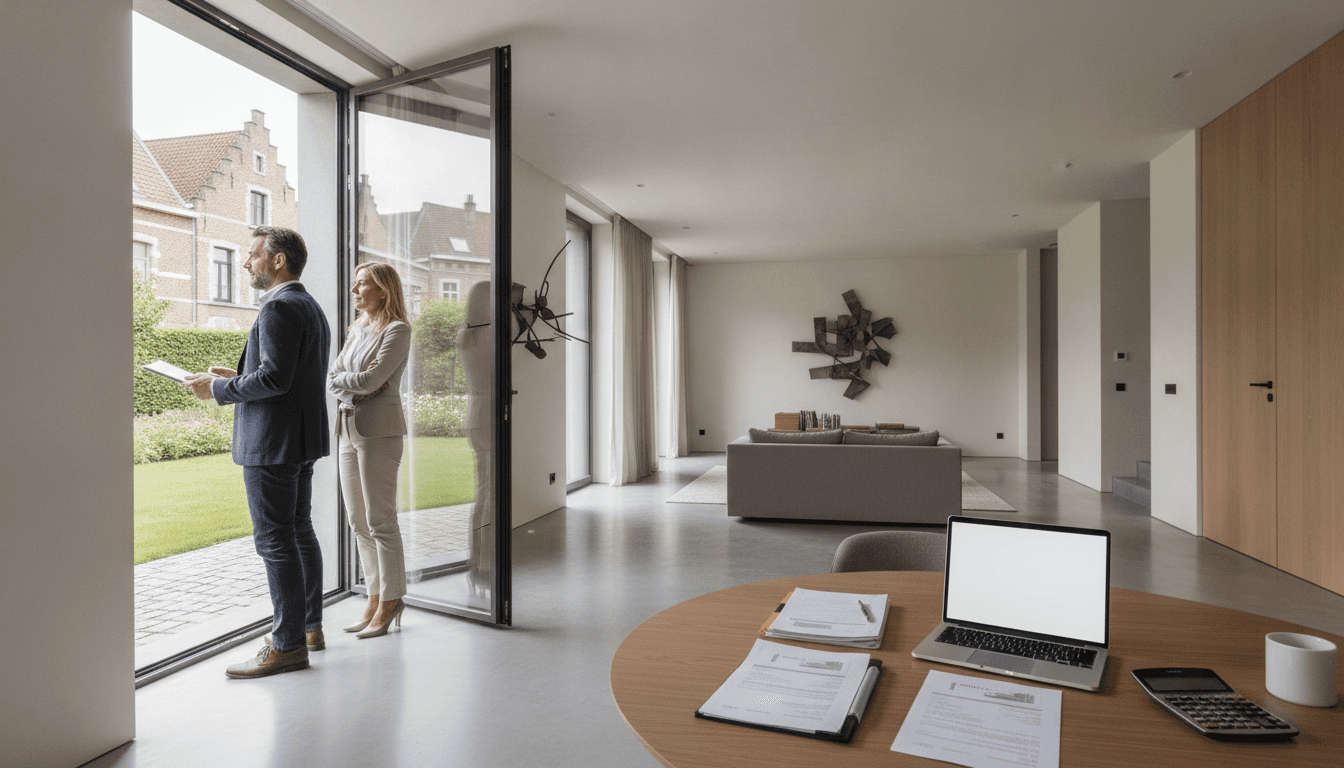
Capital gains taxes affect the total cost of selling your home in Belgium far less than most sellers expect. If you are selling the home you actually live in, the profit you make is normally not taxed at all. The money that leaves your account comes from somewhere else: agency commission, mandatory certificates and, if a loan is still registered, the paperwork to clear it. This guide separates the two.
The gain on your own home is normally not taxed
Belgium does not apply a general tax to the profit a private individual makes on selling property. Personal income tax reaches a property gain only in specific situations, and the home you live in sits outside them in the ordinary case. Buy a house in Ghent, live in it, sell it years later for more than you paid, and the difference is normally yours. There is no rate to look up and no percentage to set aside.
That surprises owners who have sold in France, Spain or the United Kingdom, where a gain on property is routinely taxed. Belgian sellers lose money at the front of the transaction instead of at the end of it. Commission and certificates are paid whether the sale made a profit or a loss.
The exemption is not automatic in every situation. It rests on the property being your actual residence rather than an investment you occupied briefly. If you moved out long before selling, rented it out for a period, or never registered there, the picture is less clean, and that is a question for your notary.
When a Belgian property sale can be taxed
Two situations move a sale out of the ordinary case. The first is a quick resale of a property that was not your main residence. Belgian income tax treats a gain realised soon after acquisition as speculative rather than as ordinary private wealth, and taxes it at a separate fixed rate. Both the length of that window and the rate itself are set in the income tax code, and they are the kind of figure that gets revised, so use the version in force on the date of your deed rather than a number you found online. Building land follows its own stricter track.
✦ 100% free & No obligation
Sell your property with the best agent
Compare the top 3 agents in your region for free and save on commission.
Compare agents →The second is selling as a professional. If you buy, renovate and resell often enough that the tax authorities see a business rather than private management of your own assets, the profit is taxed as professional income. There is no bright line. Frequency, borrowing and how much the activity resembles a trade all count.
Two dates decide which case you are in: the day you acquired the property and the day you sign the deed. Your notary has both. If your sale sits anywhere near a boundary, ask early, because moving a signing date by a few weeks is cheap and finding out afterwards is not.
The costs that actually change your net proceeds
Agency commission is the largest. It is negotiable, it is quoted as a percentage of the sale price, and around 3 percent plus VAT is a common starting point in Belgium. On a property of 400,000 euros, the gap between two quotes is easily several thousand euros, which is the practical argument for seeing more than one. You can compare estate agents who work in your own municipality before signing anything.
Certificates come next. Before a property can be advertised and sold, a set of documents has to exist: an energy performance certificate, an inspection of the electrical installation, a soil certificate, an asbestos certificate for older buildings, and a fuel tank inspection where one applies. Which of these you need depends on the region and the age of the building. Together they usually land in the low hundreds of euros, and several take weeks to arrange, so start them before you list.
Notary fees are mostly not yours. In Belgium the buyer pays the notary fees and registration duties on the deed, and the tariff is fixed by law rather than negotiated. What you pay as a seller is narrower: lifting the mortgage registration if a loan is still on the property, plus the documents the notary collects for you.
Extra items for owners who live abroad
If you have already left Belgium, the tax question does not change but the logistics do. You can sign through a power of attorney instead of travelling for the deed. That is standard practice and cheap next to a flight, but it has to be drawn up and legalised in advance, which adds days to the schedule.
Documents also take longer to assemble when the owner is not local. A soil certificate, a copy of the building permit, or co-ownership records for an apartment all come from Belgian bodies, and someone has to chase them. A good agent does that. A remote owner without one tends to find the gap late.
If you are no longer a Belgian tax resident, where the gain is declared becomes a treaty question between Belgium and your country of residence rather than a Belgian rule you can settle alone. Raise it with an adviser in both countries before the deed, not at the next filing season. The sequencing is what costs money here, because a sale that stalls on missing paperwork loses buyers.
Working out what you actually keep
Capital gains tax is rarely the line that changes your number in Belgium. Commission is. It is the largest cost of the sale, it is negotiable, and it is the one you decide before anything else gets signed.
So work in that order. Start with a free valuation of your property, then compare estate agents who actually sell in your municipality, then put the two dates in front of your notary if the property was not your main residence. ImmoMakelaarVergelijker.be passes your details to a maximum of three agents, never more, so you get a real comparison without a week of phone calls. You can start the comparison here, free and without obligation.
One caveat worth stating plainly. This article explains how the pieces fit together, not what you owe. Rates and holding periods in Belgian income tax are revised, and your own situation may sit outside the ordinary case. Before you sign, give your notary your acquisition date and your intended deed date and get the answer for your address.
Frequently asked questions
How do capital gains taxes affect the total cost of selling my home in Belgium?
For most sellers they do not. Belgium does not apply a general capital gains tax to a private individual selling the home they live in, so the profit is normally untaxed. What reduces your net proceeds is agency commission, the mandatory certificates and, if a loan is still registered, the mortgage discharge. A gain can be taxed when the property was not your main residence and is resold soon after it was bought, or when the tax authorities treat your activity as professional.
Does the seller pay notary fees in Belgium?
No. The buyer pays the notary fees and registration duties on the deed of sale, at a tariff fixed by law. The seller pays only for lifting the mortgage registration if a loan is still on the property, plus any power of attorney or translations needed when the owner cannot attend the signing.
Which certificates do I need before selling a Belgian property?
Usually an energy performance certificate, an electrical installation inspection, a soil certificate, an asbestos certificate for older buildings, and a fuel tank inspection where a tank is present. Which ones apply depends on the region and the age of the building. Arrange them before listing, because several take weeks to obtain.
How much commission does a Belgian estate agent charge?
Commission is negotiable and is quoted as a percentage of the sale price, with around 3 percent plus VAT a common starting point. Rates differ by agency and by region, so comparing several offers on the same property is the simplest way to reduce the single largest cost of your sale.
"Tech entrepreneur and strategist focused on digital transformation in the real estate sector."