
How to get a better EPC certificate quickly before selling

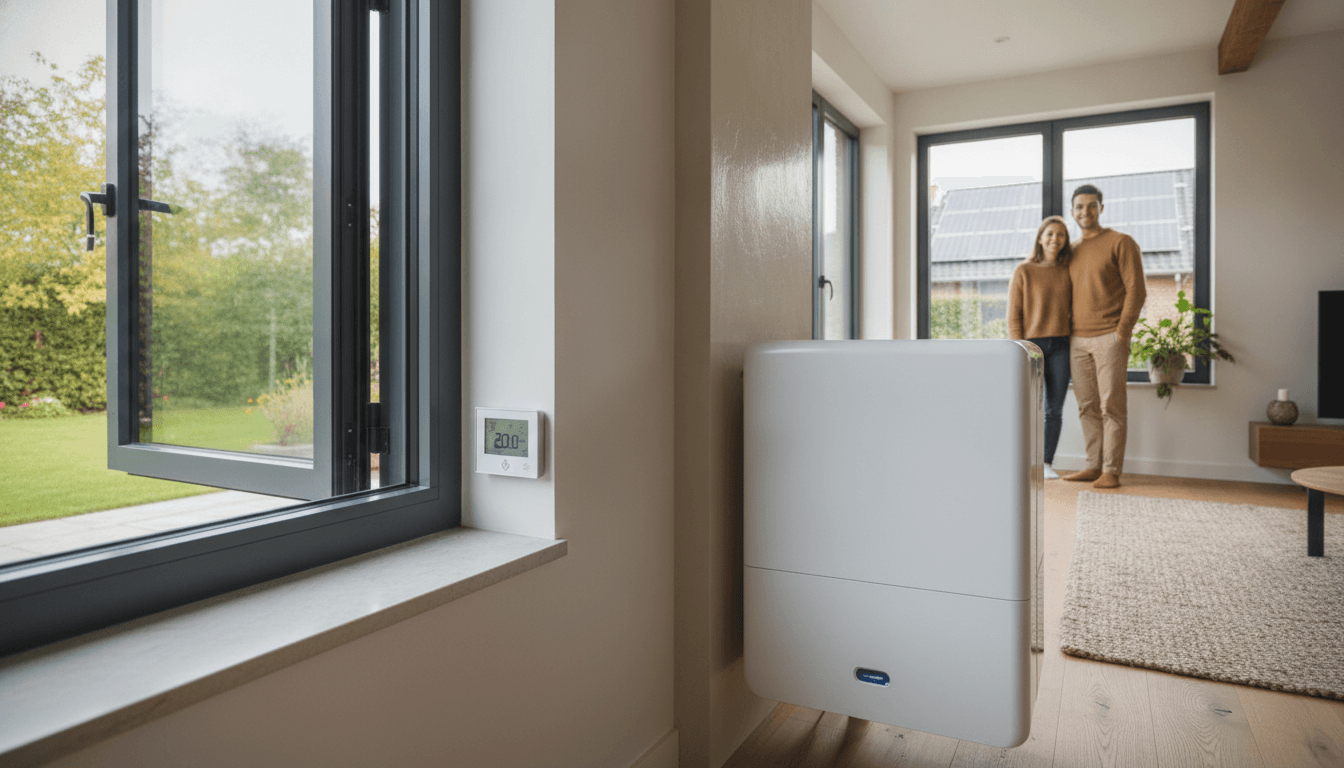
How to get a better EPC certificate quickly before selling
How to get a better EPC certificate quickly before selling is a question many owners in Wallonia and Brussels ask themselves while preparing their listing. Part of the score does not depend on building work, but on what you manage to prove to the assessor. The rest takes time and money. Here is what genuinely moves within a few weeks, and what has no chance of changing before you put the property on the market.
What the assessor can record, and what they have to assume
The EPC certificate in Wallonia and Brussels is not an estimate made by eye. The accredited assessor follows a strict protocol: they record what they observe on site and what you document. For everything else, the calculation method imposes default values tied to the year the property was built.
That distinction is the heart of the matter. A roof insulated in 2009 that nobody can find any trace of will be treated as an uninsulated roof if nothing allows it to be verified. A cavity wall filled by injection eight years ago meets the same fate. The assessor is not being difficult, they are applying the rule: with no possible visual check and no written proof, the default value applies, and that value is deliberately punitive.
In other words, many Belgian homes receive a score that describes their owner's level of documentation more than their actual condition. That is precisely where the quick gain lies, the one that requires neither building work nor a permit.
Your invoices sometimes carry more weight than a building site
Before ordering a single quote, open your files. The following documents can allow the assessor to record real values instead of default ones.
✦ 100% free & No obligation
Sell your property with the best agent
Compare the top 3 agents in your region for free and save on commission.
Compare agents →- detailed invoices for insulation work, stating the material, the thickness and the surface area treated;
- the technical data sheets for the materials installed, often supplied by the contractor;
- photos taken during the work, while the insulation is still visible before everything is closed up;
- the purchase and installation invoice for the window frames, with the type of glazing;
- the boiler documents: installation invoice, technical data sheet, recent servicing certificate;
- the paperwork linked to a regional grant or to an earlier energy audit.
A simple contractor's invoice stating "roof insulation, mineral wool 18 cm, 95 m²" is worth more than a long explanation on the day of the visit. If you bought the property knowing about this work, ask the previous owner or the contractor for the paperwork, as contractors usually keep their records for several years. This search takes a few hours and costs nothing, which makes it the first thing to do when time is short.
The quick measures that still count
Once the paperwork is together, some physical measures remain feasible in a short time and on a contained budget. Insulating the loft hatch and the floor of an unconverted loft are among the shortest jobs, sometimes a single day of work, for a surface area that counts in full in the calculation.
Insulating heating pipes and the hot water tank in a cellar or an unheated room also enters into the method. Replacing a thermostat with a programmable model, bringing an existing ventilation system back into service or adding controls to an older installation are further options to discuss with your assessor before the visit.
Keep a cool head about the order of magnitude. These measures improve a score, they do not turn an energy-hungry home into an efficient one. An uninsulated house from the sixties will stay at the bottom of the scale despite a treated loft hatch. So the useful question is not only "can I gain a letter", but "will these few hundred euros show up in the asking price". A local agent who sells in your municipality every week will answer faster than any theoretical calculation, and comparing several estate agents gives you exactly that: several readings of the same property.
What will not change before you list
Let us be direct about the limits. External wall insulation, a full replacement of window frames, a heat pump or a new roof all require quotes, often a permit or the agreement of the co-ownership association, and weeks of work. Launching that kind of project in a rush, on the eve of a sale, exposes you to three risks: a badly negotiated budget, a rushed job and an uncertain return on investment when you sell.
In those situations, the winning strategy is often to sell with the score as it stands, but with a solid file: an accurate certificate, a costed list of the work to be done and, if possible, one or two contractor quotes. A buyer who sees a clear plan negotiates less hard than a buyer who imagines the worst. To place a realistic price on your property in its current state, a free valuation of your home is a costed starting point before any decision about building work.
The right moment to bring in the assessor
The certificate must be available as soon as the listing goes live, since the label and the theoretical consumption are among the compulsory details in Wallonia as well as in Brussels. So allow three to four weeks, the time needed to gather your evidence, carry out the small measures you have chosen and find a date for the visit.
Call the assessor before they come and tell them what you have. Many are willing to say which documents will be usable, which avoids wasting the visit. Arrange access to the loft, the cellar, the utility room and the plans of the property. A certificate drawn up without access to half the home mechanically rests on more default values.
The certificate is valid for ten years, but it can be redone sooner if your situation changes. If you carry out documented work after it has been drawn up, a new certificate will reflect reality. The cost of that second visit then has to be weighed against the gain expected at the sale.
A matter of paperwork as much as building work
Improving an EPC certificate within a few weeks is mostly about preparation. Finding the proof of work already carried out, dealing with two or three accessible weak points and receiving the assessor in good conditions: that is the realistic scope. The rest belongs to the long timetable of renovation, and an informed buyer understands that perfectly.
The final price will depend as much on how the property is brought to market as on the letter on the certificate. An agent who knows the demand in your neighbourhood will know how to present a moderately insulated home without giving it away. Through ImmoMakelaarVergelijker.be, you can compare up to three IPI-licensed estate agents in your region, free of charge and with no obligation, and compare their views on whether your planned work is really worth it before you sign anything.
Frequently asked questions
Can I improve my EPC certificate without carrying out any work?
Yes, in some cases. If insulation, glazing or heating work has already been done without being documented, supplying the invoices, technical data sheets or site photos allows the assessor to record the real values instead of the default values set by the calculation method.
How much time should I allow before putting the property on the market?
Count on three to four weeks. That covers the search for documents, any small measures and making an appointment with an accredited assessor. The certificate must be available when the listing is published.
Is it worth renovating just before selling?
Rarely for the big items. External wall insulation or a full replacement of window frames takes months and a substantial budget, with no guarantee of recovering the sum in the sale price. Short, inexpensive measures, such as insulating the loft or the pipework, offer a better ratio between effort and effect.
What if my home still ends up with a poor label?
Sell with a complete file rather than a flattered score. An accurate certificate, a costed list of the work to be done and a few quotes reassure the buyer and limit the negotiation. An estate agent experienced in your municipality will help you position the price accordingly.
Frequently asked questions
Can I improve my EPC score without doing any renovation work?
Yes, in some cases. If insulation, glazing or heating work was already done but never documented, providing invoices, technical data sheets or site photos allows the assessor to record real values instead of punitive default values.
How early before listing should I arrange the EPC assessment?
Allow three to four weeks. That covers gathering your documents, carrying out any small measures, and booking an accredited assessor. The certificate must be available the moment the listing goes live.
Which documents are most useful to have ready for the assessor?
Detailed invoices for insulation work stating the material, thickness and surface area, window frame purchase invoices with glazing type, boiler installation and servicing certificates, technical data sheets, site photos taken during the work, and any regional grant paperwork.
Is it worth doing major renovations just before selling?
Rarely. Projects like external wall insulation, full window replacement or a heat pump require permits, months of work and a large budget, with no guarantee of recovering the cost in the sale price. Small measures like insulating the loft hatch or heating pipes offer a better effort-to-effect ratio.
What should I do if my home still gets a poor EPC label after preparation?
Sell with a complete file rather than a flattered score. An accurate certificate, a costed list of work to be done and one or two contractor quotes reassure buyers and reduce hard negotiation on the asking price.
Redactie ImmoMakelaarVergelijker
"We write about selling, valuing and costs in Belgium. Articles are drafted with the help of AI from official sources and checked by our team."