
Requesting an Energy Performance Certificate: how to do it correctly in Belgium

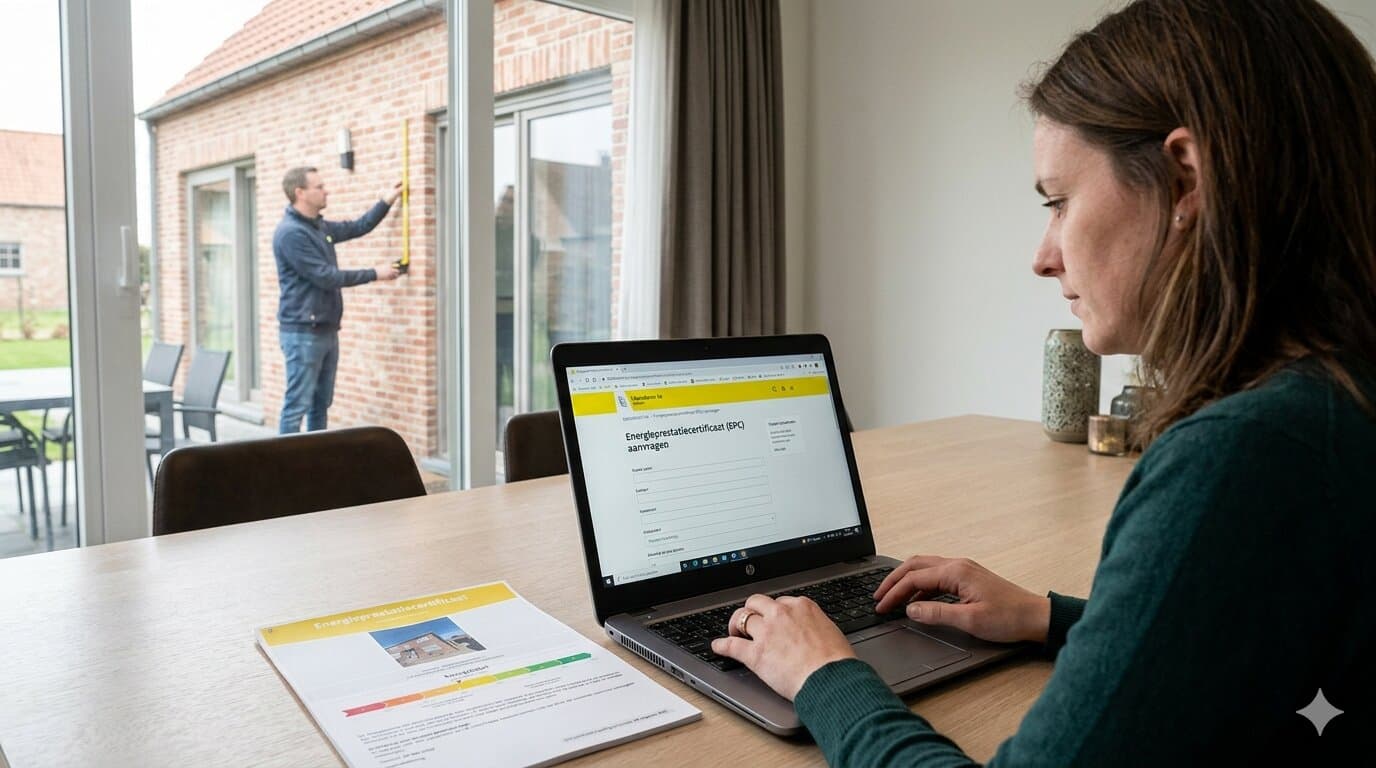
Requesting an Energy Performance Certificate (EPC) is one of the first administrative steps in Belgium when you want to sell or rent out a property. The certificate shows how energy-efficient a home is and is in most cases required before a listing can be published. It is therefore not just a formality, but a document that directly affects your sale or rental process.
For owners, the EPC has become far more than a sticker with a score. Buyers and tenants scrutinise it increasingly carefully, because energy performance partly determines how much a property actually costs to live in. Getting the certificate sorted in good time not only helps you avoid fines or delays - it also puts you in a stronger position when you go to market.
When is an EPC required?
An EPC is required when selling or renting out houses, apartments and other self-contained residential units in Belgium. It also plays a role at the moment of transfer by notarial deed, and the legislation ties the obligation to the moment a property comes onto the market. In many cases it applies to small non-residential units as well.
That means it is best not to wait until the final week before the sale. As soon as you decide to sell your property, the EPC should be part of your preparation. Starting too late risks stalling the publication of the listing or leaving key information out of the advertisement.
Who can draw up the certificate?
You can request an EPC from an accredited energy assessor. The certificate cannot be drawn up by just anyone - it must come from a qualified professional who is authorised to inspect the property and enter the required data into the regional software. This is what makes the document officially valid.
✦ 100% free & No obligation
Sell your property with the best agent
Compare the top 3 agents in your region for free and save on commission.
Compare agents →In practice, the process usually works like this: you submit your request, make an appointment, receive a site visit and then receive the EPC digitally. For owners, it is reassuring that the process can often move quite quickly these days, especially when the property is easily accessible and the relevant documents are ready.
How do you apply for one?
If you want to request an EPC, it is best to start by making a simple inventory of the property's details. Think of the address, type of property, year of construction, any renovations carried out and any available plans or invoices. The more information you can provide, the more smoothly the assessor can work.
You then choose an accredited provider or assessor and schedule the site visit. Some providers process the request quickly and can visit for inspection at short notice. After the inspection, the certificate is drawn up and sent to you, after which you can use it for the sale, rental or other administrative purposes.
Why does timing matter?
Ideally, you request the EPC before your property goes online. This is not only practical - it is also legally relevant, because prospective buyers or tenants must receive accurate information from the moment the listing is published. Without an EPC you can quickly run into delays in your sale process.
Timing also matters commercially. A property with a better energy label is often more strongly positioned on the market, while a weaker label can lead to extra questions or negotiations. It therefore makes sense to think of the EPC not as an obligatory tick-box, but as part of your sales strategy.
What does it cost?
The price of an EPC depends on the type of property, the region, the level of complexity and the provider. The market shows a wide range of price levels, often with fixed fees or bundles covering additional certificates. Some providers also state that the cost is inclusive of travel expenses or VAT, but this varies from one firm to another.
For owners, it is wise to ask upfront what is included. Does it cover only drawing up the certificate, or also travel costs, administration and additional certificates? That way you avoid surprises and can compare offers more effectively.
What does an EPC contain?
The EPC sets out, among other things, how energy-efficient the property is - usually in the form of a score or label. The certificate also contains information about the property, the inspection and recommendations for improving energy performance. This makes it a useful document both for the owner and for the prospective buyer.
For the buyer it is a clear reference point. For the seller it signals that the property is being offered transparently. In today's market, where energy efficiency carries ever more weight, this can have a tangible impact on buyer interest and the room for negotiation.
Connection to the sale
Anyone selling their property should see the EPC as part of the complete sales file. Alongside photos, pricing and presentation, the certificate is an important piece of the preparation. Without an EPC your file can be incomplete, which often makes a poor first impression on buyers.
That is why many sellers combine obtaining an EPC with other steps in the sales process. If you have no idea yet what asking price suits your property, a free valuation can help you get a better read on the market. You can then prepare the certificate and the rest of the file in one go.
Common mistakes
A very common mistake is waiting until just before publication. This tends to create time pressure at exactly the moment when you want calm in your preparation. A second mistake is assuming that all certificates are automatically the same. Quality and speed depend on who draws up the certificate and how well your file is prepared.
EPCs are also sometimes treated as entirely separate from the rest of the sales process. In reality, the certificate influences how buyers perceive the property. An energy-efficient home has stronger selling power, whereas a weaker label calls for extra arguments when it comes to pricing and communication.
Practical points to bear in mind
Check in advance whether you have all the documents the assessor might need. Old invoices, plans, certificates and information about renovations can all be useful. The more thorough your preparation, the smaller the chance that the visit will require additional follow-up later.
Also think in advance about where your property sits in its maintenance and renovation lifecycle. If you know that certain energy-related works are still planned, you can fit the EPC more deliberately into your sales strategy. This helps set realistic expectations for buyers and puts you in a stronger negotiating position.
Why it is more relevant than ever
The Belgian property market is placing ever greater emphasis on energy performance. Buyers are not only calculating the purchase price but also the future cost of renovation. As a result, the EPC is increasingly assessed as part of the total cost of ownership.
For sellers, this represents an important shift. Those who obtain their energy certificate in time and understand what it means are in a stronger position in conversations with interested parties. The certificate is therefore not just a mandatory document - it is also a practical marketing factor.
Conclusion
It is best to request your EPC well in advance, so that your sale or rental is not held up and your property is presented correctly. The certificate is compulsory, informs buyers and tenants, and forms part of a professional sales file.
Do you want to get your property properly prepared for the market? Start by requesting a free valuation and combine it with the right certificates for a strong start.
Frequently asked questions
When do I need an EPC in Belgium?
An EPC is required when selling or renting out houses, apartments and other self-contained residential units. The obligation applies from the moment a property comes onto the market, so it should be arranged before you publish your listing.
Who is allowed to draw up an EPC?
Only an accredited energy assessor can draw up an EPC. The certificate must come from a qualified professional who is authorised to inspect the property and enter the required data into the regional software, which is what makes it officially valid.
What information do I need to prepare before requesting an EPC?
It helps to have the address, type of property, year of construction, any renovations carried out, and available plans or invoices ready. The more information you can provide, the more smoothly the assessor can work during the site visit.
What does an EPC cost in Belgium?
The price depends on the type of property, the region, the complexity and the provider. It is wise to ask upfront whether the fee includes travel costs, administration and any additional certificates, so you can compare offers without surprises.
What is a common mistake sellers make with the EPC?
A very common mistake is waiting until just before publication, which creates unnecessary time pressure. Another mistake is treating the EPC as separate from the rest of the sales process, when in reality the energy label directly influences how buyers perceive the property and their room for negotiation.
"Real estate expert focused on quality control and strategic partnerships."