
Adapting your home for old age and mobility in Belgium: costs and grants

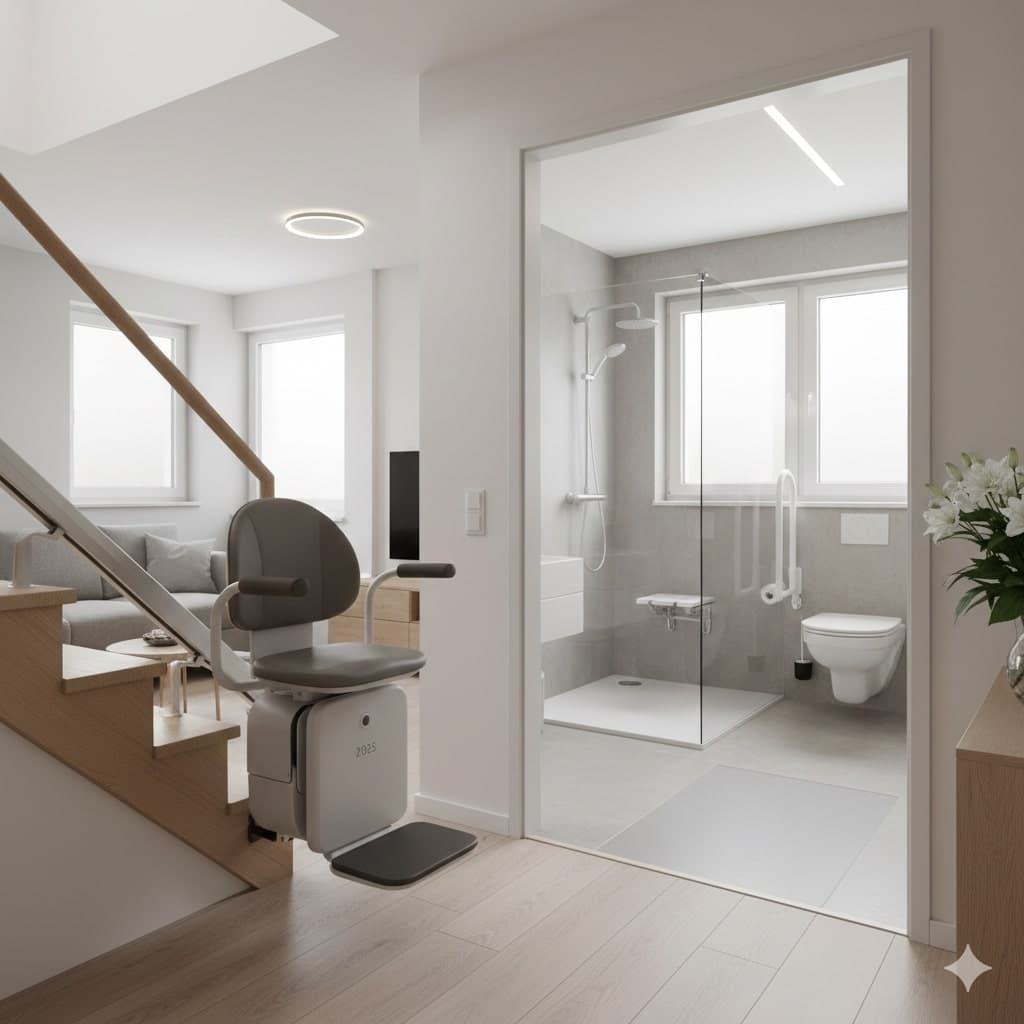
Adapting your home for old age: much more than a stairlift
Many Belgians want to stay in their own home for as long as possible, even as their mobility declines. Adapting your home for old age is not a luxury in that case, but a necessity: removing thresholds, installing a walk-in shower, a stairlift, an adapted kitchen. But how much does all this cost in 2025? And what grants and subsidies are available?
This guide gives a complete overview of the most common adaptations, their costs and the grants you can obtain in Flanders, Wallonia and Brussels.
Why plan home adaptations now?
Belgium's population is ageing rapidly. By 2030, one in four Belgians will be 65 or older. The authorities are encouraging home adaptations to allow older people to stay at home longer. That is why various grants and tax benefits exist.
But adaptations are often just as necessary for younger households with a physical disability or chronic illness. The grants generally apply in those cases too.
Adapting early brings clear benefits.
✦ 100% free & No obligation
Sell your property with the best agent
Compare the top 3 agents in your region for free and save on commission.
Compare agents →- Safety: reduced risk of falls, better accessibility
- Comfort: being able to continue living independently
- Added value: an accessible home is worth more
- Energy efficiency: adaptations often go hand in hand with insulation and an improved energy performance rating
Most common adaptations and costs in 2025
1. Stairlift
A stairlift is often the first major adaptation.
Costs (2025):
- Straight staircase: €3,000-€5,000
- Staircase with a bend: €6,000-€12,000
- External lift (to upper floor): €8,000-€15,000
Grants:
- Flanders: via the housing subsidy up to €3,000 (income-dependent)
- Wallonia: via the Pacte résidentiel up to €2,500
- Brussels: via the Brussels-Capital Region up to €2,000
2. Step-free bathroom
Walk-in shower, raised toilet, grab rails.
Costs (2025):
- Walk-in shower (including drainage, tiles and glass panel): €4,000-€8,000
- Raised toilet with grab rails: €500-€1,500
- Support rails and handrails: €200-€600
- Total bathroom adaptation: €5,000-€10,000
Grants:
- Flanders: housing subsidy up to €4,000 (income-dependent)
- Wallonia: Pacte résidentiel up to €3,000
- Brussels: up to €2,500
3. Threshold-free living
Removing thresholds, widening doors, levelling floors.
Costs (2025):
- Removing a threshold and levelling the floor: €500-€1,500 per threshold
- Widening a door (frame included): €800-€2,000
- Floor levelling: €30-€50/m²
Grants:
- Often included in the general housing subsidy for accessibility
4. Adapted kitchen
Lowered worktops, pull-out drawers and cupboards, handles at the right height.
Costs (2025):
- Lowered worktop (adapting the existing kitchen): €1,500-€4,000
- Pull-out cupboards and drawers: €2,000-€5,000
- Adapted appliances (induction hob, lowered oven): €1,500-€3,000
- Total kitchen adaptation: €5,000-€12,000
Grants:
- Flanders: via the housing subsidy up to €3,000
- Wallonia: via the Pacte résidentiel up to €2,500
5. Home automation and alarm systems
Home automation and alarm systems increase safety.
Costs (2025):
- Home automation system (lighting, heating, doors): €2,000-€6,000
- Alarm system with cameras: €800-€2,500
Grants:
- Flanders: via the housing subsidy up to €1,500 (income-dependent)
- Wallonia: via the Pacte résidentiel up to €1,000
6. Wheelchair-accessible entrance
Wheelchair-accessible entrance with ramp or platform lift.
Costs (2025):
- Ramp (concrete, metal structure): €1,500-€4,000
- Platform lift (small, for 1 step): €5,000-€10,000
Grants:
- Flanders: via the housing subsidy up to €3,000
- Wallonia: via the Pacte résidentiel up to €2,500
7. Adapting the sanitary facilities
Raised toilet, grab rails, walk-in shower.
Costs (2025):
- Already covered in the bathroom section, but for a separate toilet: €500-€1,500
Grants:
- Same as for the bathroom
Total costs and grants: a realistic example
Suppose you want to fully adapt a home for a wheelchair user:
- Stairlift (straight): €4,000 - grant €3,000 (Flanders)
- Bathroom (walk-in shower, toilet, grab rails): €8,000 - grant €4,000
- Removing thresholds (3 units): €1,500 - grant €1,000
- Kitchen adaptation: €8,000 - grant €3,000
- Wheelchair entrance (ramp): €2,500 - grant €2,000
- Home automation: €3,000 - grant €1,500
Total costs: €26,500
Total grants (Flanders, low income): €14,500
Net out-of-pocket cost: €12,000
This is a realistic estimate; actual costs may vary.
Tax benefits and subsidies by region
Flanders
Housing subsidy (formerly the renovation grant):
- For all adaptations that improve accessibility
- Income test: the lower your income, the higher the subsidy (maximum 50% of costs)
- Maximum amount: €15,000 per home over 5 years
- Application: via your municipality's Omgevingsloket (environment desk), before works begin
Other grants:
- Mijn VerbouwPremie: for roof insulation or windows, but since 1 March 2026 only for owner-occupiers in income categories 3 and 4; the two highest income categories only receive support for a heat pump or heat pump water heater
- Threshold removal grant: for removing thresholds - up to €500 per threshold
Wallonia
Pacte résidentiel:
- Subsidies for home adaptations for older people and people with disabilities
- Income test: lower incomes qualify for higher subsidies
- Maximum: €10,000 per home over 5 years
- Application: via Wallonie Habitat
Other grants:
- Primes Habitation: for energy-saving adaptations, applications by 30 September 2026; from 1 October 2026 support moves to loans (Rénopack and Rénoprêt)
Brussels
Brussels-Capital Region:
- Subsidies for home adaptations
- Income test: yes
- Maximum: €8,000 per home over 5 years
- Application: via Brussels Environment
Practical steps: how to plan an adaptation
Step 1: Assessment
- Which adaptations are truly necessary?
- Which can wait until later (for example, a stairlift only when climbing stairs becomes difficult)?
- What is your budget and what are your income levels (for grants)?
Step 2: Request quotes
- Request at least 3 quotes per adaptation (stairlift, bathroom, kitchen).
- Ask whether the contractor has experience with accessibility works.
- Check that the contractor is accredited (required for grants).
Step 3: Apply for the grant
- Before you start work, submit your grant application.
- Include quotes, photos and any medical certificates.
- Wait for provisional approval (this can take 4-8 weeks).
Step 4: Carry out the works
- Have the works carried out by an accredited contractor.
- Document everything (photos, invoices).
- Take account of energy performance standards: insulation, ventilation, energy efficiency.
Step 5: Claim the grant after completion
- Send invoices and supporting documents to the subsidy body.
- The grant is paid out after inspection (this can take 2-3 months).
Adapting your home for old age and your energy performance certificate
Many adaptations go hand in hand with energy efficiency:
- New windows (with low threshold) - better energy performance rating
- Roof insulation - better energy performance rating
- Adapted heating - better energy performance rating
A better energy performance label no longer unlocks a separate label grant:
- EPC label premium (EPC-labelpremie): abolished; it can no longer be requested since 1 July 2026, except for files activated at Fluvius by 31 December 2024
- For the energy works themselves you can still apply for Mijn VerbouwPremie or a Mijn VerbouwLening if you qualify
So: combine adaptations wherever possible. This delivers a double set of benefits.
Pitfalls and things to watch out for
- Don't wait too long: carrying out adaptations while you are still reasonably mobile is much easier.
- Think ahead: what seems sufficient now may not be enough in 5 years' time.
- Check the contractor's experience: not every contractor understands accessibility requirements.
- Ask for references: from senior citizens' associations or health insurance funds.
- Budget realistically: costs can end up higher than expected due to unforeseen problems.
Conclusion: adapting your home is an investment in independence
Adapting your home for old age or reduced mobility is not an expense, but an investment in independence, safety and comfort. With the right grants and subsidies, you can recover up to 50% of the costs, especially if your income is modest.
The key points are:
- Timing: carry out adaptations early, not when it is already too late.
- Planning: combine them with energy-saving improvements to unlock extra grants.
- Comparing: request multiple quotes and check the contractor's experience.
- Applying: submit your grant application in good time, before work begins.
With the right preparation and guidance (for example via comparing estate agents with experience in accessibility) your home becomes a place where you can grow old safely and comfortably.
That way, adapting your home stops being a cost and becomes a well-considered investment in your future.
Frequently asked questions
How much does a stairlift cost in Belgium in 2025?
A stairlift for a straight staircase costs between 3,000 and 5,000 euros. For a staircase with a bend, prices range from 6,000 to 12,000 euros.
What grants are available in Flanders for home adaptations?
In Flanders, the housing subsidy covers accessibility adaptations up to a maximum of 15,000 euros per home over 5 years. The amount is income-dependent, with lower incomes qualifying for higher subsidies of up to 50% of costs.
Do I need to apply for a grant before or after the works start?
You must submit your grant application before the works begin. You will need to include quotes, photos and any medical certificates, and then wait for provisional approval, which can take 4 to 8 weeks.
Can younger people with a disability also apply for these home adaptation grants?
Yes, adaptations are often just as necessary for younger households with a physical disability or chronic illness, and the grants generally apply in those cases too.
Can I combine home adaptation grants with energy efficiency subsidies?
Sometimes. Adaptations such as new windows, roof insulation and adapted heating also improve your energy performance rating. In Flanders, Mijn VerbouwPremie still covers energy works for owner-occupiers in income categories 3 and 4, while the two highest income categories only get heat pump support since 1 March 2026. The EPC label premium has been abolished and can no longer be requested since 1 July 2026, except for files activated at Fluvius by 31 December 2024.
"Real estate expert focused on quality control and strategic partnerships."