
Buying or building a tiny house in Belgium: what you need to know

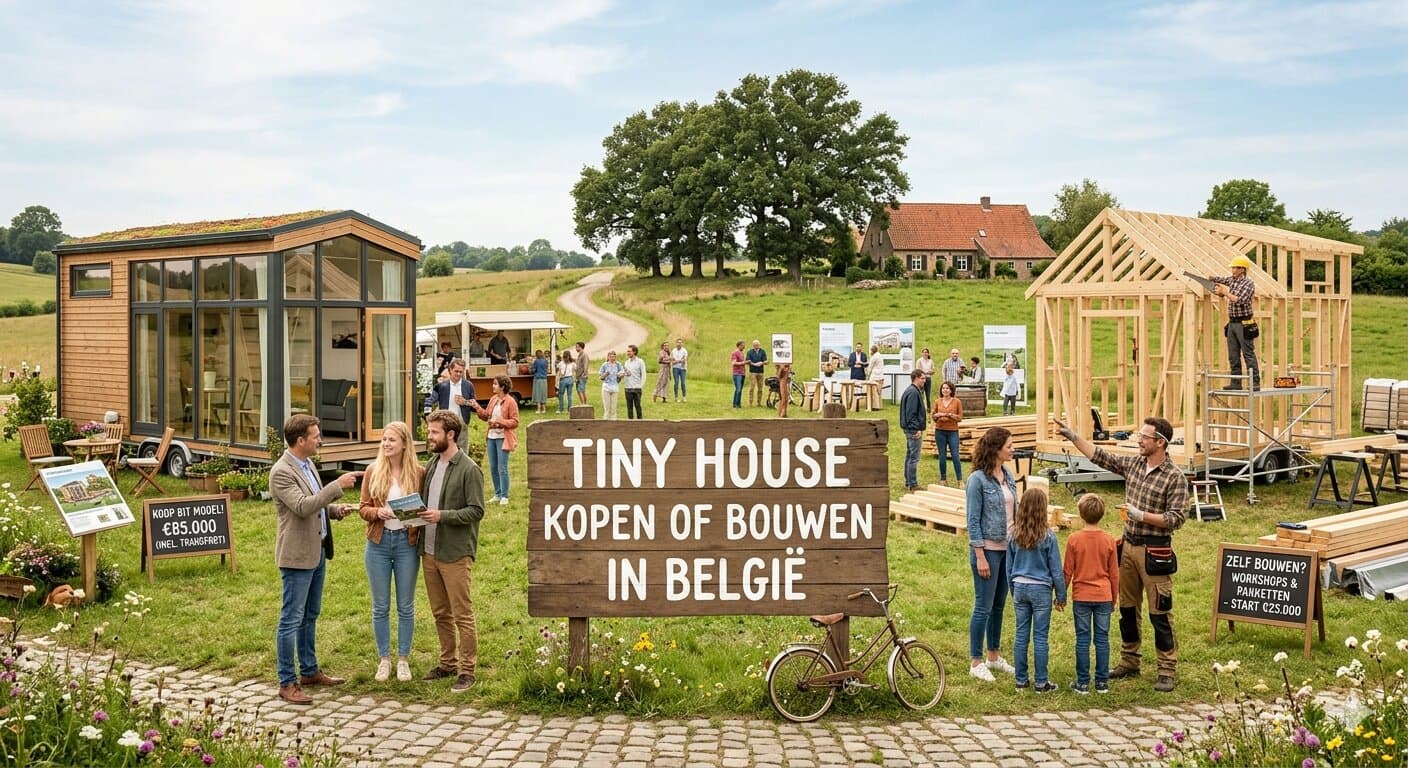
Buying or building a tiny house in Belgium is an increasingly attractive option for people looking for an affordable, sustainable and flexible alternative to conventional housing. With a floor area that usually stays below 50 m², a tiny house offers a minimalist way of living, often with lower energy consumption and minimal upkeep costs. Yet such a project is not as straightforward as it might seem. You need to take into account regulations, permits, financing and location.
In Belgium there is no specific legal category for tiny houses, but the existing general rules on planning and housing apply to your project. It is therefore important not to treat your plan as a casual shed, but as a fully-fledged primary or secondary dwelling project.
What is a tiny house?
A tiny house is in practice a compact home - often mobile or on wheels - with a kitchen, bathroom, sleeping area and living space all within a very small footprint. It is not a holiday home, but a mini-dwelling in which you can live full-time, even if you use it in a flexible way.
The layout is typically highly optimised, and many tiny houses are designed to be energy-efficient and self-sufficient. That makes them appealing to people who want to consume less, reduce their energy use and keep their housing costs low.
Buy or build yourself?
When it comes to buying or building a tiny house in Belgium, two main options exist. On one hand, you can buy a ready-made mini-home from specialists who work to order or offer standard models. On the other hand, you can build it yourself, put together a self-build kit, or have a professional build it for you.
✦ 100% free & No obligation
Sell your property with the best agent
Compare the top 3 agents in your region for free and save on commission.
Compare agents →Buying is often more expensive, but comes with a warranty, technical documentation and a finished result. Building yourself can be cheaper, but requires more time, technical knowledge and careful planning. Both choices have their pros and cons.
Price and financing
Prices for a ready-to-live-in tiny house without land start at around 30,000 euros and can rise to roughly 100,000 euros, depending on size, materials and finish. On average, a fully completed model comes in at around 60,000 euros. On top of that come the land costs and any financing charges.
Financially, a tiny house is usually funded through a mortgage, just like a conventional home, although this depends on the lender and the nature of the project. Those who build themselves or assemble a kit can often save a little extra, but must still work with a realistic budget through to final completion.
Legislation and permits
Belgium has no specific legislation for tiny houses, but existing planning rules, land-use plans and building permits apply as standard. The precise rules differ by region: in Flanders, for example, a tiny house can in principle be placed in a residential zone, a recreational zone or temporarily on agricultural land, but the details vary from one municipality to another.
Anyone who wants to live permanently in a tiny house must also be able to register their official address there. This can be a stumbling block, because minimum floor-area requirements per person must be met and some tiny houses are very small. You should therefore always contact the planning department of your local municipality before buying or building.
Land and placement
A tiny house also raises the question of land, even if it is mobile. You need to know where you are permitted to place it and whether it will be treated as a permanent home, a temporary dwelling or an outbuilding. In some areas it is possible to place it on your own building plot; others turn to tiny-house communities or long-lease (emphyteusis) arrangements.
A long lease can be interesting if you do not want to buy the land yourself. You pay an annual fee to the landowner instead of putting down a large lump sum. This lowers the entry barrier, but comes with obligations and contractual rules.
Technical requirements
A tiny house is a fully-fledged dwelling and must therefore comply with standards on safety, fire safety, electricity, water and waste. Technical finish, the required certificates, insulation and a proper connection to utilities are not optional - they are mandatory.
It is also important to choose a quality level that reflects your comfort and safety needs. A well-insulated, watertight and soundly built model prevents difficult problems further down the line. That is why it makes sense to take a close look at reference projects and the warranties on offer.
Lifestyle and practical impact
Living in a compact space requires a different mindset. In a tiny house, every centimetre is accounted for and storage space is very limited. It therefore suits people who want to live minimally, own fewer possessions and free themselves from the demands of a large home.
At the same time, a tiny house gives you mobility and flexibility. You can move your home, place it temporarily somewhere or reposition it later if your circumstances change. That is a clear advantage for many buyers and builders.
Risks and pitfalls
A number of risks should not be underestimated. First, the legal situation is often more complicated than expected, especially if you place the tiny house on agricultural or nature land. Second, registering your official address there can cause problems if the floor area falls below the legal minimum.
The market value and resaleability are also more uncertain than with a conventional home. Tiny houses are a niche product, which can affect the pool of potential buyers and the way prices evolve. That makes realistic budgeting all the more important.
Who is it suited for?
Buying or building a tiny house in Belgium is interesting for people with a minimalist lifestyle, more limited financial means or a desire to consume less. Outdoor enthusiasts, seniors, students or people with a temporary housing need will also find it an attractive solution.
At the same time, it is not for everyone. Those who need a lot of space, plenty of storage or have a large family may quickly hit the limits. It is therefore important to take a clear-eyed look at your lifestyle and long-term plans before committing.
Practical first steps
Start with the location: where do you want to place the tiny house and what does your municipality allow? Next, choose between buying and having one built, and draw up a budget that covers the tiny house itself, the land, utility connections and running costs. Ask specifically about warranties, technical specifications and previously completed projects.
For anyone who wants to get a clearer picture of their housing budget or explore how a smaller or temporary housing solution fits into the bigger picture, a free valuation can be a great first step.
Conclusion
Buying or building a tiny house in Belgium is a tempting option for anyone who wants to live compactly, affordably and sustainably. It does, however, require thorough preparation covering legislation, permits, finances and lifestyle. Those who take those steps seriously can enjoy their tiny house for a long time to come.
Would you like a clearer overview of your broader housing scenario, including a smaller or mobile option? Request a free valuation and see where a tiny house fits into your personal plan.
Frequently asked questions
How much does a tiny house in Belgium cost?
A ready-to-live-in tiny house without land starts at around 30,000 euros and can go up to roughly 100,000 euros, depending on size, materials and finish. On average, a fully completed model comes in at around 60,000 euros.
Do I need a building permit for a tiny house in Belgium?
Belgium has no specific legislation for tiny houses, but existing planning rules and building permits apply. The exact rules differ by region and municipality, so you should always contact your local planning department before buying or building.
Can I register my official address in a tiny house?
Yes, but it can be a stumbling block. You must meet minimum floor-area requirements per person, and some tiny houses are too small to qualify. Always check with your local municipality before committing.
Is it better to buy or build a tiny house yourself?
Buying a ready-made tiny house is often more expensive but comes with a warranty, technical documentation and a finished result. Building yourself or using a self-build kit can be cheaper, but requires more time, technical knowledge and careful planning.
What is a long lease and how does it work for a tiny house plot?
A long lease, or emphyteusis, lets you use land without buying it outright - you pay an annual fee to the landowner instead of a large lump sum. It lowers the entry barrier but comes with obligations and contractual rules.
"Tech entrepreneur and strategist focused on digital transformation in the real estate sector."