
Buy new-build or existing property? Advantages, risks and financial comparison

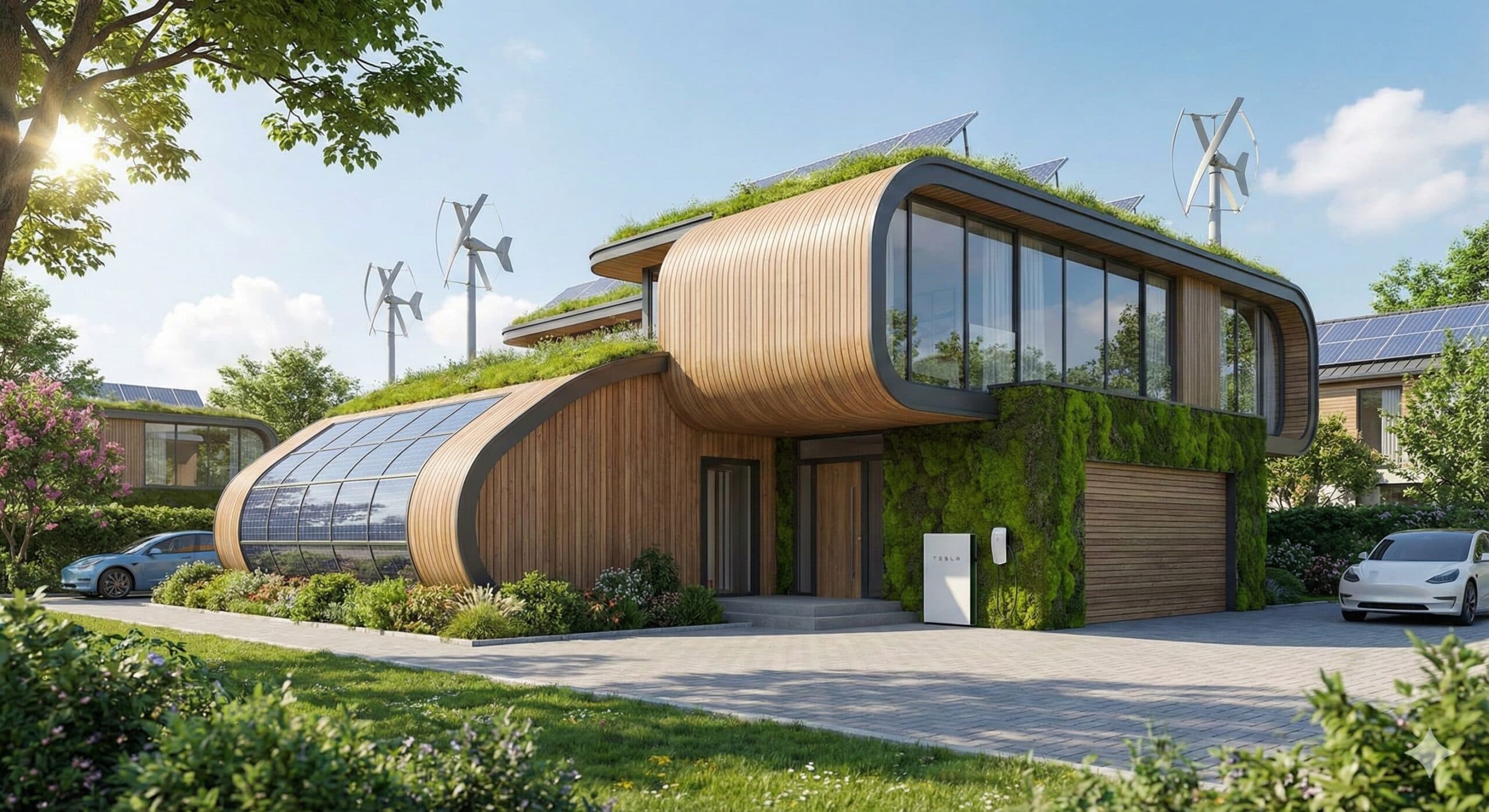
New-build or existing property: make the right choice in 2025
The decision between a brand-new home and an existing property is one of the most significant choices any home buyer will face. Both options have real strengths and serious drawbacks. New-build offers energy efficiency, modern comfort and legal guarantees - but comes at a higher price. Existing properties are cheaper, but may require renovations and carry higher running costs. In this article we compare both options using 2025 data, to help you make an informed decision.
The key differences: cost, energy consumption and warranty
The most striking difference between new-build and existing properties comes down to four areas: price, energy efficiency, maintenance and legal protection.
Purchase price and taxes:
Existing properties cost on average 2% to 3% less than comparable new-builds. More importantly, an existing property is subject to registration duties (in Flanders 2% if it becomes your only own home, 12% otherwise), whereas new-build is subject to VAT (21%). On a purchase price of €300,000, that is €6,000 in registration duties against €63,000 in VAT.
Exception: demolition and reconstruction qualifies for a reduced VAT rate of 6% instead of 21%, making this scenario particularly attractive.
✦ 100% free & No obligation
Sell your property with the best agent
Compare the top 3 agents in your region for free and save on commission.
Compare agents →Energy consumption and EPC rating:
Since January 2025, new-build homes must meet strict standards: a maximum energy score of E30, no gas connection, and at least 15 kWh/m² of renewable energy (solar panels or heat pump). This results in heating costs that are on average 50% to 70% lower than existing properties with a poor EPC rating.
Existing properties with a poor EPC rating (E or F) are losing value more quickly. Buyers who purchase a property with an EPC rating of E or F are required to bring it up to label D within six years - a costly mandatory renovation.
Maintenance obligations and guarantees:
New-build homes typically involve minimal maintenance costs during the first 10 to 15 years. The Breyne Act provides ten-year liability: the builder or contractor must repair structural defects free of charge.
Existing properties? You pay immediately for both minor and major maintenance. An ageing roof (€5,000-€15,000), pipes that need replacing (€8,000-€12,000), or damp in the cellar - costs add up fast.
Advantages of new-build in 2025
1. Energy savings and low running costs
A new-build home with solar panels, insulation and a heat pump can cost up to 70% less in heating than an existing property built before 2000. Over 20 years you can easily save €30,000 to €50,000 on energy bills.
2. No hidden defects
Everything is new, modern and properly sealed. You don't need to worry about hidden leaks, faulty wiring, or a roof that could give way overnight. Existing properties can spring exactly these kinds of surprises, sometimes costing thousands of euros.
3. The Breyne Act - legal protection
The Breyne Act guarantees ten-year liability and financial protection. The builder cannot simply go bankrupt and leave your home unfinished. This gives you real peace of mind.
4. Ready to rent out immediately
Are you an investor? A new-build apartment is available to let almost straight away. No works needed, strong energy performance attracts better tenants, and banks grant mortgages on new-build more readily.
5. Modern comfort and layout
Contemporary kitchens, underfloor heating, good air quality - everything is up to 2025 standards. Existing properties require renovations to reach the same level.
6. Subsidies and tax benefits
In certain situations, advantages apply: reduced VAT (6% for demolition and reconstruction), reductions on property tax for energy-efficient homes, and municipal subsidies.
Disadvantages of new-build: what to watch out for
1. Higher purchase price
The price gap between new-build and existing properties is significant. Between 2021 and 2025, this gap grew from €54,000 to €80,000.
2. VAT adds considerably to the cost
If an existing property becomes your only own home in Flanders, you pay 2% registration duties, while new-build attracts 21% VAT. That difference amounts to 19% of the purchase price, before any benefits are taken into account.
3. Delays and construction risks
Building projects regularly run late: delivery delays on windows, components, or screed that needs time to dry. This can amount to months of extra waiting.
4. Advance payments - financial risk
Many projects require payments well before the property is complete. If the contractor goes bankrupt, your money could be lost unless you have adequate insurance in place.
5. Prices are unlikely to drop sharply
Although experts predict some price softening if supply increases, any decline is unlikely to be dramatic. Construction costs - particularly labour - are not falling, so prices remain stable or continue to rise.
6. Waiting times can be long
For popular projects you may wait 18 to 36 months for handover. If you have already sold your previous home, this can put you in a very difficult position.
Advantages of existing properties
1. Lower purchase price
A comparable existing property costs on average 2-3% less than a new-build.
2. Lower registration duties
2% registration duties for your only own home in Flanders (12% in other cases) versus 21% VAT. The difference amounts to tens of thousands of euros.
3. Available immediately
No delays. You can move in next month. Ideal when you are under time pressure.
4. Room to negotiate
With existing properties you have more leverage to negotiate. With new-build, prices are generally fixed.
5. Proven location and value
You know the neighbourhood, the amenities, the traffic levels. With new-build, all of this can still change as surrounding projects develop.
6. Flexibility to renovate
Want to renovate to your own taste and budget? You can. With new-build, you get what the developer offers.
Disadvantages of existing properties
1. Hidden defects
A roof that needs replacing, blocked drains, wiring that doesn't meet current standards - these kinds of surprises can easily cost €10,000 to €50,000.
2. Mandatory renovation to EPC label D
Anyone who buys a property with an EPC rating of E or F is required to renovate it to at least label D within six years. Depending on the condition of the property, this costs between €20,000 and €40,000.
3. High heating costs
Poor insulation means high energy bills - up to three times higher than in a new-build.
4. Ongoing maintenance costs
Every year brings major maintenance items: roof, windows, heating system.
5. More difficult mortgage financing
Banks are more cautious when lending on poorly insulated properties. They may demand higher interest rates or be willing to lend less.
6. Stable or declining value
Without renovations, the value of existing properties can fall faster than new-build prices rise.
Financial simulation: what does it really cost?
Below we compare the total costs of both options over 20 years (including energy, maintenance and renovation):
| Cost item | Existing property (€300,000) | New-build (€380,000) |
|---|---|---|
| Purchase price | €300,000 | €380,000 |
| Taxes (registration duties / VAT) | €6,000 (2%) | €79,800 (21%) |
| Notary fees | €1,500 | €2,500 |
| Total purchase costs | €307,500 | €462,300 |
| Maintenance per year | €1,500 | €300 |
| Maintenance over 20 years | €30,000 | €6,000 |
| Heating costs per year | €2,500 | €800 |
| Heating costs over 20 years | €50,000 | €16,000 |
| Renovation (to label D) | €25,000 | €0 |
| TOTAL OVER 20 YEARS | €412,500 | €484,300 |
Notes: This is a simplified comparison. Registration duties assume 2% for your only own home in Flanders. Individual situations vary considerably. The advantages of an existing property can erode quickly if renovation is required. The new-build advantage grows the longer you stay.
What do experts say? Conclusions by buyer profile
For first-time buyers and young families:
Consider new-build through demolition and reconstruction (6% VAT benefit), or save by waiting until you have more capital. The energy savings and guarantees justify the higher price over the long term.
For investors:
New-build offers strong rental yields (4%-5.5%) and low vacancy rates. Existing properties involve renovation costs that can escalate quickly.
For budget-conscious buyers:
An existing property with a good EPC rating (C or B), minimal renovation required, and in a growth area. Save on the purchase price and reinvest in targeted renovations.
For those seeking value:
Building or renovating now is favourable: construction firms have capacity, waiting times are shorter and prices are stable rather than rising. This window will close once the market picks up again.
Practical checklist: which option suits you?
Choose NEW-BUILD if:
- You value energy savings and low heating costs
- Long-term security and legal guarantees matter to you
- You are investing with high rental income expectations
- You are willing to pay more for peace of mind and certainty
- You plan to stay in the property for 20 or more years
Choose an EXISTING PROPERTY if:
- Your purchase budget is limited
- Speed and immediate availability are your priorities
- You can carry out renovations yourself or have the budget to do so
- Neighbourhood matters more to you than an energy label
- You want flexibility in the layout
Final word: the right moment and the right choice
In 2025, both new-build and existing properties are perfectly valid choices. New-build offers certainty, energy savings and modern comfort - but at a higher price. Existing properties offer value and flexibility - but with risks around renovation and maintenance.
The most important thing is to be clear about your budget and your priorities. Want peace of mind? New-build. Want to maximise value? Existing property. For an objective analysis of your own situation, you can contact a professional estate agent. Via comparing estate agents you can find local experts who know both segments of the market. You can also request a free valuation and calculate your borrowing capacity with the loan simulator.
Make the choice that fits your future - and build your property plan on solid foundations.
Frequently asked questions
What is the difference in taxes between buying a new-build and an existing property in Belgium?
In Flanders, an existing property that becomes your only own home is subject to 2% registration duties (12% otherwise), while new-build properties attract 21% VAT. On a purchase of €300,000 versus €380,000, this can represent a difference of more than €60,000.
What is the Breyne Act and how does it protect new-build buyers?
The Breyne Act provides ten-year liability, meaning the builder must repair structural defects free of charge. It also offers financial protection, so a contractor cannot simply go bankrupt and leave your home unfinished.
Are buyers of existing properties with a poor EPC rating required to renovate?
Yes - anyone who buys a property with an EPC rating of E or F must bring it up to at least label D within six years. Depending on the condition of the property, this renovation costs between €20,000 and €40,000.
How much can you save on energy costs by choosing new-build over an existing property?
A new-build home can cost up to 70% less in heating than an existing property built before 2000. Over 20 years, this can add up to savings of €30,000 to €50,000 on energy bills.
Is demolition and reconstruction treated differently from standard new-build for VAT purposes?
Yes - demolition and reconstruction qualifies for a reduced VAT rate of 6% instead of the standard 21%, making this a particularly attractive option compared to a standard new-build purchase.
"Tech entrepreneur and strategist focused on digital transformation in the real estate sector."