
Buying a castle in Belgium: what you need to know beforehand

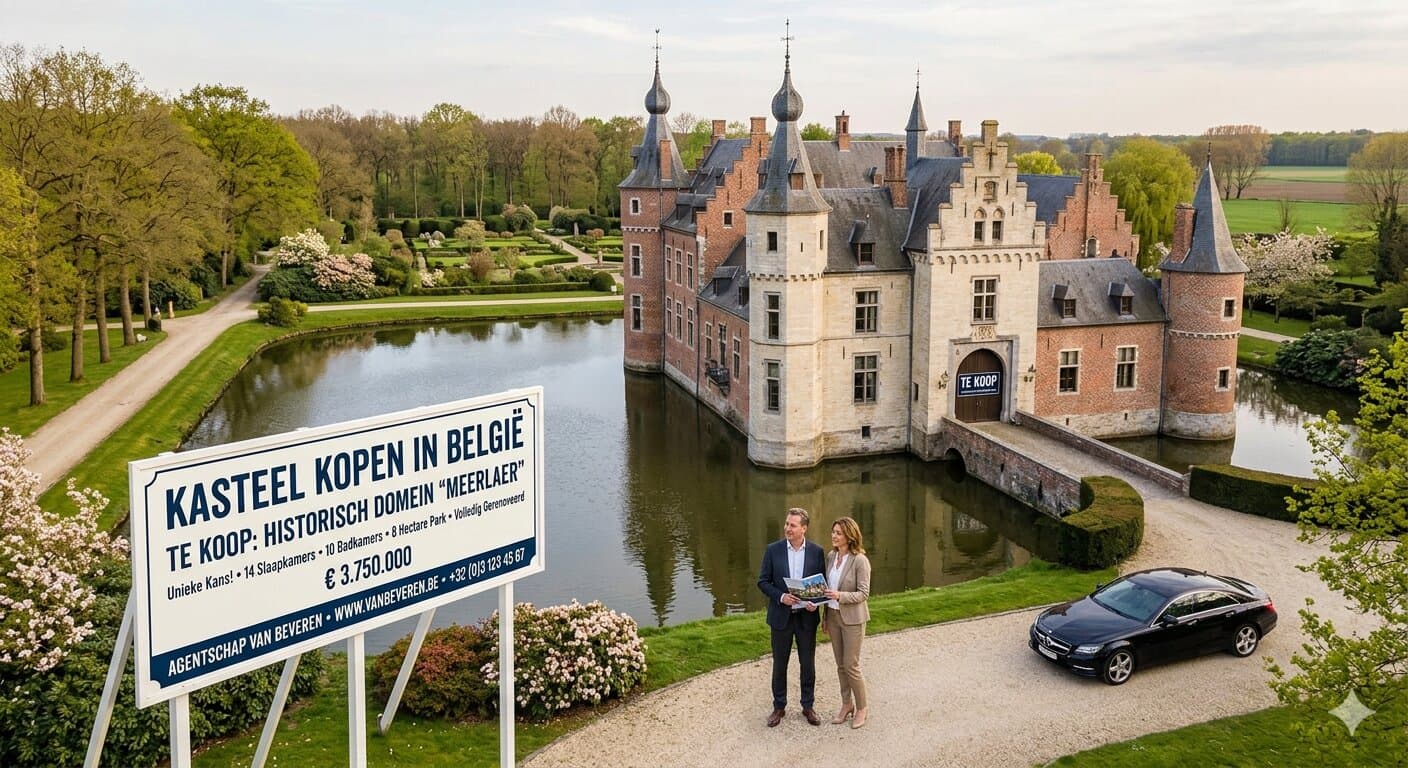
Buying a castle in Belgium is a dream for those seeking space, character and prestige. At the same time, it is one of the most complex property types on the market, because a castle often demands far more than a standard home: heritage expertise, a renovation budget, legal due diligence and a long-term vision. Anyone considering such a purchase would do well to look beyond the charm and focus above all on the practical feasibility.
The market for castles is today smaller and more exclusive than the market for ordinary homes. Yet demand persists, both from private individuals and from investors looking for an exceptional property with potential for residential use, hospitality or a mixed-use project. That makes the purchase attractive, but also particularly demanding.
What exactly are you buying?
When you buy a castle, you are not just acquiring a home - you are often buying a piece of history, a large plot and possibly several outbuildings. Some castles are offered as purely residential properties, others with redevelopment potential or as project real estate. It is therefore essential to know exactly what is included in the sale.
Sometimes the property is a listed or historically significant building, which can bring additional rules. In other cases, the castle is more of a large manor house with a distinguished appearance. Either way, the file must be examined in detail, because the difference between a purely residential property and a heritage building has a major impact on renovation possibilities and costs.
Heritage status and permits
One of the first points to check when buying a castle in Belgium is the legal status of the building. Does the property have heritage protection, does it lie within a protected landscape, or are specific requirements in place regarding renovation and maintenance? These can considerably restrict the buyer's freedom.
✦ 100% free & No obligation
Sell your property with the best agent
Compare the top 3 agents in your region for free and save on commission.
Compare agents →In practice, this means you cannot simply alter facades, roof shapes or historic elements. Even during a renovation, material choices or technical interventions may need to be aligned with heritage regulations. Consultation with the local authority and heritage services is therefore often necessary before you make a decision.
Renovation and maintenance
Castles are often impressive, but also expensive to maintain. Roofs, facades, heating systems, windows and technical installations all require extra attention with this type of property. Moreover, older buildings frequently have a higher structural complexity than a standard home.
You should therefore always budget for renovation costs, even when the property looks good at first glance. The finishes may be beautiful, but behind the facade there can be hidden costs for insulation, damp treatment or structural works. Buying a castle without a technical inspection is a significant risk.
Land and outdoor space
A castle is often sold with a large estate - woodland, meadows, a driveway or outbuildings. That increases the appeal, but also the management burden. Larger plots require upkeep, and not every buyer wants to - or can - take on that responsibility.
It is therefore important to know which parts of the estate are effectively included in the sale. Additional plots are sometimes available, or part of the land may be offered separately. In other cases there may be easements, access rights or development possibilities that strongly influence the value.
Intended use and zoning
Not every castle is intended solely for residential use. Some properties are offered as development land, event venues, hospitality establishments or mixed-use real estate with several possible functions. That can be interesting, but only if the zoning and permits actually allow it.
If you plan to use a castle for commercial purposes, you need to scrutinise the rules far more carefully. It is not enough for the property to be large enough - the intended function must also be legally feasible. You therefore need to know clearly before you buy what is permitted and what is not.
Financing and budget
Purchasing a castle usually requires considerably more financial capacity than buying a standard home. The purchase price can be high, and on top of that come notary fees, registration duties, renovation, maintenance and often fit-out or operating costs as well. Your total budget therefore needs to be calculated far more broadly than the asking price alone.
For investors and high-net-worth private buyers, this is an important test. A beautiful purchase only becomes genuinely interesting if the costs remain manageable over the long term. With castles in particular, emotional value can feel very different from economic reality - and that is precisely why financial discipline is essential.
The market and valuation
The market for castles is thinner than that for ordinary homes, which makes valuation more difficult. Comparable sales are less frequent and often very different from one another. A professional assessment is therefore almost always worthwhile.
Value depends not only on construction quality, but also on location, land, heritage status and possible change of use. A castle with development potential can be priced in a very different way from a purely residential one. Anyone who wants to know whether the asking price is defensible would do well to make an objective comparison.
Who is this suitable for?
Buying a castle suits buyers who have a clear vision and sufficient budget. That can mean private owners who want to live in a grand and characterful setting, but also investors or entrepreneurs looking for a unique location. In both cases, a long-term perspective is important.
Those who primarily want practical living without a heavy maintenance or renovation burden will usually be better served by a classic house or apartment. A castle demands more time, more money and more commitment. The charm is great, but so is the responsibility.
The purchase process
The process of buying a castle resembles that of other property, but the preparation is far more intensive. You need to examine the legal file, the permits, the heritage status, the plot boundaries and the technical condition much more thoroughly. Making an offer without that basic information is dangerous.
A visit with a structural or technical expert is therefore often advisable. This gives you a clear picture of possible hidden costs and of the feasibility of your plans. Only then can you negotiate with confidence.
Negotiation and risk management
With an exceptional property, negotiation is often a tailor-made exercise. A seller may emphasise the uniqueness of the estate, while a buyer will focus primarily on restoration and operating costs. The final price therefore often lands somewhere between emotion and reality.
A well-prepared buyer can negotiate from a position of strength. You know what further investment is still needed and where the risks lie. That makes your offer both more credible and more rational.
What to check in the file
Always verify the ownership situation, any encumbrances, the zoning of the land, possible heritage restrictions and the technical condition of the building. Also ask about the maintenance history, any works carried out and the existence of additional permits. Each of these elements can strongly influence the final value or the possible uses of the property.
The more complete the file, the smaller the chance of unpleasant surprises. For a castle, this is especially important, because any unforeseen problem can immediately have a major financial impact. Caution here is not an unnecessary luxury - it is a condition for making a sound purchase.
Practical conclusion
Buying a castle in Belgium is a unique purchase full of character, but one that comes with clear risks and costs. Those who are guided by beauty alone may later face serious surprises. Those who thoroughly examine the legal, financial and technical picture, on the other hand, make a far stronger choice.
Frequently asked questions
What should I check first when buying a castle in Belgium?
You should verify the legal status of the building, including whether it has heritage protection or lies within a protected landscape. These factors can significantly restrict what you are allowed to change or renovate.
Can I use a Belgian castle for commercial purposes like events or hospitality?
Only if the zoning and permits actually allow it. It is not enough for the property to be large enough - the intended function must also be legally feasible before you buy.
Do I need a technical inspection before buying a castle?
Yes, buying a castle without a technical inspection is a significant risk. Behind a beautiful facade there can be hidden costs for insulation, damp treatment or structural works that are not visible at first glance.
Is the land and estate always included when you buy a castle?
Not automatically. It is important to know which parts of the estate are effectively included in the sale, as additional plots are sometimes offered separately and there may also be easements or access rights that affect the value.
Why is valuing a castle more difficult than valuing a regular home?
The market for castles is thinner and comparable sales are less frequent and often very different from one another. Value depends on a combination of construction quality, location, land, heritage status and possible change of use, which makes a professional assessment almost always worthwhile.
"Tech entrepreneur and strategist focused on digital transformation in the real estate sector."