
Buying a farmhouse in Belgium: what should you look out for?

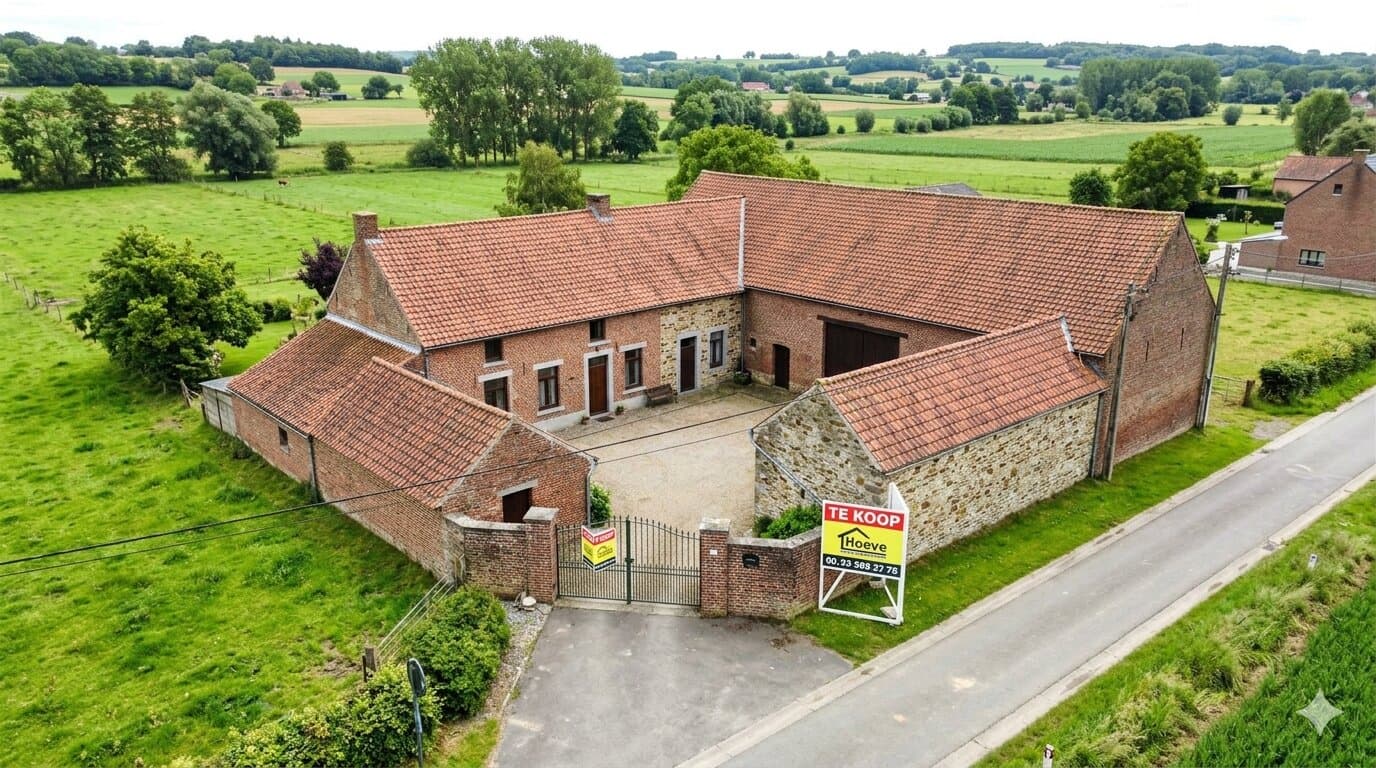
Buying a farmhouse in Belgium appeals to many buyers looking for space, peace and character. A farmhouse often combines a home with rural property, outbuildings, land and sometimes considerable renovation potential. This makes it a very particular type of purchase - one that offers more possibilities but also more things to check than a standard family home.
The appeal is clear: you typically get more living space, an authentic look and feel, and a green setting. At the same time, buying a farmhouse is rarely a purely residential decision. You are also buying a plot of land, an architectural story and sometimes a legally complex whole that needs to be carefully examined before you commit.
What exactly is a farmhouse?
A farmhouse is traditionally a rural dwelling with outbuildings such as stables, barns or storage space. In practice, the range of properties on the market varies enormously - from compact former farmsteads to large rural estates with several volumes and extensive land. That is why it is important not just to look at the photos, but also to check the actual planning designation and rights of use.
Some farmhouses are fully residential, while others still have an agricultural or mixed-use character. That distinction matters a great deal when it comes to permits, conversion possibilities and future use. Anyone who wants to buy a farmhouse must therefore always find out what legal obligations and restrictions apply to the plot and the buildings.
Why do buyers choose a farmhouse?
Most buyers are drawn to farmhouses primarily for the space and authenticity they offer. You often get a larger living area, extra storage space and a plot of land that other types of property simply cannot provide. For families, self-employed people or those who keep hobby animals, that can be particularly attractive.
✦ 100% free & No obligation
Sell your property with the best agent
Compare the top 3 agents in your region for free and save on commission.
Compare agents →On top of that, a farmhouse often has a unique character. The combination of rural architecture and outbuildings appeals to a different audience than the average new-build home. That makes this kind of purchase emotionally compelling - but for precisely that reason, you need to stay extra rational when analysing the price and the condition of the property.
Location and planning designation
When buying a farmhouse in Belgium, location is one of the first things to check. It is not just the municipality and accessibility that count, but also the planning context. Is the farmhouse situated in a residential zone, an agricultural zone or possibly in an area subject to special restrictions? This can make a significant difference for renovations and future plans.
Some farmhouses sit on exceptional plots, while others are mainly interesting for their residential value or their potential for conversion. If you are thinking of extending later or using an outbuilding for a different purpose, you need to know in advance whether that is legally possible. A beautiful location is therefore not enough on its own - the planning designation must also fit your plans.
Renovation and structural condition
Many farmhouses are old and require more maintenance than a standard home. That does not make them unattractive, but it does mean you need to estimate the renovation costs seriously. The roof, facade, windows, electrical installation, plumbing and insulation are usually the biggest items to address.
With rural properties, additional factors come into play, such as the condition of the outbuildings, the foundations and any damp problems. Buying a farmhouse without a technical inspection is a risk that can lead to unexpected costs. A thorough assessment is therefore almost always essential before you put in an offer.
Permits and use
An important difference from a standard home is that a farmhouse often has several built volumes with a historical or functional use. Not every volume can simply be converted or demolished. The permit situation is therefore at least as important as the residential quality of the property.
If you plan to convert stables into extra living space, a workshop or a professional practice, you need to have that checked out in advance. Some farmhouses offer a great deal of potential, but not every creative use is legally feasible. Information from the local authority and the property file are therefore essential.
Land and outdoor space
Buying a farmhouse often means buying a piece of land as well. That can range from a small garden to meadows, arable land or several plots with an agricultural designation. The land makes the purchase attractive, but also more complex.
The question is not only how much land you are getting, but also what you are allowed to do with it. Will you use it purely for private purposes, or do you want to keep animals, work with the outbuildings or combine it with a professional activity? The planning designation and any obligations attached to the plot partly determine the real value of the purchase.
Price and valuation
The price of a farmhouse is not determined solely by the living area. Location, land, outbuildings, renovation condition and possible uses all play a role. A well-located and properly permitted farmhouse can therefore be worth a great deal, even when it needs renovation work.
At the same time, beware of getting carried away by enthusiasm. Many buyers are charmed by the character of a property and fail to see the real costs clearly enough. An objective valuation helps to establish whether the asking price is proportionate to what you still need to invest. A realistic estimate is therefore a useful starting point.
Financing and total budget
Buying a farmhouse means budgeting not only for the purchase price, but also for the additional costs. Think of registration duties, notary fees, renovation costs and any expenses for connecting utilities or landscaping the outdoor space. With rural properties in particular, the total can add up quickly.
It is therefore wise to take a broad view of your budget from the outset. The purchase price is only one component of the total investment. If you still need to renovate or build, you also need to factor in the timing of those expenditures. Otherwise, a farmhouse that looks attractive on paper can turn out to be a heavy financial burden in practice.
How do you approach the search?
Start by defining your goal. Are you looking for a pure home, a rural family base, a renovation project or a property with additional uses? That determines which farmhouses are worth pursuing and which are better avoided.
After that, check the legal and technical information systematically. Ask about permits, the planning designation, any easements and the condition of the buildings. The more complete your information, the smaller the chance of unpleasant surprises later on. It is better to buy a farmhouse with a checklist than on gut feeling alone.
Negotiation and offer
With a farmhouse, there is often more room to negotiate than with a standard property. This is because the condition of the building, the land and the likely renovation costs all feed heavily into the price. A well-founded offer takes those factors into account, not just the charm of the property.
If you are genuinely keen on a property, it pays to calculate the costs objectively first. What needs to be done immediately? What can wait? And how much room is left in the budget after the purchase? That way you prevent emotion from taking over from financial common sense.
Which buyers is this right for?
Buying a farmhouse in Belgium is most interesting for buyers who are looking for space and flexibility. That could be families, self-employed people who need storage space, people who want to live in the countryside, or buyers who see a renovation project as an opportunity to add value. It can also be a smart choice for those who want to use part of the property differently in the future.
That said, this type of property is not for everyone. Those who want minimal renovation work, prefer to live centrally and do not want the extra management involved will often be better served by a standard house or apartment. A farmhouse demands more follow-up, more budget and more patience.
Practical conclusion
Buying a farmhouse in Belgium can be tremendously rewarding if you value space, character and possibilities. At the same time, this type of property demands extra attention to planning designation, permits, land, renovation and total cost. That is precisely why a rational approach matters, even when a property has a great deal of emotional appeal.
Would you like to get a clearer picture of whether a farmhouse fits your budget and plans? Start with a realistic valuation and request a free estimate before you make your decision.
Frequently asked questions
What is the difference between a farmhouse in a residential zone and one in an agricultural zone?
The planning designation determines what renovations and conversions are legally allowed. A farmhouse with an agricultural or mixed-use designation comes with different permit requirements and restrictions than one that is fully residential.
Can I convert the outbuildings of a farmhouse into extra living space or a workshop?
Not automatically - each built volume has its own permit history and legal status. You need to check with the local authority in advance whether your intended use is legally feasible.
What costs should I budget for beyond the purchase price of a farmhouse?
You need to account for registration duties, notary fees, renovation costs, and potentially connecting utilities or landscaping the outdoor space. With rural properties these additional costs can add up quickly.
Is there usually room to negotiate the price of a farmhouse?
Yes, farmhouses typically offer more room for negotiation than standard homes because the condition of the building, the land and the expected renovation costs all feed into the price. A well-founded offer takes those factors into account rather than being driven by the charm of the property.
What should I check before making an offer on a farmhouse?
You should systematically verify the planning designation, existing permits, any easements, and the structural condition of the buildings including roof, foundations, and outbuildings. Buying without a technical inspection is a risk that can lead to unexpected costs.
"Tech entrepreneur and strategist focused on digital transformation in the real estate sector."