
Buying a holiday home in Belgium: what should you watch out for?

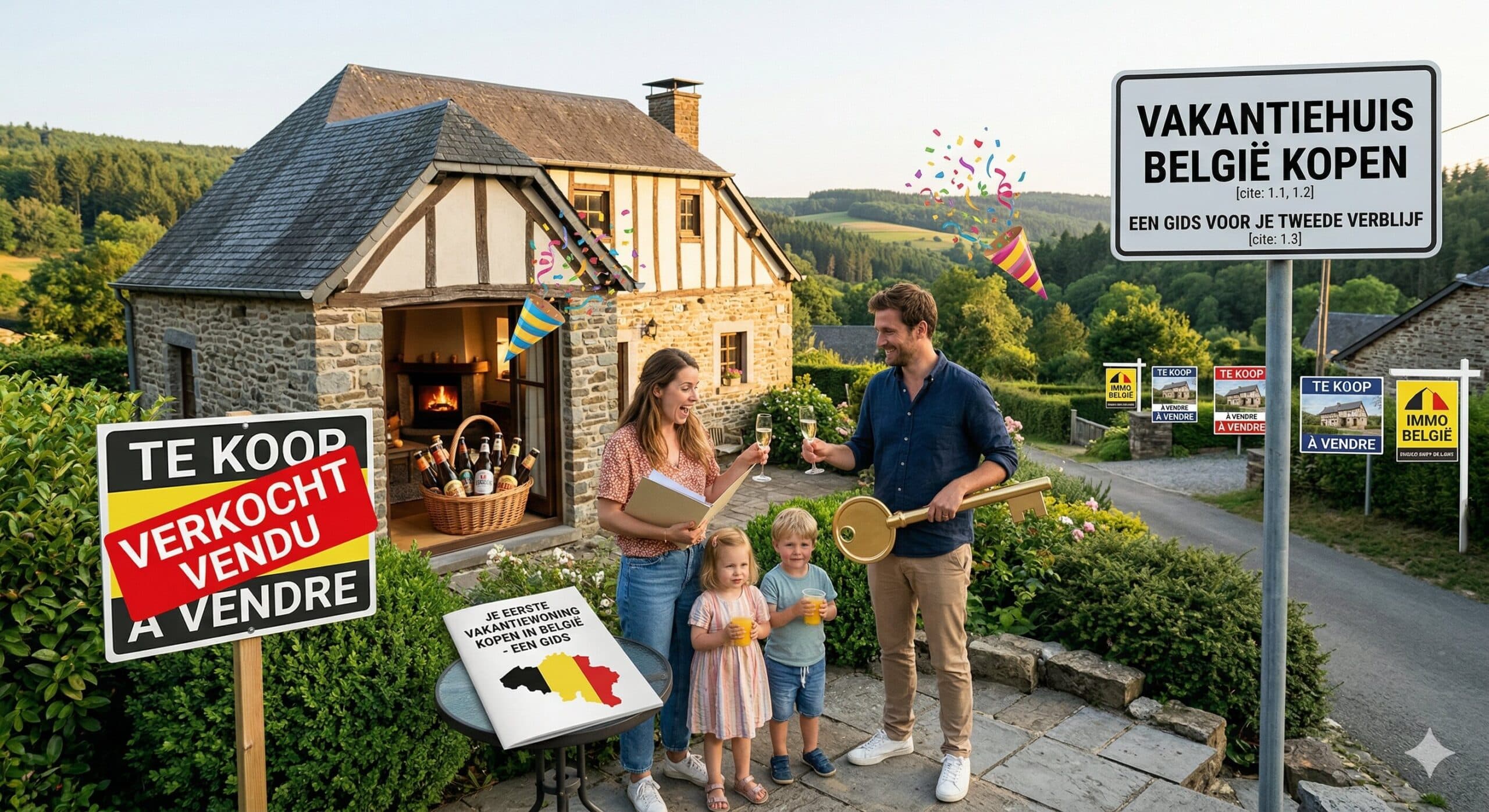
Buying a holiday home in Belgium appeals to many people: you have your own place to relax, you can enjoy it yourself and possibly rent it out later. However, purchasing a second home is not the same as buying a family residence. You need to take into account location, intended use, financing, taxation and any applicable rental rules. Thinking things through carefully beforehand prevents the dream of a holiday home from turning into a financial headache.
Why buy a holiday home?
Buying a holiday home in Belgium makes sense if you:
- want a fixed base for weekends or holidays;
- enjoy staying close to nature, the coast or a city;
- see a second home as a long-term investment;
- may want to rent it out to others in the future.
For many buyers, it is primarily a combination of personal use and preserving the property's value. Location and property type play a major role in this.
Where is the best place to buy a holiday home?
Belgium has several popular regions for a second home:
- The coast, for those who love the sea, the beach and rental potential;
- The Ardennes, for nature, peace and tourism;
- Limburg and the Kempen, for forests, cycling networks and recreational activities;
- Rural areas in Flanders or Wallonia, for those seeking space and tranquillity;
- Holiday parks, where chalets, bungalows or lodges are available for purchase.
The right region depends on your goal: personal use, rental income, or a combination of both.
✦ 100% free & No obligation
Sell your property with the best agent
Compare the top 3 agents in your region for free and save on commission.
Compare agents →How does it differ from a regular home purchase?
A holiday home is generally not bought to become your primary residence. This means you need to account for:
- different financing conditions;
- a potentially higher tax burden;
- specific rules governing rental;
- restrictions in certain holiday parks or recreational zones.
Sometimes you are not even purchasing the land itself, but a right of use - such as a long lease (emphytéose) or a right of superficies (opstal). It is important to understand this clearly before committing.
How do you finance a holiday home?
Financing a second home is often subject to stricter conditions than a first property. Banks regard a holiday home as less essential than your primary residence. As a result:
- you often need to contribute a larger deposit;
- the loan amount may be lower;
- the bank scrutinises your overall debt level more carefully;
- potential rental income is not always fully taken into account.
Always compare several financing options and make sure you are well informed before proceeding.
What costs are involved?
When buying a holiday home in Belgium, you need to budget for much more than just the purchase price:
- notary fees;
- registration duties or VAT, depending on the type of purchase;
- any syndic or park management fees;
- maintenance and repairs;
- insurance;
- utility costs;
- municipal or tourist taxes, where applicable.
Particularly in a holiday park, service charges or park contributions can make up a significant portion of the budget.
What should you look out for when buying?
It is best to approach the purchase of a second home with a critical eye. Pay attention to these points:
- Location: will this place remain attractive in the long term?
- Energy performance certificate and condition of the property: how energy-efficient and well-maintained is the home?
- Accessibility: how easily can you reach the property?
- Rental rules: are you permitted and practically able to rent it out?
- Legal structure: are you buying full ownership, a long lease or a right of superficies?
- Park or management rules: are there restrictions on use, renovation or rental?
A holiday home often seems romantic at first glance, but the legal and financial aspects deserve at least as much attention.
Buying a holiday home as an investment
Some buyers see a holiday home primarily as an investment. That is possible, but you need to do the sums carefully:
- how much the purchase and upkeep will cost;
- how much rental income the property can generate;
- how many days per year the property will be occupied;
- what costs arise from vacancy periods and management.
A holiday property in a strong location can be worthwhile, but do not expect a guaranteed return. Always ask for a realistic financial projection.
In summary
Buying a holiday home in Belgium is a great way to combine a personal retreat with a potential investment. But it is important not to rely on feeling alone. Region, costs, financing, ownership structure and rental possibilities all determine whether the purchase is truly a good idea. Those who investigate these points thoroughly in advance stand a much better chance of making a smart and stress-free purchase.
Frequently asked questions
Is financing a holiday home different from financing a regular home?
Yes, banks apply stricter conditions for a second home because they see it as less essential than your primary residence. You will typically need a larger deposit, may receive a lower loan amount, and your overall debt level will be checked more carefully.
What extra costs should I budget for when buying a holiday home in Belgium?
Beyond the purchase price, you need to account for notary fees, registration duties or VAT, insurance, maintenance, utility costs, and any municipal or tourist taxes. In a holiday park, service charges or park contributions can also add up significantly.
Can I rent out my holiday home in Belgium?
It is possible in many cases, but you need to check the specific rental rules that apply to your property or park. Some holiday parks or recreational zones have restrictions on short-term or tourist rentals.
What is the difference between buying full ownership and a long lease or right of superficies?
With full ownership you own both the property and the land, while a long lease (emphytéose) or right of superficies (opstal) gives you only a right of use rather than outright ownership of the land. It is worth understanding this distinction clearly before signing anything.
Which regions in Belgium are popular for buying a holiday home?
The most popular regions are the coast, the Ardennes, Limburg and the Kempen, rural areas in Flanders or Wallonia, and holiday parks. The best choice depends on whether you are looking for personal use, rental income, or a combination of both.
"Tech entrepreneur and strategist focused on digital transformation in the real estate sector."