
Buying a house in Belgium: how to go about it smartly

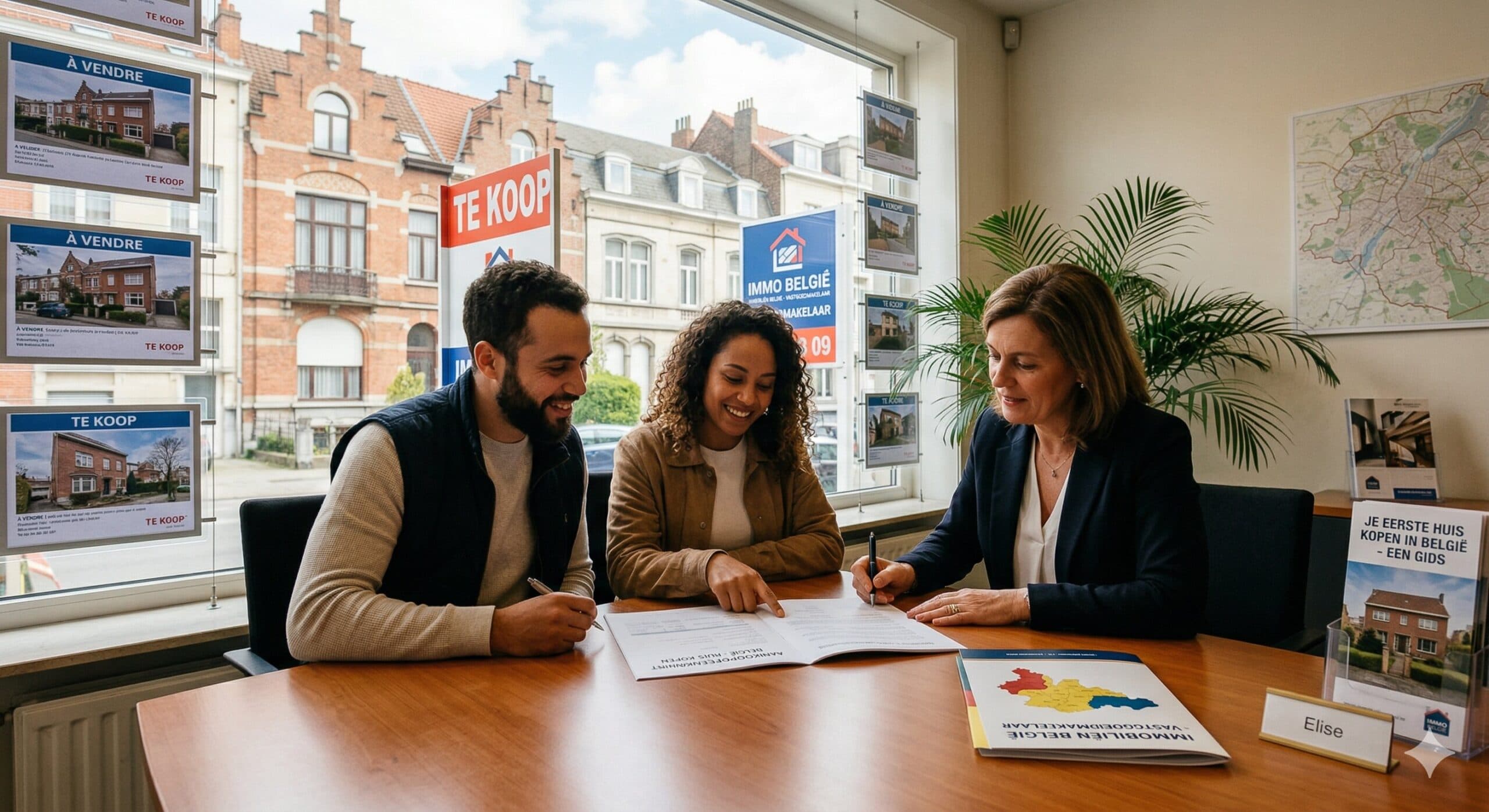
Buying a house in Belgium is, for most people, the largest purchase they will ever make. That is why it is important to look beyond the asking price and consider your own budget, the additional costs, the legal steps involved and the condition of the property. Going into the process well prepared will save you stress and costly surprises. In this guide, we walk you through every step of buying a home in Belgium, what to watch out for and which costs you simply cannot afford to overlook.
1. Establish your budget first
Before you start looking at properties, you need to know what you can realistically afford. Look beyond the purchase price and consider the full picture:
- how much you can borrow;
- how much of your own money you have available;
- which additional costs you will need to cover;
- what monthly repayment you can comfortably manage.
Banks generally look at your income, existing loans and your own contribution. In practice, it is wise not to stretch your borrowing capacity to its absolute limit, so that you keep a financial buffer for unexpected expenses.
2. Factor in the additional costs
Buying a house in Belgium involves considerably more than just the purchase price. Think of:
- registration duties or VAT;
- notary fees;
- mortgage and file-handling costs;
- valuation costs;
- building insurance and possibly outstanding-balance insurance;
- moving costs and any minor works after purchase.
For an existing property, these costs can add up significantly. For new-build properties, VAT plays a major role instead. It is therefore smart to draw up a realistic simulation of your total acquisition budget before you start.
✦ 100% free & No obligation
Sell your property with the best agent
Compare the top 3 agents in your region for free and save on commission.
Compare agents →3. Search with a clear profile
Not every house suits every buyer. Ask yourself:
- in which municipality or neighbourhood I want to live;
- how many bedrooms I need;
- whether I want a garden, garage or terrace;
- whether renovation is a realistic option for me;
- how important energy efficiency and the EPC rating are to me.
A well-defined search profile saves a great deal of time. The clearer your requirements, the easier it is to filter out properties that genuinely suit you.
4. Visit properties with a critical eye
During a viewing, pay attention to more than just the overall appearance. Also check:
- the condition of the roof, windows and walls;
- damp patches or cracks;
- the electrical installation;
- heating and insulation;
- the EPC label;
- the layout and practical usability;
- potential renovation costs.
Where possible, ask about recent works carried out or repairs that are planned. A property that looks cheap at first can turn out to be expensive if a great deal of hidden work is needed.
5. Make an offer with your head as well as your heart
Once you have found a house, you need to decide how much you want to offer. Consider:
- the asking price;
- comparable properties in the area;
- the condition of the property;
- how quickly you want to complete the purchase;
- your budget ceiling.
Do not rely on emotion alone - bring your calculator too. A well-considered offer gives you more room to negotiate and prevents you from overpaying.
6. From offer to preliminary sales agreement
When buyer and seller have reached agreement, a preliminary sales agreement (compromis de vente) is usually drawn up. From that point on, you are in principle legally bound. Before you sign, make sure you are certain about:
- your financing;
- any suspensive conditions;
- the agreed price;
- the date of the notarial deed;
- any additional arrangements regarding, for example, furniture, works or the handover of keys.
Read the agreement carefully, and if you have any doubts, seek advice from a notary.
7. The notarial deed
After the preliminary agreement comes the notarial deed. This is the moment the sale is officially completed. Between the preliminary agreement and the deed, a great deal of administrative work takes place - checks, searches and the finalisation of the mortgage. In most cases, this process takes a few months.
On the day the deed is signed, you pay the remaining balance and officially become the owner of the property.
8. Avoiding common mistakes
When buying a house in Belgium, the same mistakes tend to come up again and again:
- not budgeting enough for additional costs;
- focusing only on the purchase price;
- failing to account for renovation work;
- making an offer too hastily;
- not reading the preliminary agreement carefully;
- leaving no financial buffer after the purchase.
Anyone who avoids these pitfalls will buy in a calmer and more sensible way.
9. In summary
Buying a house in Belgium requires more than simply finding a property you like. You need to know your budget, estimate the total costs, assess the condition of the property with a critical eye and understand how the legal process unfolds. Those who are well prepared stand a much better chance of making a purchase that is not only affordable today, but remains comfortable in the long term.
Good luck!
Frequently asked questions
What additional costs should I expect when buying a house in Belgium?
On top of the purchase price, you need to budget for registration duties or VAT, notary fees, mortgage and file-handling costs, valuation costs, building insurance and possibly outstanding-balance insurance, plus moving costs and any works after purchase. For existing properties these costs can add up significantly, while for new-build properties VAT plays a major role instead.
How long does it take between signing the preliminary agreement and receiving the notarial deed?
In most cases, the process takes a few months. During this period, administrative work such as checks, searches and the finalisation of the mortgage takes place.
Am I legally bound once I make an offer on a property?
You become legally bound when the preliminary sales agreement (compromis de vente) is signed, not at the moment of making an offer. Before signing, make sure you are certain about your financing, the agreed price, any suspensive conditions and the planned date of the notarial deed.
What should I check during a property viewing?
Beyond the general appearance, check the condition of the roof, windows and walls, any damp patches or cracks, the electrical installation, heating and insulation, the EPC label and the practical layout. Asking about recent works or planned repairs can also help you estimate any hidden renovation costs.
What are the most common mistakes people make when buying a house in Belgium?
Common mistakes include not budgeting enough for additional costs, focusing only on the purchase price, failing to account for renovation work, making an offer too hastily and leaving no financial buffer after the purchase. Not reading the preliminary agreement carefully is also a frequently made error.
"Tech entrepreneur and strategist focused on digital transformation in the real estate sector."