
Buying your first home as a young person in Belgium: benefits and financial tips

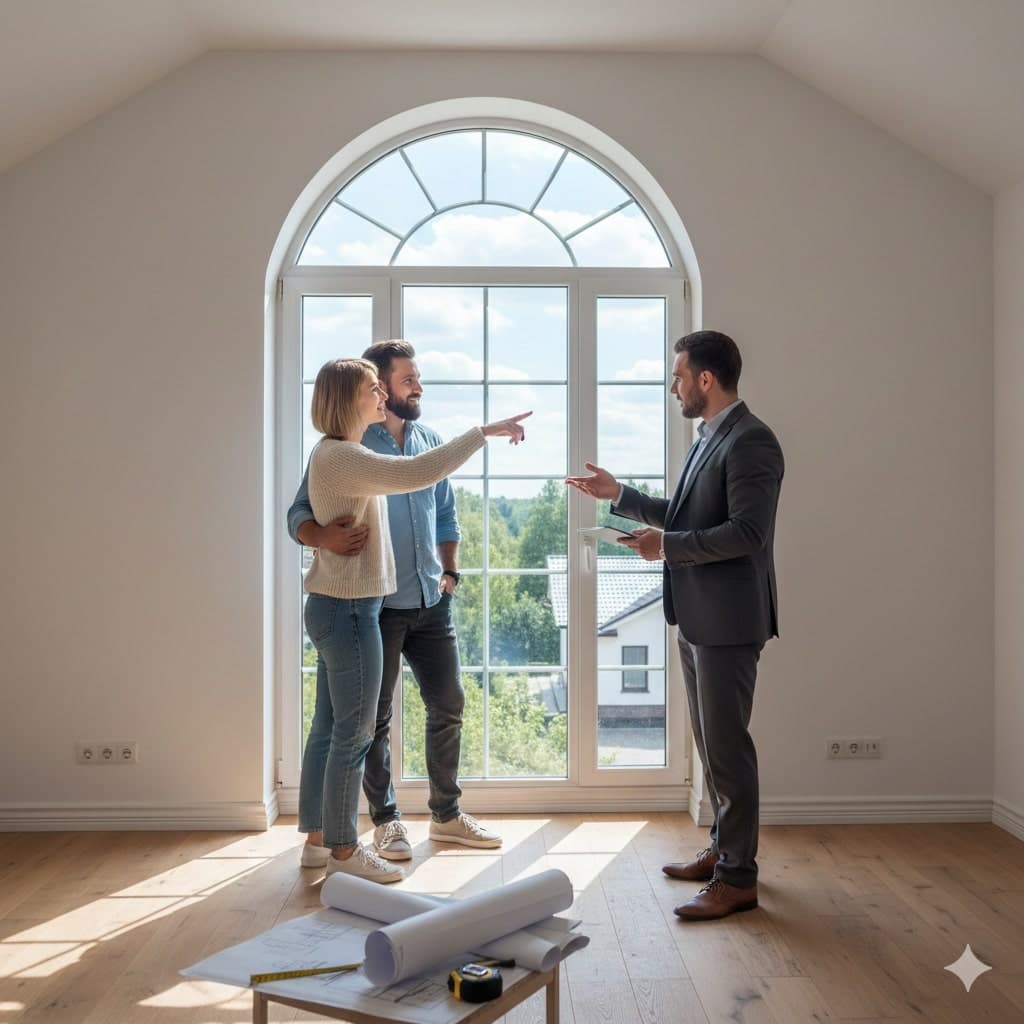
Buying your first home as a young person: from dream to reality in 2025
For many young people, buying a first home feels like an unachievable dream. Rising property prices, high rental costs and strict lending conditions make it tough. Yet in 2025, there are more options than you might think. Reduced registration duties for your only own home, public housing loans, and a clear understanding of your financial capacity are making home ownership more realistic for young people. In this article you will find the complete step-by-step guide to buying your first home as a young person, plus practical tips to cut costs.
The situation for young people in 2025: challenges and opportunities
The hard reality:
Recent ING research shows that 71% of young people between 25 and 34 believe that housing costs are a barrier to starting a family. Two in three young people think that buying an ideal home as a first-time buyer is out of reach.
The figures back this up: the average selling price of a home in Belgium is €376,462. For an apartment - more popular with first-time buyers - it sits around €286,152. These are substantial sums that require years of saving, or smarter strategies.
The good news is set out below.
✦ 100% free & No obligation
Sell your property with the best agent
Compare the top 3 agents in your region for free and save on commission.
Compare agents →- Young people between 26 and 30 now make up a fifth of all property buyers in Belgium - mainly in the apartment market. The trend shows that young people are buying earlier than before, largely because of high rents.
- Registration duties have been reduced for buyers of their only own home - a saving of thousands of euros.
- Certain public housing loans offer financing of up to 100-120% of the purchase price - ideal if you have little savings.
- Progressive mortgages - with higher repayments later in the term - keep monthly costs manageable for younger incomes.
Step 1: Calculate your financial capacity
Before you start looking at properties, you need to know how much you can borrow. This defines your search area and keeps your expectations realistic.
What determines your maximum loan?
Banks apply two key ratios:
- Loan-To-Value (LTV): this is the percentage of the property value you are allowed to borrow. For first-time buyers occupying the property themselves: up to 90% as standard, but up to 35% of the total lending portfolio may exceed 90%, and up to 5% may even exceed 100% (if your profile is strong).
- Debt Service To Income (DSTI): this is your monthly repayment divided by your net income. Banks want this to stay below 50% for standard incomes.
A practical example:
- Property price: €300,000
- Your own contribution: €30,000 (10%)
- Amount borrowed: €270,000 (90% LTV)
- Registration duties: €6,000 (2% for an only own home in Flanders)
- Notary fees: €1,500
- Total costs: €37,500
Total monthly outgoing (loan repayment + additional costs): approx. €1,500-€1,700/month (depending on term and interest rate)
Banks need to be confident you can comfortably manage this. With a net income of €3,000-€3,500/month you are generally in a good position.
Use a tool: The loan simulator lets you quickly calculate your maximum borrowing capacity.
Step 2: Build your savings strategically
If you do not yet have enough for a personal contribution and purchase costs, here are some smart saving strategies.
Tax-efficient saving (not the same as ordinary saving):
In Belgium, you can save up to €1,050 per year with a 30% tax reduction (pension saving). This costs you €735 in real terms, but you save €1,050, giving you a net benefit of €315.
Long-term saving of up to €2,450/year also qualifies for a 30% tax reduction.
Over 5 years this can yield between €5,250 and €12,250 - not bad at all!
Earning extra as a student or young person:
Students can earn up to around €13,000 gross per year without paying income tax, as long as they remain below certain income thresholds.
This means: work during the summer, at weekends or part-time, and build your savings without a heavy tax burden.
Family support - using it wisely:
72% of Belgian families help their children financially when buying a home. This can be done through:
- A direct gift of money (no tax on this)
- A loan from parents (formalise this with a notary if the bank requires it)
- A parental guarantee (lowers the interest rate for you)
Make sure everything is done legally - ask a notary for advice.
Step 3: Make the most of tax benefits in 2025
Benefit 1: Reduced registration duties for your only own home (rates vary by region)
In Flanders, registration duties for your only own home were reduced to 2% in 2025 (previously 3%). In Wallonia, the rate for your own and only home fell from 12.5% to 3% on 1 January 2025 (other purchases stay at 12.5%). Brussels keeps the 12.5% rate, but the first €200,000 is exempt for an own and only home priced at most €600,000. These arrangements can save thousands of euros - check with a notary to find out exactly what applies in your region.
Conditions:
- You are a natural person (not a company)
- This is your only own home (it does not have to be your first purchase)
- You occupy it yourself (not as an investment)
- On the date of the deed you do not wholly own another home (in Flanders also no building land); in Flanders you can still qualify if you commit in the deed to sell that home within 2 years
Benefit 2: Public housing loans (region-specific)
If your income is modest (below certain ceilings), you may be able to apply for a public housing loan covering up to 100-120% of the purchase price, depending on the region. In Flanders this is the Vlaamse woonlening; in Wallonia the Fonds du Logement wallon and the SWCS offer similar products; in Brussels the Fonds du Logement de la Région de Bruxelles-Capitale plays this role. These loans can cover all costs, including registration duties.
Benefits:
- Financing up to 120%
- Low interest rate (often below market)
- No or minimal personal contribution required
Conditions:
- You live in the relevant Belgian region
- You are a first-time buyer
- Your income is below certain maximum thresholds (higher for families)
- The property price is below a certain ceiling (varies by lending body)
Benefit 3: Energy renovation incentives
Buying an energy-efficient property (EPC A/B) or planning to renovate? You may be eligible for tax exemptions and low-interest loans. Another way to save.
Step 4: Choose the right type of property and location
Young people more often buy apartments than houses - and financially speaking, that makes a lot of sense.
Why apartments are popular with first-time buyers:
- Price: €286,152 on average versus €376,462 for a house - a saving of over €90,000.
- Maintenance: the building manager handles major works - predictable costs. Houses throw up unexpected repairs.
- Location: apartments are more often found in city centres with good public transport - ideal for young professionals.
- Rental market: easier to rent out if you want to sell later.
Location choices that save money:
- Surrounding municipalities rather than city centres: 15-25% cheaper
- Areas near train stations or well-served by public transport: stable values and a strong rental market
- Up-and-coming neighbourhoods with future potential: more growth for young buyers
Step 5: Compare mortgages and negotiate hard
This is where you can genuinely save thousands of euros.
Compare at least three banks:
Ask KBC, ING, Belfius and at least one online bank (Keytrade, Argenta) for written simulations. The difference can be 0.3-0.5% in interest rate - on a loan of €270,000 over 25 years that adds up to well over €10,000.
Negotiating points for young buyers:
- Strong personal contribution: 15% instead of 10% = better rate
- Stable income: permanent contract or stable position = interest rate discount
- Energy-efficient property: ING offers a 0.2% discount for an EPC of ≤150 kWh/m²
- Bundle products: current account + savings account + insurance at the same bank = preferential treatment
- Young customer rate: many banks offer a preferential rate to younger clients
Use a broker: Independent mortgage brokers such as Hypotheekwinkel, Credishop or Immotheker compare all banks and receive a commission from the bank - not from you. Their service is free for you.
Step 6: Prepare your bank application - no mistakes
Many young people get turned down because of a careless application. Here are the critical documents:
Identification and income:
- Copy of identity card
- Employer's declaration (not more than 3 months old)
- Pay slips (last 3 months)
- Annual tax certificates
Financial situation:
- Statements from all bank accounts (up to date)
- Overview of outstanding debts and loans
- Deed of gift (if parents are contributing)
Property details:
- Sale agreement/preliminary contract
- EPC certificate
- Valuation report (not more than 6 months old)
Personal situation:
- Marriage certificate (if applicable)
- Cohabitation agreement (if relevant)
Check everything twice. No crossings-out, no errors. Sloppiness means delays or rejection.
Step 7: Surround yourself with professional advice
This is not a sign of weakness - it is a smart move.
Estate agent: By comparing estate agents you find local experts who know what first-time buyers pay in each neighbourhood. Use their knowledge.
Notary: A good conversation of 1-2 hours costs €100-€200, but saves you a great deal of trouble and uncertainty.
Mortgage broker: Free advice, with potential savings of tens of thousands of euros over the life of the loan.
Mortgage adviser at your bank: Many banks offer free advice - take advantage of it.
Practical step-by-step guide - short version
- Weeks 1-2: Calculate your maximum with the loan simulator. Make sure your income is stable.
- Weeks 3-4: Request a free valuation in your search area. Get to know properties and prices.
- Weeks 5-6: Gather all banking documents. Check everything.
- Week 7: Request quotes from 3 banks. Compare the APR and interest rates.
- Week 8: Negotiate. Use the best offer as leverage with competitors.
- Week 9: Sign with the bank of your choice. You always have 7 working days to withdraw without cost.
- Week 10+: Viewings and making offers. Work with an estate agent.
Conclusion: buying is more realistic for young people than ever
In 2025, buying a first home as a young person is no longer an unachievable dream - it requires preparation, discipline and a clear head. The combined benefits of reduced registration duties, public housing loans, tax-efficient savings schemes and a good understanding of your financial capacity make it genuinely realistic.
Young people who buy now - especially apartments - are building wealth. In 20-25 years you will no longer be paying rent, and that brings real peace of mind. And who knows, you might move on to a larger home after that.
Start today: calculate your capacity with the loan simulator, compare estate agents in your area, and request a free valuation. Your first home is closer than you think.
Young people, your moment is now. Make it happen.
Frequently asked questions
What are the registration duty rates for first-time buyers in Belgium?
The reduced rates apply to your only own home, not only to first-time buyers. In Flanders the rate is 2% since 1 January 2025. In Wallonia it is 3% since 1 January 2025 (12.5% for other purchases). In Brussels the rate is 12.5%, but the first 200,000 euros are exempt for an only own home priced at up to 600,000 euros. Check the exact conditions with a notary.
How much can I borrow as a first-time buyer in Belgium?
Banks generally allow first-time buyers to borrow up to 90% of the property value, though up to 35% of a bank's total lending portfolio can exceed 90% LTV. Your monthly repayment should also stay below 50% of your net income.
Can I get a home loan with little or no savings?
Yes - public housing loans in Belgium can cover up to 100-120% of the purchase price, including registration duties. These loans are region-specific and require your income and the property price to fall below certain thresholds.
Is it better to buy an apartment or a house as a first-time buyer?
Apartments are popular with first-time buyers mainly because of price - the average cost is around €286,152 compared to €376,462 for a house. They also tend to have more predictable maintenance costs and are often better located near public transport.
How can I get a lower mortgage interest rate as a young buyer?
You can improve your rate by offering a larger personal contribution (15% instead of 10%), having a stable income or permanent contract, buying an energy-efficient property, or bundling products like a current account and insurance with the same bank. Using a free independent mortgage broker is also a good way to compare rates across multiple lenders.
"Tech entrepreneur and strategist focused on digital transformation in the real estate sector."