
Dolomite surfacing: advantages, disadvantages and applications

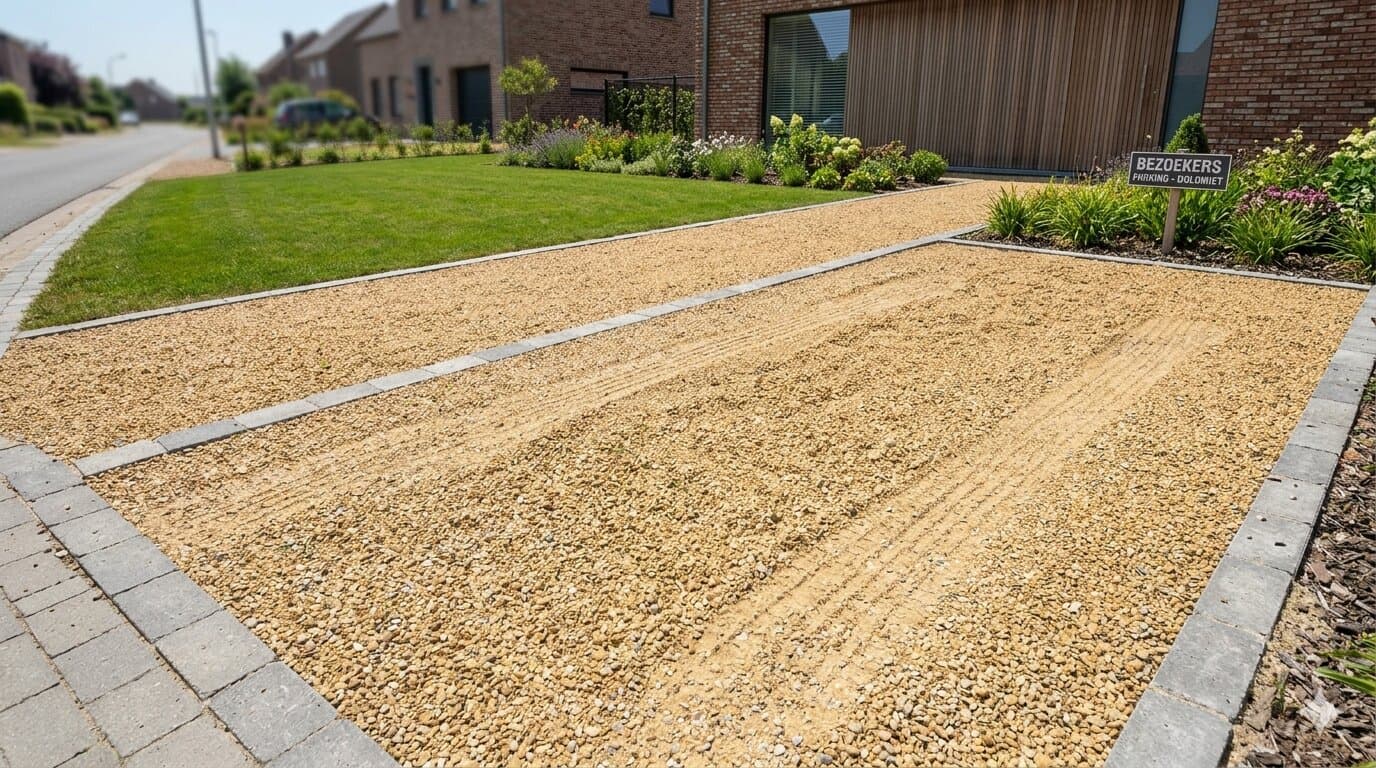
A dolomite surface is a popular choice for anyone looking for a natural, affordable and water-permeable finish for a driveway, garden path or terrace area. The material has a calm, rural appearance and is often chosen for its price and straightforward maintenance. That said, dolomite is not equally suited to every application. Anyone wanting to make the right choice should look carefully at the grain size, the sub-base and the intended use of the space.
What is dolomite surfacing?
Dolomite is a crushed limestone used as a semi-hard surface. It comes in various grain sizes, including fine and coarse variants. Depending on the installation method, it can be laid loose or stabilised to increase its load-bearing capacity. This makes it suitable for a wide range of applications such as garden paths, driveways and parking areas.
What can dolomite be used for?
Dolomite surfacing is commonly used for:
- driveways;
- garden paths;
- parking areas;
- pétanque courts;
- decorative paths in the garden;
- areas where a natural look is desired.
For light to moderate use, dolomite can be a practical solution, especially when the sub-base has been properly constructed.
Advantages of dolomite
Dolomite has several strong points.
✦ 100% free & No obligation
Sell your property with the best agent
Compare the top 3 agents in your region for free and save on commission.
Compare agents →- it is relatively inexpensive;
- it looks natural and well-kept;
- water drains through it well with the right grain size;
- it is easy to install;
- repairs are usually straightforward to carry out;
- it fits well in a rural or green setting.
For many homeowners, it offers an attractive combination of price, appearance and functionality.
Disadvantages of dolomite
There are also a few points to be aware of:
- it can develop ruts with intensive use;
- fine grains can become dirty more quickly;
- in wet weather or with heavy traffic, maintenance requirements can increase;
- without a proper sub-base, it may lack stability;
- discolouration or greying can occur.
For a heavily used driveway, it is therefore important to think carefully in advance about the right construction method.
How should a dolomite surface be constructed?
A good dolomite surface depends heavily on the sub-base. The typical construction involves:
- an excavated and levelled sub-grade;
- a foundation layer of crushed stone or hardcore;
- optionally a geotextile membrane to prevent mixing and suppress weeds;
- a top layer of dolomite in the correct grain size;
- optionally compaction or stabilisation for added firmness.
Without a solid base, the surface can sink more quickly or develop potholes.
Stabilised or loose dolomite?
Dolomite can be laid loose or stabilised with a binding agent. Loose dolomite gives a more natural look and is often easier to repair. Stabilised dolomite is firmer and better suited to heavier use, but requires careful installation. The choice depends on the intended use, the load and the desired appearance.
Is dolomite permeable to water?
Yes, dolomite can be water-permeable, particularly when the grain size and construction are suited to this purpose. That makes it an interesting option for drainage and the natural infiltration of rainwater. A good layer structure is, however, essential for proper water permeability.
Summary
A dolomite surface is an attractive and affordable solution for anyone looking for a natural semi-hard surface with a understated appearance. The material works well for garden paths, driveways and other light-duty applications, but does require a solid sub-base and regular maintenance. Choosing the right grain size and construction method will get the most out of this type of surfacing.
Frequently asked questions
What is dolomite surfacing suitable for?
Dolomite is commonly used for driveways, garden paths, parking areas, petanque courts and decorative garden paths. It works best for light to moderate use when the sub-base has been properly constructed.
Does dolomite drain water well?
Yes, dolomite can be water-permeable when the grain size and construction are suited to this purpose. A proper layer structure is needed to ensure good water infiltration.
What are the main drawbacks of dolomite surfacing?
Dolomite can develop ruts with intensive use, fine grains may get dirty more quickly, and discolouration or greying can occur over time. Without a proper sub-base, the surface may also lack stability.
Should I choose loose or stabilised dolomite?
Loose dolomite gives a more natural look and is easier to repair, while stabilised dolomite is firmer and better suited to heavier use. The right choice depends on the intended load, use and desired appearance.
How should a dolomite surface be constructed?
A solid sub-base is the foundation of a good dolomite surface, typically consisting of an excavated sub-grade, a layer of crushed stone or hardcore, and optionally a geotextile membrane. The dolomite top layer can then be compacted or stabilised for added firmness.
"Tech entrepreneur and strategist focused on digital transformation in the real estate sector."