
Going from an EPC G to an EPC C in Wallonia: what work should you plan for?

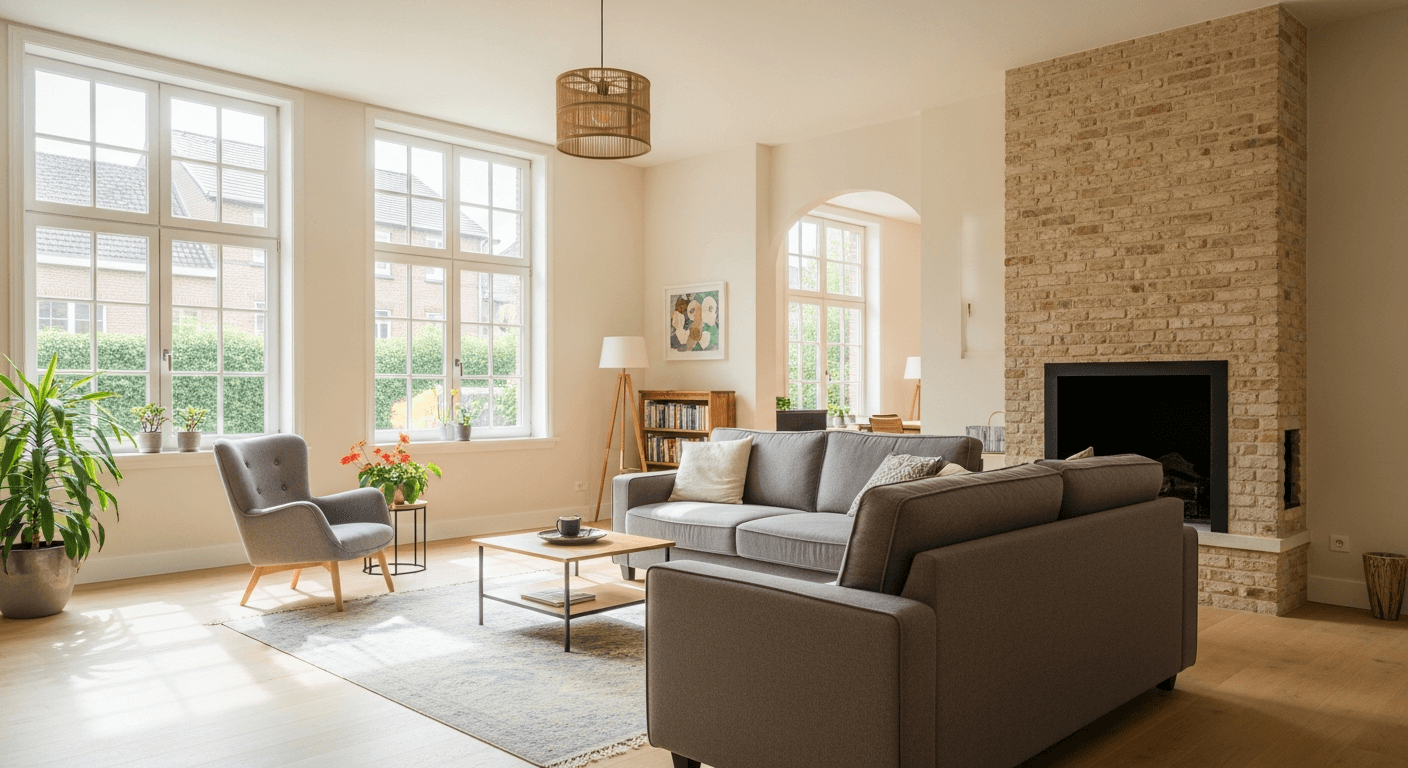
Going from an EPC G to an EPC C in Wallonia: what work should you plan for?
Improving your EPC rating from G to C in Wallonia is an achievable goal for most homes built before 1980, provided you follow a clear and logical approach to the works. In 2026, buyers are paying ever closer attention to energy labels, and properties rated F or G are selling more slowly, often below market value. Renovating before you sell can therefore make a tangible difference to your final result.
Understanding the gap between G and C
In Wallonia, the EPC certificate (Certificat de Performance Énergétique des Bâtiments) assigns a class from A++ to G based on primary energy consumption expressed in kWh/m² per year. A property rated G typically consumes more than 510 kWh/m²/year. To reach class C, consumption must fall to 255 kWh/m²/year or less (class C covers 170 to 255 kWh/m²/year).
That gap represents a reduction in consumption of around 65 to 70%. It is ambitious, but achievable by combining insulation, ventilation and heating system replacement. The good news: you do not need to do everything at once, and you need not break the bank if you plan carefully.
The works that really make a difference
Not all renovation works deliver the same energy gains. Here are the areas to prioritise when moving from G to C:
- Roof insulation: This is the first project to tackle. Up to 30% of heat loss in older homes escapes through the roof. Insulating a cold loft with cellulose wool or mineral wool is often the quickest and least expensive solution. Budget between €20 and €50/m² depending on the technique chosen.
- Wall insulation: Either external wall insulation (EWI) or internal insulation, depending on the building's configuration. EWI is more effective but more expensive (€80 to €150/m²). It eliminates thermal bridges and does not reduce the living area.
- Window and door frame replacement: Moving from single glazing to double or triple glazing significantly improves both the thermal and acoustic performance of the building. Choose frames with a Uw value below 1.1 W/m²K.
- Heating system replacement: An old oil-fired or natural gas boiler can be replaced with an air-to-water heat pump. In Wallonia, this alone can gain two to three EPC classes, especially when insulation is already in place.
- Controlled mechanical ventilation (CMV): Often overlooked, ventilation is nevertheless essential to achieving a good EPC rating. A dual-flow CMV system with heat recovery is recommended in well-insulated homes.
Walloon grants available in 2026
Walloon support is changing in 2026. The current Habitation grants managed by the SPW (Service Public de Wallonie - the Walloon Public Service) are closing: every application, including the final invoice, must be filed by 30 September 2026 at 23:59. Until then they cover the works listed below.
✦ 100% free & No obligation
Sell your property with the best agent
Compare the top 3 agents in your region for free and save on commission.
Compare agents →- Roof, wall and floor insulation
- Window and door frame replacement
- Installation of a heat pump or thermodynamic water heater
- Dual-flow ventilation
From 1 October 2026 Wallonia replaces these grants with loans: Rénopack, a 0% loan with part of the amount waived, for income categories C1 to C3, and Rénoprêt for C4, landlords and co-owner associations. According to the Walloon minister's press release of 16 July 2026, support only applies to works that lift the label from G or F to at least D, or from E to at least C, and an audit before the works is mandatory. Going from G to C therefore qualifies. Check logement.wallonie.be for the final rules and amounts.
It is strongly advisable to contact a local energy advice centre before starting any works. These advisers are free of charge and can produce a simulation of your potential EPC gain as well as a personalised financing plan.
In what order should the works be carried out?
The basic rule in energy renovation is: the building envelope first, equipment second. There is no point investing in a high-performance heat pump if the walls and roof are still losing significant amounts of heat. Here is a logical sequence:
- Roof insulation
- Wall and floor insulation
- Window and door frame replacement
- Installation of ventilation
- Heating system replacement
This sequencing also allows you to spread the budget over several years, while claiming grants as you go. A renovation carried out in two or three phases remains perfectly coherent as long as each step is done properly.
What impact on resale value?
Moving from an EPC G to an EPC C has a measurable impact on the sale price. In Wallonia, market studies available in 2026 show that a property rated C or better sells on average 8 to 15% more than an equivalent property rated F or G, all else being equal. In certain municipalities in the province of Liège or Brabant wallon, that gap can exceed €20,000 on an average-sized property.
Beyond the price, a good EPC reduces the time a property spends on the market. Buyers financing their purchase with a mortgage are increasingly factoring energy costs into their repayment capacity calculations. An energy-efficient home attracts more viewings and generates fewer downward negotiations.
If you are considering selling your property after renovation, it may be worth getting a free property valuation to measure the concrete impact of the works on your potential sale price.
The role of the estate agent in a post-renovation sale
A renovated property with a strong EPC certificate is marketed differently from a standard property. The sales file should highlight the works carried out, the grants obtained, and the new EPC certificate. An experienced estate agent in your area will know how to present these elements effectively to prospective buyers.
To find a BIV/IPI-accredited professional suited to your situation, you can compare estate agents in Wallonia free of charge through our platform. Up to three local agents will put forward a proposal tailored to your property.
If you are still unsure about the right time to sell, speaking with several agents will give you a clear picture of the current market in your municipality. Comparing recognised estate agents is a no-obligation step that can help you avoid selling too early or too late.
FAQ
What is the average cost of renovating from G to C in Wallonia?
The budget varies depending on the size and condition of the property, but you should generally allow between €30,000 and €70,000 for a single-family home. From 1 October 2026 the Walloon Rénopack and Rénoprêt loans can help finance this amount, with a partial reduction of the loan for income categories C1 to C3.
Is renovation compulsory before selling in Wallonia?
No, it is not a legal requirement in 2026. You can sell a property rated G, but you must inform buyers through the EPC certificate. Some owners prefer to sell as-is and accept a slight reduction in price. Others choose to renovate in order to maximise their return. It all depends on your financial situation and the local market.
Who can issue the new EPC certificate after the works?
In Wallonia, the EPC certificate must be drawn up by a certifier accredited by the Walloon Region. After the works, you must engage a new certifier, who visits the property and recalculates the class on the basis of the renovated elements. Wallonia publishes no official price for a certificate, so ask several certifiers for a quote.
Is it possible to go from G to C in a single phase of works?
Yes, it is possible if you carry out all the works at the same time - for example, as part of a full-scale renovation. This is often technically more effective and causes less disruption overall. Some companies offer comprehensive packages covering insulation, windows and doors, heating and ventilation, with a single site supervisor throughout.
Frequently asked questions
What works should I prioritise to go from EPC G to EPC C in Wallonia?
The most impactful works are roof insulation, wall insulation, window and door frame replacement, heating system replacement, and controlled mechanical ventilation. The recommended order is to tackle the building envelope first - roof, walls, and windows - before investing in a new heating system.
How much does it cost to renovate a property from EPC G to EPC C in Wallonia?
For a single-family home, you should generally budget between 30,000 and 70,000 euros. From 1 October 2026 the Walloon Rénopack and Rénoprêt loans can help finance this cost, with a partial reduction of the loan for income categories C1 to C3.
Does Wallonia offer financial support for energy renovation works in 2026?
Yes, but it is changing. Applications for the current Habitation grants managed by the SPW, including the final invoice, must be filed by 30 September 2026. From 1 October 2026 support takes the form of loans: Rénopack (0% with a partial reduction, income categories C1 to C3) and Rénoprêt (C4, landlords and co-owner associations), for works that lift the label from G or F to at least D, or from E to at least C, with a prior audit.
What is the impact of going from EPC G to EPC C on the resale value of a property in Wallonia?
Market studies in 2026 show that a property rated C or better sells on average 8 to 15% more than an equivalent property rated F or G. In some municipalities in Liege or Brabant wallon, that difference can exceed 20,000 euros on an average-sized property.
Do I need to renovate my property before selling it if it is rated EPC G in Wallonia?
No, there is no legal requirement to renovate before selling in 2026. You must inform buyers through the EPC certificate, but you can choose to sell as-is and accept a potential reduction in price rather than renovating first.
"Tech entrepreneur and strategist focused on digital transformation in the real estate sector."