
EPC renovation obligation in 2026: what a seller needs to know

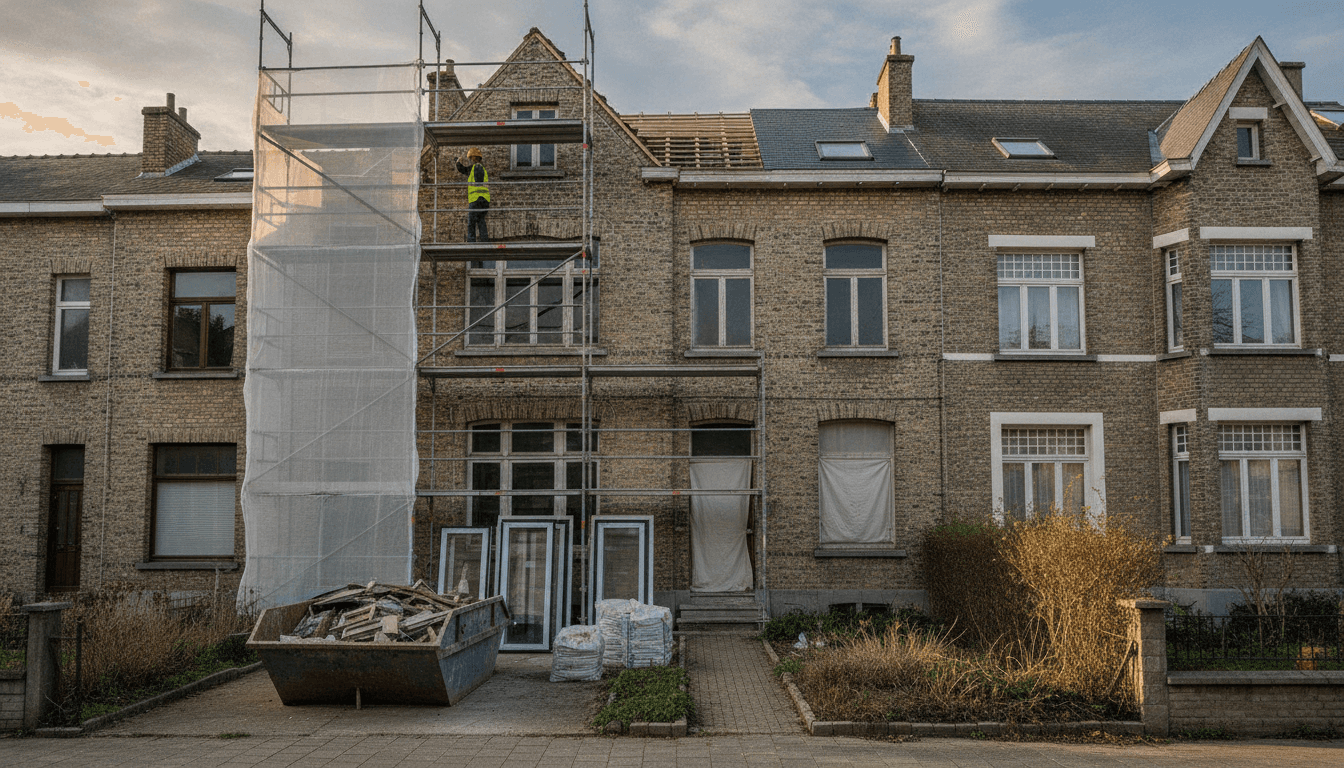
The EPC renovation obligation does not fall on you as the seller, but on the person who buys your home. And whatever falls on the buyer always ends up in the price. Here is what this rule actually covers in 2026, region by region, and how it shapes the negotiation over your property.
EPC certificate and renovation obligation: two separate things
Many sellers mix up the two, and that confusion sometimes costs real money during the negotiation.
The EPC certificate is an obligation that rests on you, before the very first viewing. You must have a valid certificate from the moment the property goes on the market, and the label as well as the specific consumption figure must appear in every listing, on the portals just as in the agency window. The certificate stays valid for ten years, unless renovation work justifies a new calculation. We cover that side of things in our article on the EPC obligations when selling a house in Belgium.
The renovation obligation is something else. It has nothing to do with putting the property up for sale, but with what happens after the deed is signed. Depending on the region and on the label of the property, the new owner may be required to reach a certain level of energy performance within a period set by law. You do not carry that obligation. Any well informed buyer, however, works it out before making an offer.
Keep the logic in mind: the certificate is your administrative duty, the renovation obligation is a future cost for the buyer. The second one affects your price far more than the first.
✦ 100% free & No obligation
Sell your property with the best agent
Compare the top 3 agents in your region for free and save on commission.
Compare agents →Flanders: a renovation obligation that genuinely exists
Flanders is the only Belgian region where the renovation obligation tied to a sale is fully in force, and it has been since 1 January 2023.
The principle is simple. When a home carrying an E or F label changes owner, the new buyer must bring it up to at least a D label within six years of the notarial deed. The obligation follows the property, not the person, and it also applies to gifts and other transfers of full ownership. A new certificate then has to show that the level has been reached. Where it is not, fines apply and a new deadline is set.
A gradual tightening of that threshold was planned for purchases from 2028 onwards, but the Flemish coalition agreement 2024-2029 announced that it will be scrapped, so label D remains the level to reach. Label A by 2050 stays a long-term goal, not a deadline for your buyer.
For a Flemish seller, that has a direct and measurable consequence. If your property carries an E or an F, your buyer is not only buying a house: they are buying a building site with a legal deadline attached. That deadline almost always turns into a request for a discount, and it narrows the pool of candidates able to finance both the purchase and the work.
Wallonia and Brussels: where things stand in September 2026
On the French speaking side the picture is more nuanced, and that is where the loosest information circulates.
In Wallonia, the EPC certificate remains compulsory when the property goes on the market and its validity runs for ten years. As things stand today, however, there is no binding renovation obligation imposed on the buyer of an existing home comparable to the Flemish mechanism. The long term regional strategy aims for an average residential stock close to label A by 2050, but that goal does not currently translate into a personal five year deadline applying to your buyer.
In Brussels, the same certification rules apply to a sale. There is no renovation obligation tied to a sale, but the Region has set a target for every home: by 1 January 2033 at the latest, every private home must reach PEB 275 (at most 275 kWh per m² per year, currently class E or better), whoever owns it.
The practical conclusion fits in one sentence: check the state of the regional rules at the exact moment you put your property on the market, and be wary of listings or buyers claiming an obligation already exists where it has not been voted. An estate agent active in your municipality knows where the file really stands and can tell the difference between a rule in force and an announced plan.
What the renovation obligation changes for you as a seller
Even in a region where no obligation is in force, energy performance has settled at the centre of the negotiation. That is the point many owners underestimate.
A buyer in 2026 no longer looks only at floor area and location. They look at the annual energy bill, at the amount of work to budget for, and at whether their bank will agree to finance the whole thing. Lenders are in fact building energy performance into their analysis more and more, and some loan products reserve better terms for efficient properties or for files that include a renovation.
The result: a home with an F label attracts fewer candidates, sits on the market longer, and sells for less. The discount does not always match the real cost of the work either. It matches the buyer's perception of the risk, and buyers tend to overestimate the bill when they have no quote in hand.
That is precisely where you keep control. A seller who turns up with a recent certificate, two concrete quotes and a clear idea of the available grants turns an anxious unknown into a figure. The discussion stops being about a fear and becomes about a number. You can request a free valuation of your property to see where you stand before starting that conversation.
Renovate before selling, or sell as is?
There is no single answer, but there is a method for deciding.
Renovating before selling makes sense when the investment is limited and the label gain is clear. Roof insulation remains the most profitable lever in the vast majority of older Belgian houses: the cost is contained, the work is short, and the effect on the EPC calculation is significant. Replacing single glazed window frames also stands up. In those cases you often get back more than you put in, because you remove the buyer's negotiating argument at the same time.
Selling as is stands up when the renovation calls for a heavy budget, when it needs months of work, or when your personal situation imposes a tight timetable. A full renovation carried out purely in order to sell rarely pays for itself in full, all the more so because the buyer will often want to redo things to their own taste.
Between the two lies a third route, too often forgotten: renovate nothing, but document everything. Have quotes drawn up by local contractors, gather the information on the regional grants the buyer will be able to claim, and present the lot at the first viewing. You do not pay for the work, and yet you take away the buyer's widest negotiating margin.
The choice depends on your property, your neighbourhood and the profile of the buyers active where you live. An agent who sells every month in your municipality sees these trade offs continuously. Compare several estate agents and weigh their opinions against each other before starting any work.
Preparing your sale in practice
A few simple steps are enough to get your file in order before the first listing.
Start by checking the date of your EPC certificate. If it is approaching ten years, or if you have carried out work since it was drawn up, a new certificate may show a better label. Many owners have insulated a roof or replaced a boiler without ever having the document updated, and so they sell with a label that no longer matches the reality of their house.
Then gather your evidence: insulation invoices, installation certificates, boiler servicing records, installation reports. An assessor who has supporting documents assigns real values where, without them, they apply penalising default values. That point alone sometimes shifts a label by a full letter.
Finally, anticipate the questions the buyer will ask: what the annual energy bill comes to, which works are the priority, what grants exist in the region, and what deadline applies if a renovation obligation is in force. Prepared answers inspire confidence and shorten the negotiation.
Frequently asked questions
Am I required to renovate my home before selling it?
No. No Belgian region requires the seller to renovate before the sale. Your obligations are limited to holding a valid EPC certificate and to stating the label as well as the specific consumption figure in every listing. In Flanders, the renovation obligation targets the buyer of a property labelled E or F, who must reach label D within six years of the notarial deed.
How long does my EPC certificate stay valid?
Ten years from the date it was drawn up, in all three regions of the country. If you have carried out insulation work or replaced your heating system since then, a new certificate may show a better label. Have it drawn up before the property goes on the market rather than after, because it is the label published in the listing that attracts or puts off candidates.
Does the renovation obligation apply in Wallonia?
In September 2026, Wallonia does not impose on the buyer of an existing home a binding renovation obligation comparable to the Flemish mechanism. The EPC certificate remains compulsory for a sale. The regional strategy aims at an efficient residential stock by 2050, but without a personal deadline imposed on your buyer. Check the state of the rules at the moment you put your property on the market.
Does a poor EPC label really lower my sale price?
Yes, in practice. An F or G label reduces the number of candidates, lengthens the selling time and almost systematically triggers a request for a discount. That discount reflects the buyer's perception of the risk more than the real cost of the work. Presenting costed quotes and the list of available regional grants strongly limits the gap.
Conclusion
The EPC renovation obligation is a buyer's obligation, not a seller's. In Flanders it is in force and very real: an E or F label requires the new owner to reach label D within six years of the deed. In Wallonia and Brussels, no equivalent obligation applies today to the buyer of an existing home, even if the subject comes back regularly in public debate.
In all three regions, though, the effect on your sale is comparable. The label drives the number of candidates, the speed of the sale and the final price. An up to date certificate, quotes in hand and an agent who knows the buyers in your municipality are often worth more than an improvised renovation. Compare up to three accredited estate agents near you, free and with no commitment, and pick the one who will best defend the value of your property.
Frequently asked questions
Does the renovation obligation apply to me as the seller?
No, the renovation obligation falls on the buyer, not the seller. It only comes into effect after the deed is signed and requires the new owner to meet a certain energy performance level within a set period.
What is the renovation obligation in Flanders for homes with an E or F label?
In Flanders, when a home with an E or F label changes owner, the new buyer must bring it up to at least a D label within six years of the notarial deed. This obligation has been in force since 1 January 2023 and also applies to gifts and other transfers of full ownership.
Is there a renovation obligation for buyers in Wallonia or Brussels?
As of September 2026, Wallonia has no binding renovation obligation imposed on buyers of existing homes comparable to the Flemish system. In Brussels, there is no obligation tied to the purchase, but every private home must reach PEB 275 (currently class E or better) by 1 January 2033, whoever owns it.
Should I renovate my home before selling or sell it as it is?
It depends on your situation. Renovating makes sense when the investment is limited and the label gain is clear - roof insulation and replacing single-glazed windows are often worth it. Selling as is can be the better option when renovation requires a heavy budget, months of work, or when your personal timeline is tight.
Can I improve my EPC label without doing any renovation work?
Not by improving the label itself, but you can ensure your current certificate reflects the actual state of your home. If you have carried out work like roof insulation or a boiler replacement since the certificate was drawn up, having it recalculated may show a better label - and providing invoices and installation documents to the assessor can prevent penalising default values being applied.
Redactie ImmoMakelaarVergelijker
"We write about selling, valuing and costs in Belgium. Articles are drafted with the help of AI from official sources and checked by our team."