
Can you sell a house with an EPC F or G rating without renovating?

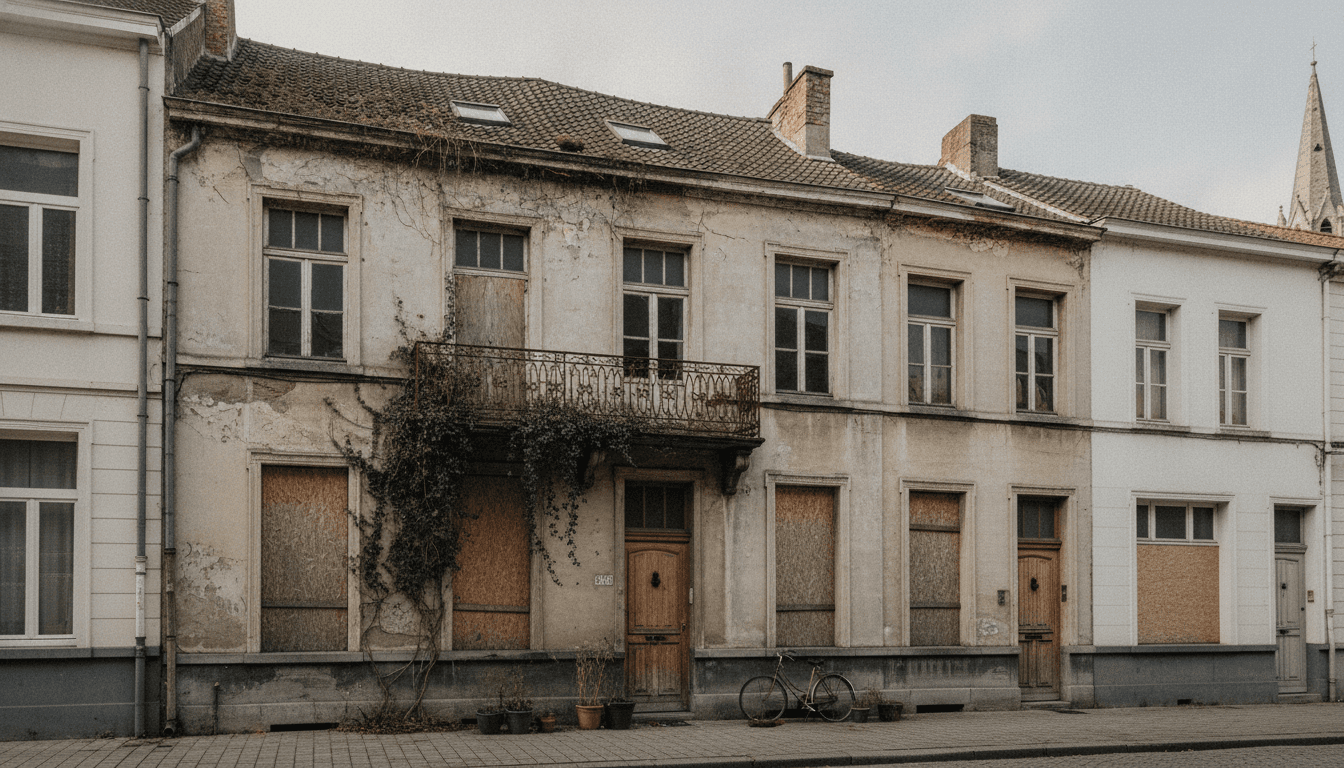
A home with an EPC F or G rating can go on the market without a single day of building work. No Belgian rule forbids selling an energy-hungry property, not in Wallonia, not in Brussels, not in Flanders. What the law does require is transparency: a valid certificate, the label shown from the first advert onwards, and a properly informed buyer. So the real question is not whether you are allowed to sell, but at what price.
Selling an EPC F or G property is legal in all three regions
The energy performance certificate is an information document. It measures the theoretical energy performance of the home and translates it into a letter. It is not a condition of sale. A notary will pass the deed on a G-rated property just as readily as on a B-rated one, provided the certificate is present and valid.
One useful detail: the scale is not identical everywhere. In Wallonia and Brussels, where the certificate is known as the PEB, residential labels run all the way down to G. In Flanders, the residential certificate scale stops at F, and the local term is EPC rather than PEB. If you are selling a Flemish house, your worst case is therefore an F.
A large share of the Belgian housing stock predates the first insulation standards. Houses built between 1950 and 1970, uninsulated and heated with oil, regularly land in F or G. You are not an isolated case, and buyers in this segment know it.
What you must provide, even without doing any work
Three obligations apply everywhere, and they apply before the very first viewing.
✦ 100% free & No obligation
Sell your property with the best agent
Compare the top 3 agents in your region for free and save on commission.
Compare agents →First, the certificate must exist and be valid at the moment the property goes on the market. It stays valid for ten years from the date it was drawn up. An expired certificate has to be redone by an accredited assessor, even if nothing in the home has changed.
Then, the label and the consumption figure must appear in all your advertising, online and on paper. An advert with no mention of the label exposes the seller to a regional fine. Many owners discover this along the way, often after posting the property themselves on a classifieds site.
Finally, the original certificate is handed to the buyer and annexed to the deed. The notary checks this every time. You will find the full list of documents to gather in our article on the EPC obligations when selling a house.
Nothing on this list requires you to insulate, to replace a boiler, or to reach a minimum label.
The renovation obligation falls on the buyer, not the seller
This is the point that causes the most confusion, and it is also the one that reassures most sellers.
Where a renovation obligation exists, it is triggered after the deed is signed and it rests with the new owner. In Flanders, the buyer of a home rated E or F must reach label D within six years of the deed. That requirement never travels back to the seller: you do not have to carry out the work in their place, nor finance it, nor guarantee a result.
On the Walloon and Brussels side, sale-linked obligations have been announced and then reworked several times. As of September 2026, the timetable is still moving. Before committing to works on the strength of a deadline alone, check the exact state of play with SPW Énergie or Bruxelles Environnement. A good local agent will track these developments for you as well.
The practical consequence is simple. The obligation does not block your sale, but it weighs on the negotiation, because the buyer prices the future cost of the work into their offer.
The price is where an EPC F or G is paid for
A poor label does not close the door, it moves the dial. Two effects stack up.
The first is the discount. Candidates work out what it will cost to insulate the roof, replace the window frames or change the heating system, then subtract that amount from their offer. They often subtract a little more than the real cost, to be safe.
The second concerns financing. Some banks apply different conditions depending on energy performance and ask for a renovation plan. That reduces the number of buyers able to follow at the asking price.
The result shows up in time on the market more than in the advertised price. A poorly rated property that is also poorly positioned stays online, takes successive reductions and ends up below its value. A poorly rated property that is priced correctly from day one sells within normal timeframes.
To place your own property, start with a free valuation, then test it against the view of professionals active in your municipality.
Renovate before selling, or sell as it stands?
There is no single answer. The calculation rests on three things: the cost of the work, the expected gain in price, and the time you can give it.
Selling as it stands makes sense when there is no budget for works, when you need to move quickly, or when the property appeals to buyers who will renovate to their own taste anyway. In that case, a partial renovation is often money lost, since the buyer tears out what you have just paid for.
Renovating makes sense when one targeted, inexpensive intervention shifts the label. Roof insulation remains the best cost-to-effect move in most older houses. We go into these trade-offs in our article on the concrete options for an EPC F property.
Before starting any work, have both scenarios costed by agents who actually sell this kind of property in your area. Comparing several estate agents gives you three readings of the same property rather than one.
Presenting a weak EPC without scaring buyers off
Transparency sells better than silence. A seller who states the label, explains where the consumption comes from and produces an insulation quote keeps control of the conversation. A seller who lets the buyer discover the G at the offer stage is on the receiving end of the negotiation.
A few things help in practice: a recent quote for the priority works, the list of regional grants still available, and an argument covering what the certificate does not measure, such as build quality, floor area or location.
The choice of agent matters as much as those documents. A professional used to renovation properties in your region knows who to show them to and at what price. ImmoMakelaarVergelijker.be puts you in touch with a maximum of three local agents, free of charge and with no obligation. You can compare these agents and keep the one whose approach suits you.
Frequently asked questions
Can you legally sell a house with an EPC F or G rating in Belgium?
Yes, selling a home with an EPC F or G rating is legal in all three Belgian regions. No rule in Flanders, Wallonia, or Brussels forbids putting an energy-inefficient property on the market, as long as you meet the transparency requirements.
What documents or information must a seller provide when selling an EPC F or G home?
You need a valid EPC certificate (no older than ten years), the label and consumption figure must appear in all advertising from the start, and the original certificate must be handed to the buyer and annexed to the deed. Nothing on this list requires you to carry out any renovation work.
Who is responsible for the renovation obligation - the seller or the buyer?
The renovation obligation falls on the buyer, not the seller. In Flanders, for example, the buyer of a home rated E or F must reach label D within six years of the deed, but this requirement never applies to the seller.
How does a poor EPC rating affect the sale price of a home?
Buyers typically subtract the estimated cost of future renovation work from their offer, often adding a safety margin on top. Some banks also apply stricter financing conditions based on energy performance, which reduces the number of buyers who can meet the asking price.
Is it better to renovate before selling or sell the property as it stands?
There is no single answer - it depends on the cost of the work, the expected price gain, and how quickly you need to sell. Selling as it stands can make sense if budget or time is limited, while renovating beforehand makes sense if one targeted intervention, such as roof insulation, can shift the label at a reasonable cost.
Redactie ImmoMakelaarVergelijker
"We write about selling, valuing and costs in Belgium. Articles are drafted with the help of AI from official sources and checked by our team."