
Home equity at sale in Belgium: what happens to it?

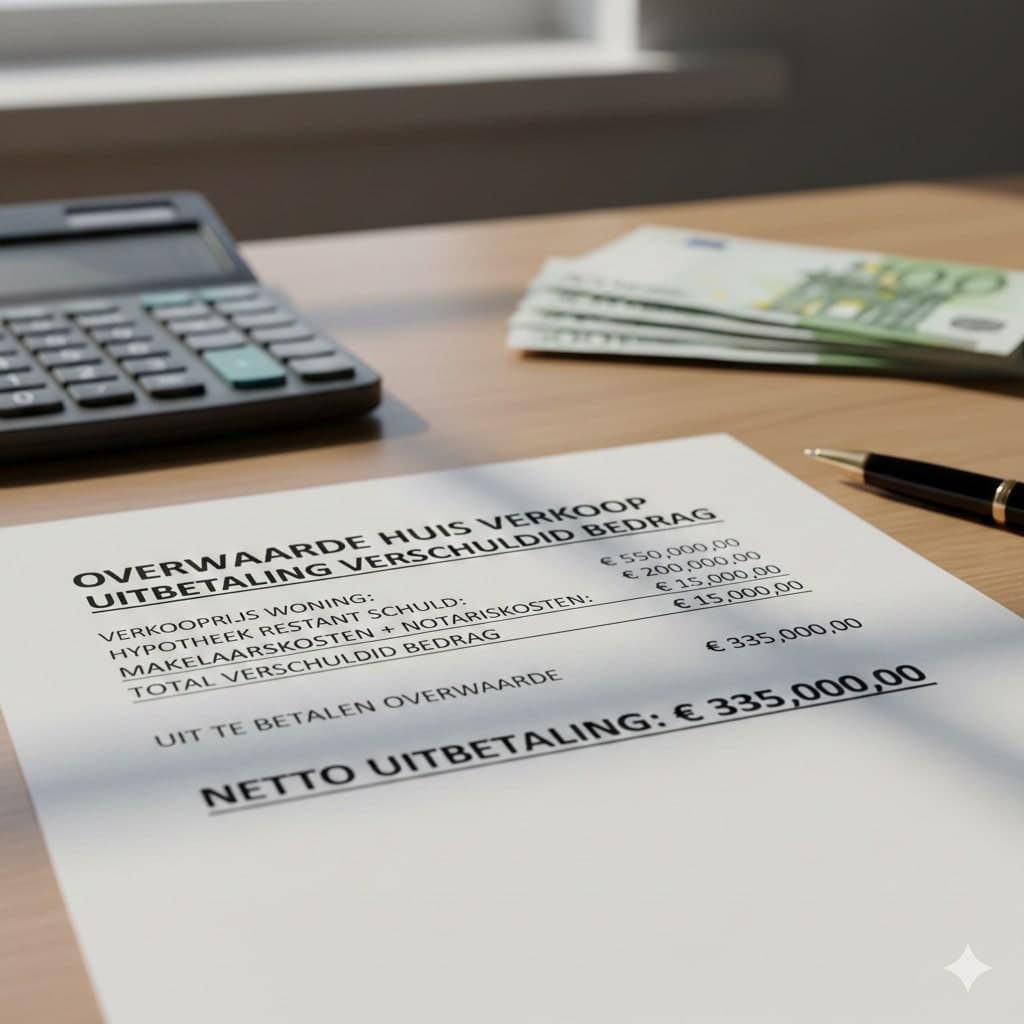
Home equity at sale in Belgium When you sell your home, you face several important questions. One of them is: what happens to your home equity? This is the amount left over after your mortgage has been repaid and all selling costs have been paid. In this guide, we explain exactly what home equity is, how it is calculated, what you can do with it, and what tax consequences it may have.
What is home equity when selling a property?
Home equity is simply the difference between:
- What your home sells for (sale price)
- What you still owe on it (mortgage loan + other debts)
This is the money that belongs to you - your capital in the property.
Concrete example:
- You sell your home for: €400,000
- Outstanding mortgage balance: €250,000
- Estate agent commission: €12,000
- Notary fees: €5,000
- Total costs: €17,000
Calculation:
€400,000 (sale price) - €250,000 (mortgage) - €17,000 (costs) = €133,000 home equity
✦ 100% free & No obligation
Sell your property with the best agent
Compare the top 3 agents in your region for free and save on commission.
Compare agents →This money is yours - it is transferred directly to your bank account.
How is home equity calculated?
The full calculation is somewhat more complex because several costs are involved.
Step 1: Determine the net sale proceeds
This is not the same as what the buyer pays. Various charges apply:
Estate agent commission: 3-4% of the sale price (€400,000 × 3.5% = €14,000)
Notary fees: approximately 1% to 1.5% of the sale price
Any other costs: for example inspection, photography, advertising
Net proceeds = Sale price - These costs
Step 2: Deduct your outstanding mortgage
This is important. Your bank will tell you exactly how much you still owe - including all interest up to the repayment date.
Net proceeds - Mortgage balance = Home equity (before taxes)
Step 3: Check the tax implications
In Belgium, the sale of your primary residence is generally tax-free - meaning no income tax on the gain. However, exceptions do apply.
The steps from sale proceeds to payment
When you sell your home, the financial settlement works as follows:
At the signing of the deed (at the notary's office)
- The buyer pays the full amount to the notary
- The notary pays the estate agent commission
- The notary repays your mortgage lender
- The notary deducts their own fees
- The remainder (your home equity) is transferred to you
All of this happens in a single transaction. You do not need to arrange anything yourself.
Timing
This process takes 2 to 5 working days after the deed has been signed at the notary's office. The money then appears in your bank account.
Practical example: full settlement
Situation:
- Sale price: €350,000
- Estate agent commission: 3.5% = €12,250
- Notary fees: €4,500
- Registration duties (payable by the buyer, not by you): withheld by the notary
- Outstanding mortgage balance: €180,000
- Early repayment penalty: €800 (because you repay ahead of schedule)
Calculation:
| Sale price | €350,000 |
|---|---|
| - Estate agent commission | -€12,250 |
| - Notary fees | -€4,500 |
| - Early repayment penalty | -€800 |
| = Net proceeds | €332,450 |
| - Mortgage balance | -€180,000 |
| = HOME EQUITY | €152,450 |
This money (€152,450) is transferred to your bank account.
What can you do with your home equity?
You now have €152,450. This is your money - you can do whatever you like with it:
Buy your next home: You can use it as a deposit or as partial financing.
Pay off debts: Credit cards, personal loans - you can clear them now.
Save or invest: Put it in a savings account or invest it.
Enjoy life: Travel, a car, renovating your next home.
Retirement: Set it aside for your pension.
There are no legal restrictions - it is your money.
Tax on home equity: good news
For your primary residence: You owe no income tax on the gain you make when selling your primary residence. This is an important advantage in Belgium.
Say you bought the house 20 years ago for €200,000 and are now selling it for €400,000 - a gain of €200,000. You pay no tax on this (provided it is your primary residence).
HOWEVER - Exceptions:
For second homes and investment properties: You will owe tax on the gain.
If you sell within 3 years: In certain circumstances (with some exceptions), you may face higher taxation if you have owned the property for only a short time.
Speculation and trading: If you buy and sell properties quickly to make a profit, the tax authorities may classify this as "property trading", in which case you will be taxed.
Tip: Ask your notary whether the sale is tax-exempt. They know the exact rules that apply to your situation.
Important points to watch
1. The early repayment penalty
Many mortgages include an early repayment penalty if you repay early. It can amount to 0% to 1% of the outstanding capital. Check your loan agreement.
2. Registration duties are paid by the buyer
Registration duties (3% for an only own home in Wallonia and 12.5% otherwise; 12.5% in Brussels, with the first €200,000 exempt for an only own home priced at most €600,000) are paid by the buyer, not by you. The notary collects them, but they are not your cost.
3. Choosing an estate agent
If you sell your house without an estate agent, you save a commission of 3 to 4%. That can amount to several thousand euros. But you then have to do the work yourself (marketing, viewings, negotiations).
4. The timing of the mortgage repayment
Your mortgage is only repaid once the funds come in. So there is no "gap" during which you would be repaying two mortgages at the same time.
5. Debts to the tax authorities or other creditors
If you have tax debts, the notary can deduct them directly from your equity. Make sure you have no outstanding tax debts!
Releasing equity before the sale (alternative)
We mentioned it earlier, but it is worth repeating: you do not have to wait for the sale to use your equity. You can also access it by increasing your mortgage before you sell.
That can be useful if you need funds for a renovation before the sale, or for other purposes.
Practical tips to maximise your equity
Keep the property well maintained: A well-maintained house sells for more.
Make the property appealing: Good upkeep, a tidy front door, a well-presented garden: all of this can push up the sale price.
Choose the right estate agent: A good agent sells faster and at a better price. Compare agencies.
The right moment: The summer months usually see more demand. Avoid winter if possible.
A realistic price estimate: A house on the market with no interested buyers does not help you. A good valuation is indispensable.
Still far from retirement? Avoid losses through good preparation. Make sure your house is in good condition.
Summary: equity when selling a property
Equity is the money that comes back to you once your mortgage is repaid and all costs are paid.
Calculation: Sale price - Mortgage balance - Costs (agency, notary) = Equity
What you do with it: Your choice: buy, save, invest, pay off debts.
Tax: For your main residence, generally tax-exempt. For other properties, the gain is taxable.
Timing: The money is paid out 2 to 5 working days after the notarial deed.
Key tips: Choose a good estate agent, keep your property in good condition, check for early repayment penalties, and ask your notary for tax advice.
Next step: prepare your sale
About to sell your house? Make sure you are well prepared. Start with a free valuation of your property to estimate your equity realistically. Then compare estate agents to get the best sale price and the best service.
Maximum preparation = maximum equity. Start today!
Frequently asked questions
What is home equity when selling a house in Belgium?
Home equity is the amount left over after your mortgage has been repaid and all selling costs have been deducted from the sale price. For example, if you sell for 400,000 euros, owe 250,000 on your mortgage, and pay 17,000 in costs, your home equity is 133,000 euros.
How long does it take to receive your home equity after signing the deed?
After the deed is signed at the notary's office, the process takes 2 to 5 working days. The notary handles all payments in a single transaction, so you do not need to arrange anything yourself.
Do you pay tax on the profit when selling your home in Belgium?
If you are selling your primary residence, you generally owe no income tax on the gain - even if the property has increased significantly in value over the years. Exceptions apply for second homes, investment properties, and situations where properties are bought and sold quickly for profit.
What costs are deducted from the sale price before you receive your home equity?
The main costs deducted are the estate agent commission (typically 3-4% of the sale price), notary fees (approximately 1% to 1.5%), your outstanding mortgage balance, and any early repayment penalty if you repay the mortgage ahead of schedule.
What can you do with your home equity after the sale?
There are no legal restrictions on how you use the money. Common options include using it as a deposit on your next home, paying off debts, saving or investing it, or setting it aside for retirement.
"Real estate expert focused on quality control and strategic partnerships."