
How large can a garden shed be without a planning permit?

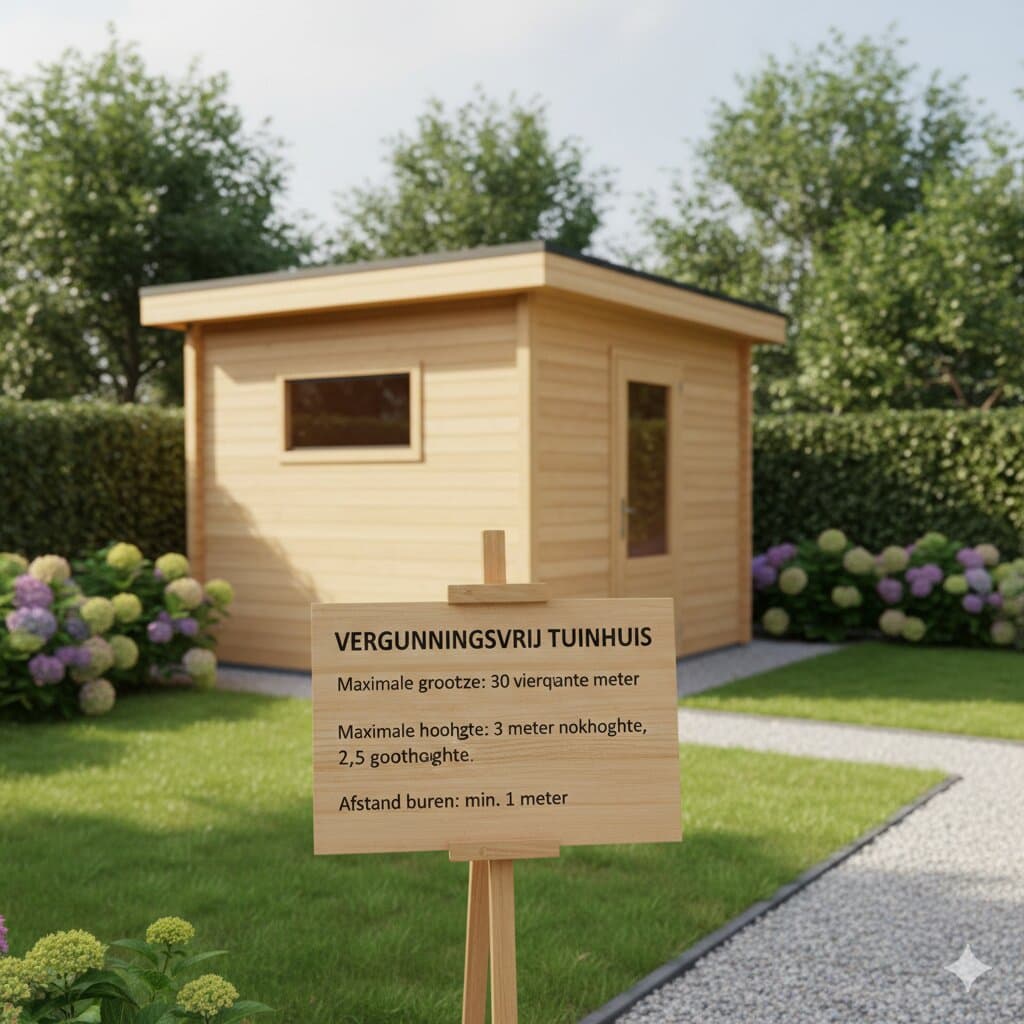
For gardening enthusiasts and DIY fans in Belgium, the question of how large a garden shed can be without a planning permit comes up regularly when planning extra storage space, a hobby room or a poolhouse. In many cases it is possible to erect a detached outbuilding without a planning permit, provided you meet strict conditions regarding size, height and positioning. This makes the process accessible, but getting it wrong can lead to fines or demolition orders. This article sets out all the rules so you can get started without any risk.
The core rules: when is no permit required?
In Belgium, a garden shed generally falls under the category of "detached outbuildings in a side or rear garden". Each region has its own rules on when a planning permit can be dispensed with. The key limits vary by region, but the main conditions typically include:
- Total footprint: in Flanders, max. 40 m² for all detached outbuildings combined (shed + greenhouse + garage + …); in Wallonia, max. 20 m².
- Height: max. 3.5 m (ridge height) in Flanders, max. 3 m in Wallonia, with an eaves height of max. 2.5 m.
- Distance to property boundary: at least 1 m in the rear garden, 3 m in the side garden.
- Distance from the dwelling: max. 30 m from the main building.
- Function: exclusively for storage, maintenance or leisure (no residential use).
In Flanders, if you already have a 15 m² greenhouse, you can still add a garden shed of up to 25 m² (total 40 m²). In Wallonia, the combined total must not exceed 20 m². If you exceed any of these limits, you will need to apply for a planning permit through the relevant regional portal.
How large can a garden shed be without a permit: practical limits
The answer to how large a garden shed can be without a planning permit depends on your existing situation. The total surface area applies to the ground floor footprint of all outbuildings combined. Examples:
- No existing outbuildings: garden shed up to the regional maximum is possible.
- With an existing garage of 20 m² (Flanders): garden shed max. 20 m².
- Several small structures: add them all up to the applicable regional maximum.
The height limit applies from ground level to the highest point of the roof, which means standard garden sheds (typically 2.5-3 m) comfortably fall within the limit. For larger or taller structures - for example a poolhouse with a flat roof - you will need to apply for a permit.
✦ 100% free & No obligation
Sell your property with the best agent
Compare the top 3 agents in your region for free and save on commission.
Compare agents →Additional conditions: positioning and structural safety
Beyond size and height, positioning and safety also matter:
- Location: only in a side or rear garden, not at the front or visible from public land.
- Distances: 1 m from the rear boundary, 3 m from the side boundary (unless the neighbours agree otherwise).
- No residential use: no bed, kitchen or bathroom; purely an outbuilding.
- Structural safety: no architect required for <30 m² with no structural risks.
Is your plot located in a protected area (forest, buffer zone, flood zone)? In that case the exemption often does not apply and you will need to submit a planning permit application.
Regional differences: Flanders, Wallonia and Brussels
In Flanders, the limit is 40 m², subject to the conditions described above. In Wallonia the rules are stricter: max. 20 m², minimum distance of 1 m to boundaries and a maximum height of 3 m. In the Brussels-Capital Region, local rules apply, often requiring a prior notification or a permit from smaller surface areas onwards. Always check the rules for your specific region and municipality.
When is a planning permit required?
If you exceed the limits on how large a garden shed can be without a planning permit, you must apply for a planning permit through your regional permit portal (with an architect above certain thresholds). Common reasons a permit is needed:
- Total outbuilding area exceeds the regional maximum.
- Height exceeds the regional limit.
- <1 m from a boundary or >30 m from the dwelling.
- Residential or commercial use.
- Located in a protected zone.
Even where an exemption applies, your municipality may still require a prior notification or enforce additional local rules (e.g. colour, materials). Always contact your local planning department to be sure.
Risks of non-compliance
If you build without a permit when one is required, you risk:
- A fine: potentially running into thousands of euros, depending on the infringement.
- A demolition order: the garden shed will have to be removed or modified.
- Problems when selling: when selling your home, you will have to regularise any infringements.
Check with your municipality and keep plans and photographs as proof.
Tips for a successful installation
- Measure your garden: take stock of existing outbuildings and check boundary distances.
- Choose standard models: prefab garden sheds often fit neatly within the permitted limits.
- Talk to your neighbours: discuss distances with them and get their agreement.
- Combine with renovation: an insulated garden shed may qualify for energy renovation grants in your region.
- Consult an architect if in doubt: essential for structures above 30 m² or with complex roof designs.
A garden shed adds value to your property: extra storage, more enjoyment of your garden and potentially a higher market value when you sell.
Want to know how a garden shed affects your property value or get ready for a sale? Request a free valuation. An estate agent can help with timing and pricing.
Frequently asked questions
How large can a garden shed be without a planning permit in Flanders?
In Flanders, the combined footprint of all detached outbuildings - including sheds, greenhouses and garages - must not exceed 40 m². If you already have existing outbuildings, their surface area counts toward that total.
Do the size limits apply per shed or to all outbuildings combined?
The limits apply to all detached outbuildings combined. For example, if you already have a 20 m² garage in Flanders, you can only add a garden shed of up to 20 m² to stay within the 40 m² maximum.
How close to the property boundary can I place a garden shed without a permit?
In both Flanders and Wallonia, the shed must be at least 1 m from the rear boundary and at least 3 m from the side boundary. Neighbours can agree to a smaller side distance, but the rear minimum of 1 m still applies.
What happens if I build a garden shed without a permit when one is required?
You risk a fine that can run into thousands of euros, a demolition order requiring you to remove or modify the structure, and complications when selling your home - any infringement will need to be regularised before a sale can go through.
Do I need a planning permit in the Brussels-Capital Region for a small garden shed?
Brussels often applies stricter local rules, sometimes requiring a prior notification or a full permit even for smaller structures. You should always check the specific rules for your municipality before starting construction.
"Tech entrepreneur and strategist focused on digital transformation in the real estate sector."