
Sell your house and keep living in it in Belgium

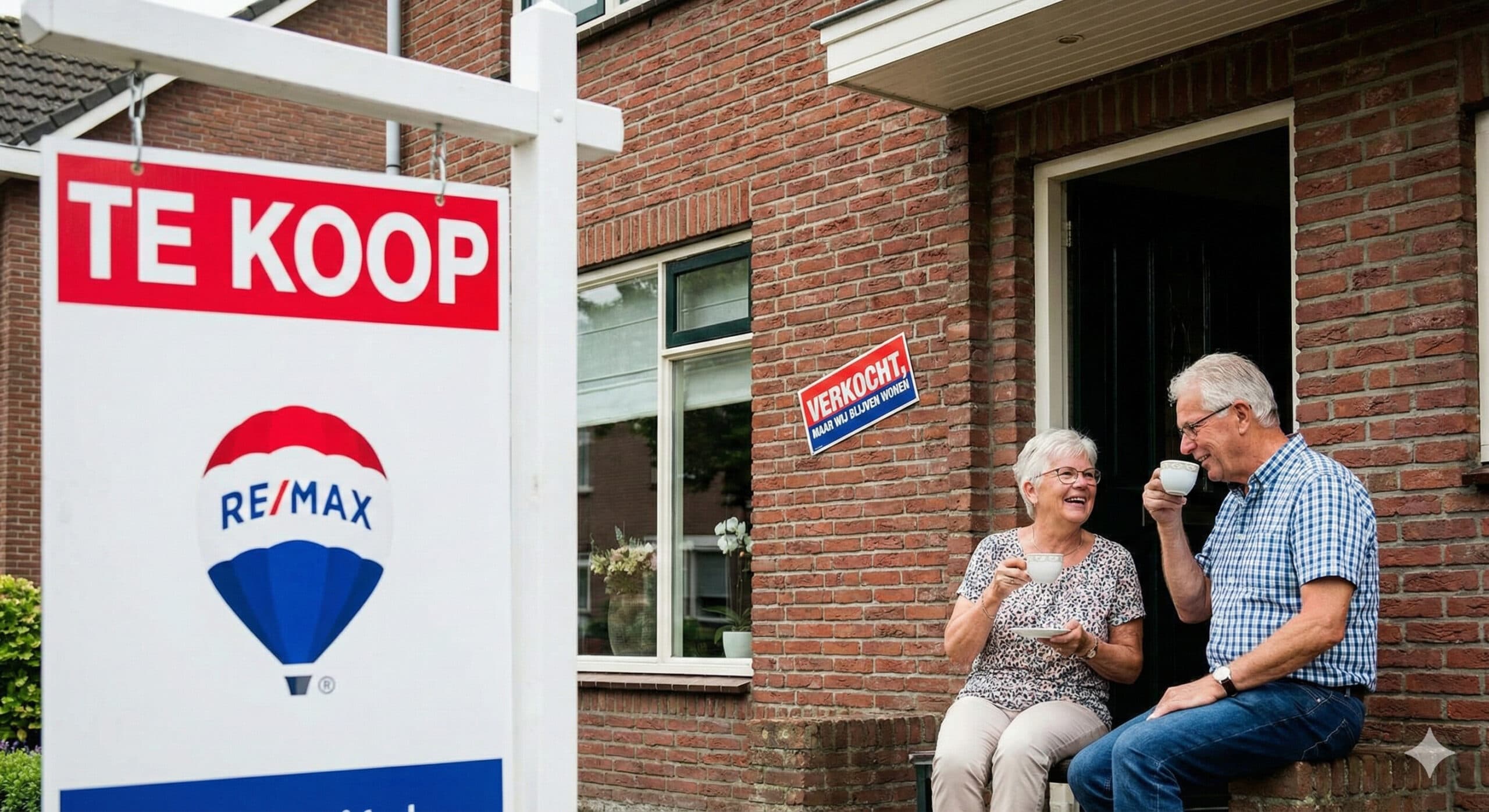
Selling and still living in your home is possible in Belgium in three ways. You sell the bare ownership and keep the usufruct, you sell for a life annuity, or you sell outright and then rent from the buyer. Each route produces a different amount, with different security for you and a different risk for the buyer. This article puts the three side by side, so you know what to ask your notary.
Why people take this route
The reasons vary. Sometimes the capital is needed for care costs, a loan or a gift to the children. Sometimes someone does not want to leave the house as a burden to the heirs. And sometimes the home has simply become too big, while moving out of the neighbourhood is not an option.
What all the formulas have in common is that you receive less than the full market value. You are not selling an empty house, you are selling a house with yourself still in it. That difference is not a trick by the buyer, it is the price of the occupancy right you keep.
Selling the bare ownership and keeping the usufruct
You sell the bare ownership and keep the usufruct, usually for life. You may go on living in the property, or let it and keep the rent yourself. The buyer becomes full owner only when your usufruct ends.
The value of the usufruct depends mainly on your age. The younger you are, the more the usufruct is worth and the less the buyer pays today. The notary calculates that split with the standard tables and records it in the deed.
✦ 100% free & No obligation
Sell your property with the best agent
Compare the top 3 agents in your region for free and save on commission.
Compare agents →Watch the charges. As usufructuary you carry ordinary maintenance and the property tax. The bare owner carries major structural work, to the roof or the foundations for instance. Put in the deed who pays for which works, because that is the classic source of argument ten years later.
Selling for a life annuity
With a life annuity you usually receive a sum at the start, known as the bouquet, and then an annuity until you die. With an occupied annuity sale you stay in the property, which makes both the annuity and the bouquet lower than in a vacant sale.
The annuity stops when the seller dies. That makes the formula a gamble for the buyer and a certainty for you, as long as the agreements hold. So have the deed state what happens if the buyer stops paying, and how the annuity is indexed. Without indexation the annuity loses a serious slice of its purchasing power after fifteen years.
An annuity sale is always notarial, and registration duty is calculated on the value of the whole, not only on the bouquet. Count that cost in before you compare the formula with an ordinary sale.
Selling and renting from the buyer
The third route is the easiest to explain. You sell the property outright at the normal market price, and then rent it from the new owner. You sign the lease at the moment of the deed, so that there is not a single day on which you have no title to live there.
The advantage is clear: you get the full price. So is the drawback: you become a tenant and fall under the ordinary residential lease rules of your region. A short lease can be terminated, a nine-year lease offers more security but ties you in as well. Discuss with the notary which term fits your plan, and have the rent and the indexation recorded at the same time.
What it costs you in value
With usufruct and a life annuity you receive less cash today, in exchange for an occupancy right that costs you nothing further. With a sale plus lease you receive the full price, but you pay rent from then on, so part of that capital flows back to the buyer every month.
Always make that comparison over a realistic period. Set out what you receive net, what you still pay or receive monthly, and what is left after ten or twenty years. A good valuation of the ordinary sale price is the starting point, because every formula is derived from it. So first request a free valuation of your home.
What the notary has to record
In every formula, have four things put in black and white. Who pays which works and taxes. What happens if the buyer sells the property on, so that your occupancy right also holds against the next owner. What happens if you move to a care home, because that is the question that comes up most often afterwards. And how the price or the annuity is indexed.
Use your own notary, even if the buyer already has one. It costs you nothing extra, because notaries share the fee. If you are hesitating between these formulas and an ordinary sale followed by a move, put a few agents side by side first and ask for their estimate of the open market value.
Frequently asked questions
Can I sell my house and keep living in it?
Yes, in three ways: selling the bare ownership while keeping the usufruct, selling for a life annuity, or an outright sale followed by a lease with the buyer. Each formula produces a different amount and a different level of security.
How much less do I get if I stay on?
That depends on your age and the formula. With usufruct and a life annuity the buyer pays less because the property only becomes available later. With a sale plus lease you get the full price, but you pay rent from then on.
Who pays for works under a usufruct?
The usufructuary carries ordinary maintenance and the property tax, the bare owner the major structural work such as roof or foundations. Record in the deed who pays for which works, because that is the classic source of argument.
What if the buyer stops paying the annuity?
That has to be in the deed. Have a rescission clause included and agree how the annuity is indexed, otherwise it loses much of its purchasing power after fifteen years.
What if I move to a care home later?
That is the question that comes up most often afterwards, so settle it in the deed beforehand. With a usufruct you can usually let the property and keep the rent; with a lease the termination rules of your region apply.
"Tech entrepreneur and strategist focused on digital transformation in the real estate sector."