
How much does an option on a house cost?

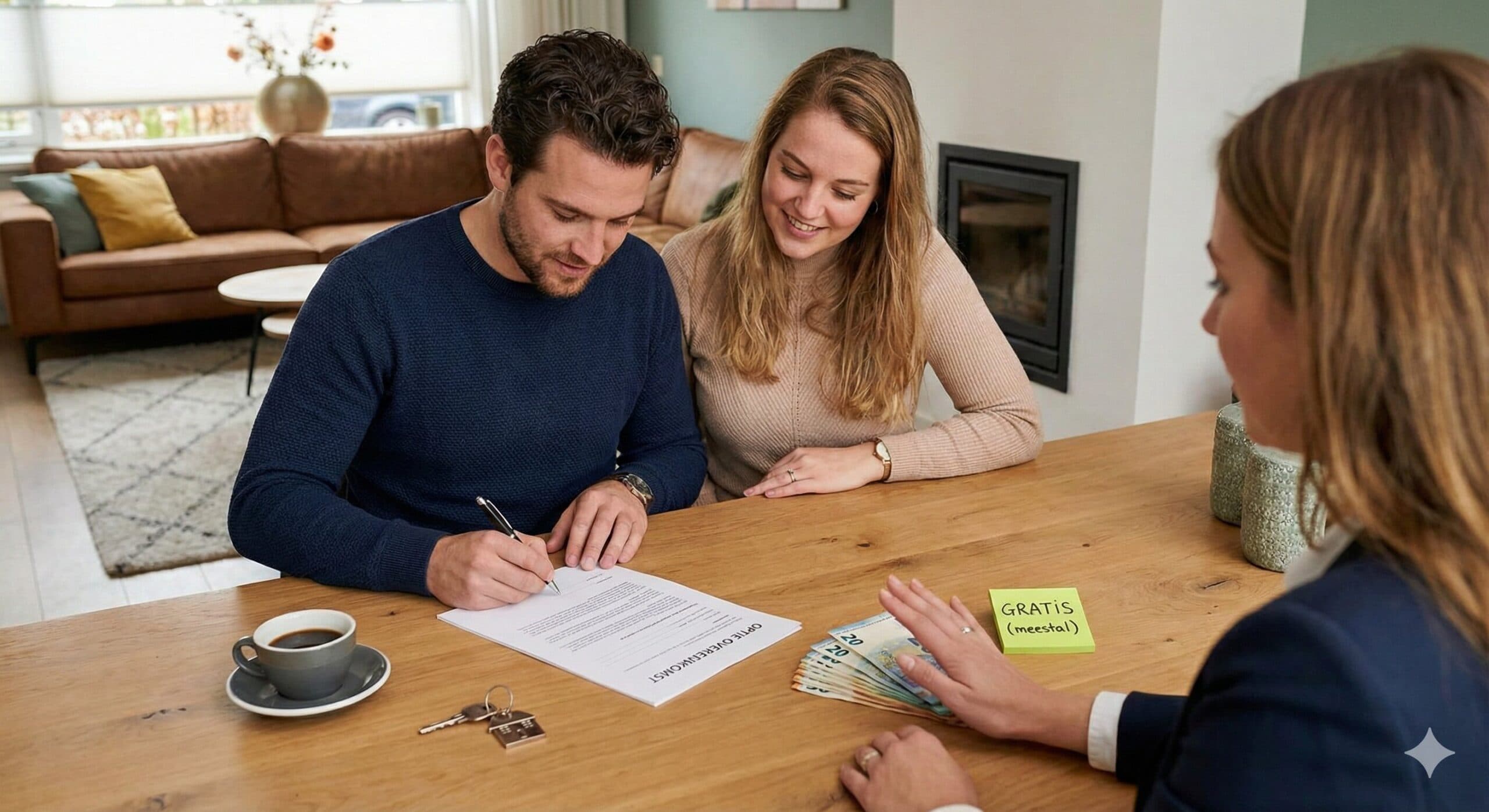
If you have a property in mind but need a little more time to think things over, you will quickly find yourself asking: how much does an option on a house cost? In Belgium, taking an option is not a compulsory part of the purchase process - it is a contractual agreement between buyer and seller. With such an option, the seller temporarily "reserves" the property for you and may in principle no longer negotiate with other candidates. In return, an option fee is often charged. In this article you will find out how an option works, what it costs in practice and which terms must absolutely be put in writing.
What exactly is an option on a house?
An option on a property gives you as a prospective buyer the right, but not the obligation, to purchase the property within an agreed period at a predetermined price. During that period the seller commits to not selling to anyone else. You therefore get time to reflect, without the property being snapped up by another buyer in the meantime.
Key features:
- The option applies for a clearly defined period (ranging from a few days to sometimes several weeks or months).
- The price at which you may later buy is already fixed.
- You can decide to "exercise" the option (buy) or simply let it lapse (not buy).
- The seller is bound during the option period; you are not.
Precisely because the seller is contractually constrained, in many cases he will ask for a fee. That is where the question of how much an option on a house costs becomes concrete.
How much does an option on a house cost in practice?
There is no legally fixed amount for the cost of an option in Belgium. The price is entirely negotiable between buyer and seller. In practice, a few common scenarios arise.
✦ 100% free & No obligation
Sell your property with the best agent
Compare the top 3 agents in your region for free and save on commission.
Compare agents →- Option without a fee (free option)
Sometimes a seller is willing out of goodwill - or when interest in the property is limited - to grant some time without asking for a fee. This happens mainly with short periods (a few days) and when there is little competition. The option then costs you nothing formally. - Fixed flat-rate option fee
Far more common is for the seller to ask a fixed amount, for example:- €1,000 to €2,500 for an average family home.
- A higher amount for more expensive properties.
This amount is usually: - deducted from the purchase price if you exercise the option;
- kept by the seller as compensation if you do not buy.
- Option as a percentage of the purchase price
Sometimes the option fee is agreed as a percentage of the intended purchase price, for example:- 1% to 3% of the purchase price.
For a property worth €400,000 that could amount to €4,000 to €12,000 - a significant sum that immediately signals serious intent. Here too: - if you exercise the option: the amount is offset as a deposit;
- if you do not exercise the option: you forfeit the amount.
- 1% to 3% of the purchase price.
The real cost of an option therefore consists of:
- the amount you must advance temporarily (in cash or by bank transfer),
- plus the risk that you lose that amount entirely if you decide not to buy.
Why does a seller ask for an option fee?
From the seller's point of view, an option is a constraint: for a set period he may not respond to other offers, even if someone bids more. He therefore wants to be compensated for:
- the risk that you pull out at the last moment;
- the time lost during which no other buyer could come forward;
- the uncertainty about how the market will move during the option period.
An option fee therefore serves as:
- an incentive for you to request an option only when you are genuinely serious;
- a safety net for the seller if you ultimately walk away.
The more interest there is in the property, the more likely the seller is to grant an option only in exchange for a substantial fee - or to refuse one altogether.
How long does an option run and what does that mean for the price?
The duration of the option and the size of the fee are usually linked:
- Short option (3-7 days):
Often a modest fee or none at all, especially in a less competitive market. The seller loses little time. - Medium option (2-3 weeks):
Here the seller will more often ask for a clear option fee, as he is missing out on serious opportunities during that period. - Long option (1-3 months):
This is seen mainly with more complex files (major renovation, development land, financing that needs thorough investigation). The fee is then usually higher, or the seller will only agree if the fee is substantial and deducted from the purchase price.
In the context of how much an option on a house costs: the longer and more restrictively you tie the seller down, the heavier the fee will generally be.
What happens to the option fee if you do buy?
In most option agreements it is stipulated that the option fee paid:
- is set off as part of the deposit on the purchase price, or
- is fully deducted from the balance still owed at the time of signing the notarial deed.
Example:
- Purchase price: €350,000.
- Option fee: €5,000.
- You exercise the option and later sign the deed of sale.
→ The €5,000 is treated as a deposit; at the notarial deed you pay the remaining €345,000 (plus costs).
Note: make sure this is stated explicitly and unambiguously in the option agreement, so as to avoid any dispute about how the amount is to be applied.
What if you do not exercise the option?
This is where the real "cost aspect" of an option lies. In many agreements:
- if you do not exercise the option within the agreed period, then:
- your right to buy the property under the agreed conditions lapses,
- you forfeit the option fee definitively to the seller.
In other words: the option fee is the price you pay for your thinking time and the exclusive right during that period. The higher the amount, the greater the financial risk you take if you decide not to buy after all.
That is why it is important to request an option only if:
- you already have a clear picture of your financial capacity (through a conversation with your bank or a loan simulator),
- you already have a first estimate of any renovation costs,
- you realistically expect to reach a decision before the option expires.
What must an option agreement definitely include?
Because significant sums can be involved, an option deserves a clear written agreement. At a minimum it should contain:
- Details of the buyer and the seller.
- Address and description of the property.
- The duration of the option (start and end date, and time).
- The option fee: amount and method of payment.
- What happens to the option fee:
- when the option is exercised (e.g. offset as a deposit),
- when the option is not exercised (e.g. retained definitively by the seller).
- The purchase price and the main conditions of the sale.
- How the option must be exercised (for example by registered letter or e-mail before a specified time).
- Any suspensive conditions, such as:
- obtaining a mortgage loan,
- satisfactory technical or legal inspections,
- additional information regarding, for example, easements or the planning status of the property.
Without clear agreements you run the risk that the seller interprets your intentions differently, or that a dispute arises afterwards about the validity of the option and the allocation of the fee.
Option on a house vs. offer vs. sale agreement
It helps to keep these distinctions clear:
- Option:
- a right for you to buy within a set period;
- the seller is bound, you are not yet;
- often accompanied by an option fee.
- Offer:
- a proposal from you to buy at a certain price and on certain conditions;
- if the seller accepts, there is in principle already a sale agreement.
- Deed of sale / private sale agreement (compromis de vente):
- a binding agreement between buyer and seller on price and conditions;
- from that point both parties are legally bound, subject to any suspensive conditions.
The question of how much an option on a house costs must therefore always be considered in the light of the degree of certainty you need and the freedom the seller is willing to give up. An option is not a compulsory step, but an additional tool that - when used well - can bring peace of mind in the lead-up to making an offer and signing a sale agreement.
When is an option useful for you as a buyer?
An option can be particularly valuable when:
- you just need a little extra time to formally confirm your financing;
- you still want to discuss renovation or conversion costs with contractors or an architect;
- several parties are interested and you want to get ahead of the competition, but are not yet ready to take the definitive step.
In all these cases, what you are really buying with the option is time and exclusivity. The price you pay for that - the option fee - must be proportionate to the advantage you gain from it and the risk that you may ultimately decide not to buy.
If you are ready to request an option on a property, it is wise to have a clear picture of your maximum budget and financing options. A loan simulation and an objective valuation of the property will help you assess which option fee still makes sense within your overall purchase budget.
Frequently asked questions
How much does an option on a house typically cost in Belgium?
There is no legally fixed amount - the price is entirely negotiable between buyer and seller. In practice, fees range from a flat amount like 1,000 to 2,500 euros for an average home, to 1-3% of the purchase price for more expensive properties.
What happens to the option fee if I decide to buy the property?
In most option agreements, the fee is offset as part of the deposit on the purchase price or deducted from the balance owed at the notarial deed. For example, if you paid a 5,000 euro option fee on a 350,000 euro property, you would pay the remaining 345,000 euros at signing.
Do I lose my option fee if I decide not to buy?
Yes, in most agreements if you do not exercise the option within the agreed period, the seller keeps the fee definitively. This is essentially the price you pay for the thinking time and the exclusive right during that period.
Can I get an option on a house without paying a fee?
Yes, a seller can agree to a free option, especially for short periods of a few days when there is little competition or limited interest in the property. However, this depends entirely on the seller's willingness and the market conditions.
What should an option agreement always include?
At minimum, the agreement should state the option fee and what happens to it when exercised or not, the duration with a clear start and end date, the purchase price, and how the option must be exercised. Any suspensive conditions, such as obtaining a mortgage loan or satisfactory inspections, should also be included.
"Real estate expert focused on quality control and strategic partnerships."