
How much own contribution do you need to buy a house in Belgium?

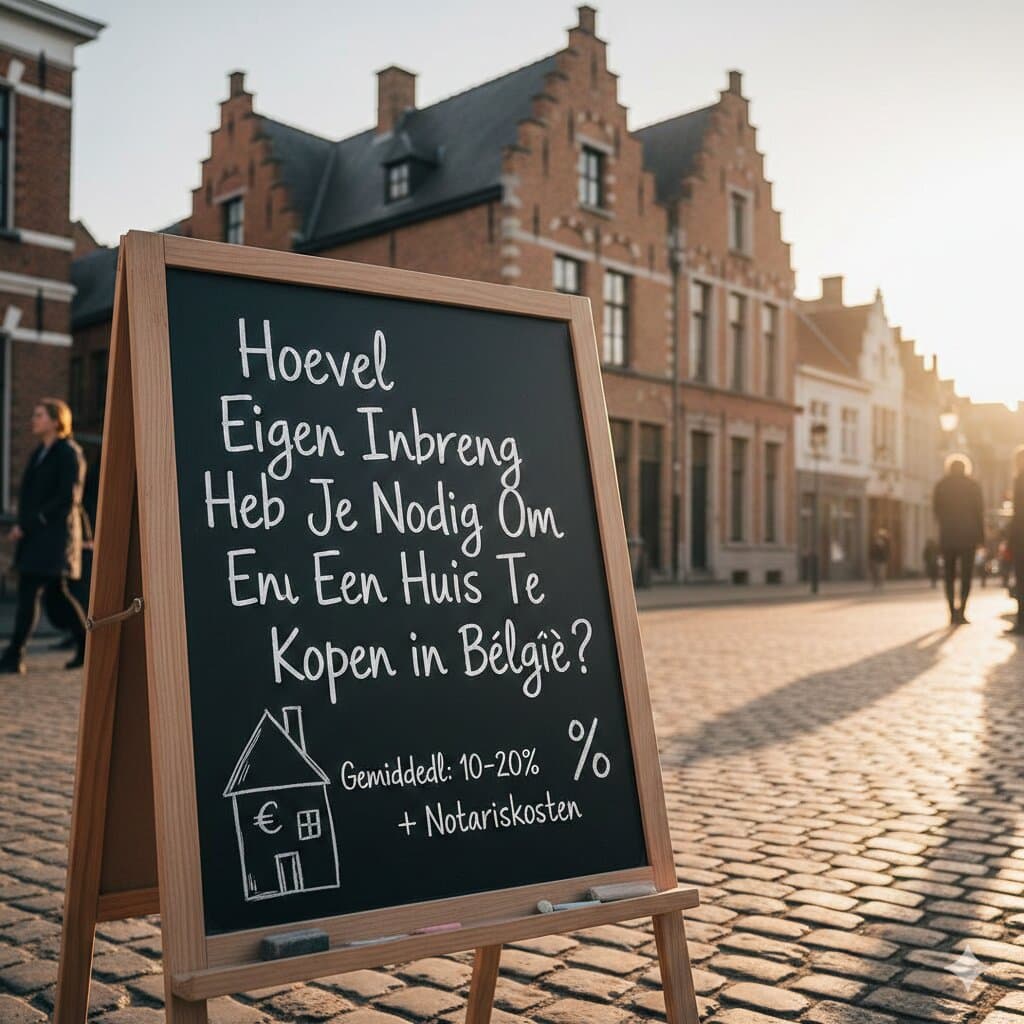
The rule of thumb in Belgium is simple: count on about ten percent of the purchase price as your own contribution, plus the full purchase costs. Those costs are rarely included in the loan, and that is exactly what many buyers underestimate. Below is how banks look at your contribution, what counts towards it, and what to do if you are not there yet. The same rule applies whether you buy a house, a flat or a building plot.
What the bank expects
Since the recommendations of the National Bank, lenders keep most mortgages for an owner-occupied home below roughly ninety percent of the value of the property. First-time buyers get somewhat more room than people who already own, but financing one hundred percent has become the exception rather than a right.
One detail matters: that ninety percent applies to the value of the property, not to your total budget. Registration duty, the notary's fee and the cost of the mortgage deed come on top and are in principle paid by you.
Count the costs, not just the price
On a purchase in Flanders you pay sale duty on the purchase price. For a sole owner-occupied home a reduced rate has applied since 2025, while other purchases carry the general rate, which is considerably higher. Brussels and Wallonia have their own rates and abatements.
On top of that come the notary's fee, the deed costs and the cost of registering the mortgage. Add all of that up before you make an offer, because the bank generally does not lend it to you. Someone buying a property of three hundred thousand euro therefore needs a substantial sum for the deed on top of the ten percent contribution.
✦ 100% free & No obligation
Sell your property with the best agent
Compare the top 3 agents in your region for free and save on commission.
Compare agents →What counts as own contribution?
Savings are the classic source, but not the only one. The proceeds of a previous home count, as do investments you sell, and in many files a gift or an interest-free loan from family. With help from parents, always ask how the bank wants to see that contribution documented, because a gift and a loan affect your file differently.
Some banks also accept security instead of cash, for instance a mortgage on your parents' home or a personal guarantee. That lowers your own contribution, but it puts a charge on someone else's assets. Discuss it with your notary before you sign.
If you are not there yet
Three routes remain. You save longer and buy later, you buy cheaper, or you bring in a third party through a gift or a guarantee. A fourth option, borrowing everything from whichever bank offers the highest percentage, sounds attractive but costs you that advantage back in a higher interest rate.
In that case, compare not only the maximum amount but the rate. A loan with a lower own contribution often carries a premium, and over twenty years that weighs more heavily than the ten thousand euro you avoid putting in today.
Before you make an offer
Ask two or three lenders for an agreement in principle, with the same term and the same amount, so that you can compare the rates properly. Also ask explicitly what percentage of the value they finance in your file and whether the deed and notary costs can be included.
If you are selling a property to fund the contribution, fix that sale value first. Request a free valuation of your home or compare a few agents before you make an offer on something new.
Frequently asked questions
How much own contribution do I need for a house in Belgium?
Count on about ten percent of the purchase price, plus the full purchase costs such as registration duty, the notary's fee and the cost of the mortgage deed. Those costs are rarely included in the loan.
Can I still borrow one hundred percent?
That has become the exception. Lenders keep most loans for an owner-occupied home below roughly ninety percent of the value, with somewhat more room for first-time buyers.
Is the registration duty included in the mortgage?
In principle no. The ninety percent applies to the value of the property; registration duty, the notary's fee and the cost of registering the mortgage are paid by you.
Does a gift from my parents count as own contribution?
Usually yes, as does an interest-free family loan, although the bank treats the two differently. Ask in advance how they want that contribution documented.
What if I do not have enough own contribution?
Save longer, buy cheaper, or bring in a gift or guarantee from family. A loan with a low own contribution often carries a higher rate, so compare the rate and not only the amount.
"Tech entrepreneur and strategist focused on digital transformation in the real estate sector."