
Property viewing checklist in Belgium: 40 points you absolutely must check

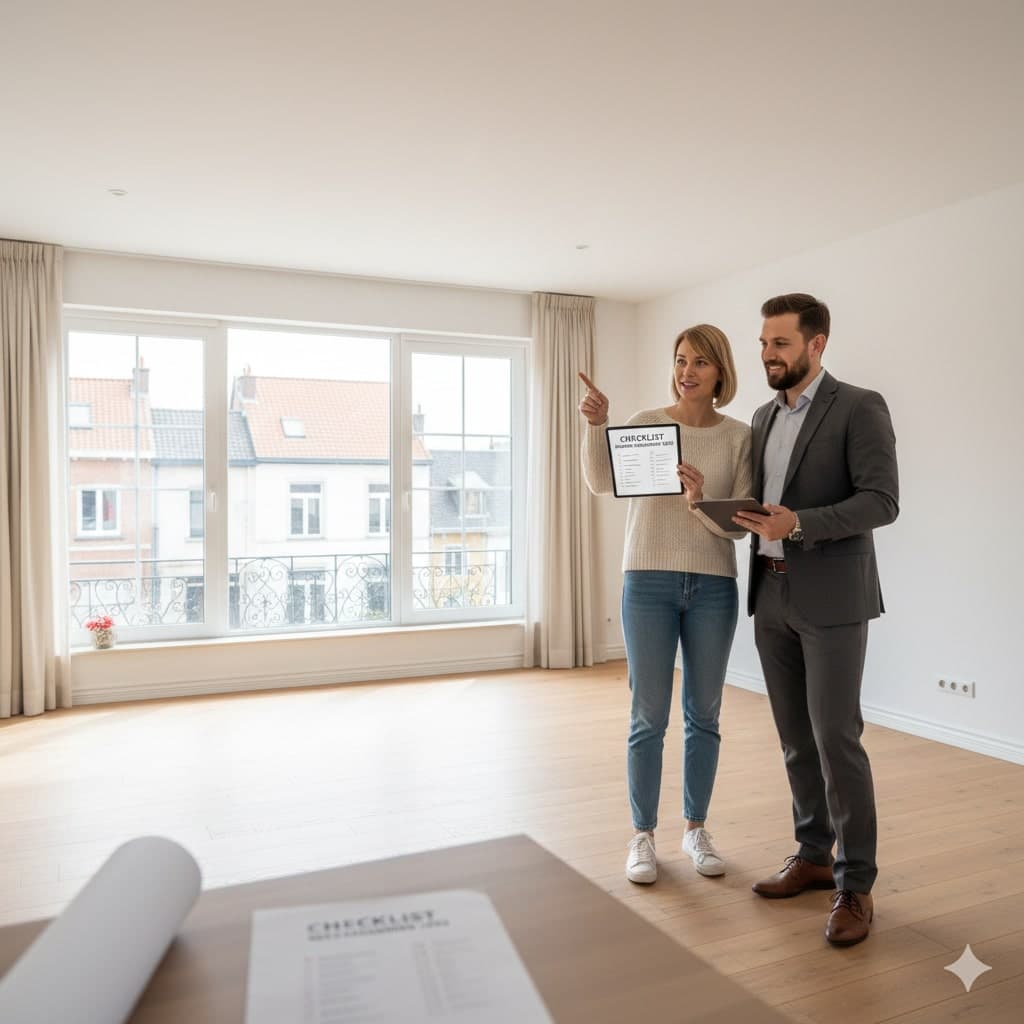
Why a property viewing checklist is essential
The first impression during a property visit in Belgium is often emotional: plenty of light, a pleasant garden, a nice neighbourhood. Yet most unpleasant surprises only come to light after the purchase. A property viewing checklist helps you avoid overlooking important defects or costly repairs. In a market of rising prices and increasingly strict energy requirements, looking carefully matters more than ever.
The guide below offers a structured checklist by theme. Use it at every viewing, take notes and compare properties objectively - not just on gut feeling.
Preparation before you visit
- Study the listing critically: does the asking price match similar properties in the area?
- Check the energy performance certificate (EPC), year of construction, habitable floor area and heating type.
- Look at a map for orientation (sunlight), busy roads, railway lines, hospitality venues and industrial sites.
- Note down questions for the agent or owner in advance (damp, neighbours, renovations, reason for sale).
- Always bring: a notebook, your smartphone (photos + compass app), and optionally a small tape measure.
A brief phone call beforehand can save a wasted journey: ask about major defects, planned works in the building (for apartments) and the estimated monthly charges.
First exterior impression: structure, roof and plot
On arrival, start by checking the outside.
Structure and facade
✦ 100% free & No obligation
Sell your property with the best agent
Compare the top 3 agents in your region for free and save on commission.
Compare agents →- Are there cracks in the facade or foundation? Vertical, wide cracks can indicate subsidence.
- Check whether the brickwork is consistent throughout or whether sections have been added without a clear transition.
- Look at the condition of the pointing and cladding; loose stones or flaking render mean extra costs.
Roof and guttering
- Look for missing or displaced tiles, sagging ridge lines and ageing slates.
- Are the gutters and downpipes intact, or do you see rust, leak stains or improvised repairs (tape, buckets)?
- Ask about the age and type of roof covering, and whether insulation is present. An old, uninsulated roof is often one of the most expensive items to address.
Windows and exterior joinery
- Check the material (wood, PVC, aluminium) and condition of the frames. Rotten wood or flaking paint points to deferred maintenance.
- Is there double or triple glazing? Note the manufacturing year if it is printed on the glass.
- Watch for condensation between the panes: that means the unit has lost its insulating value.
Plot and surroundings
- Check ground levels: does the property sit lower than the street or garden? That increases the risk of water ingress.
- Look at fences, garden walls and terraces: stable or subsiding?
- Consider sightlines and overlooking. A small garden with good privacy can be more valuable than a large garden exposed to neighbours.
Stepping inside: smells, sounds and general impression
The first few seconds indoors are often very telling.
- Do you smell mustiness or mould? That points to hidden damp problems.
- Can you clearly hear street noise, trams or aircraft with the windows closed? Noise nuisance is very hard to solve through renovation.
- How does the temperature feel? A property that stays cold in winter despite the heating may be poorly insulated.
- Look at the general cleanliness and finish: untidy, poorly maintained homes usually require more renovation than is immediately apparent.
After the first walkthrough, jot down brief notes: "bright", "dark", "spacious", "low ceilings", "noisy", "quiet" - this helps when comparing later.
Construction and finishes: walls, floors and ceilings
Go through each room and look for:
Walls
- Cracks in corners or around windows and doors? Fine hairline cracks are normal; wide, continuous cracks are a concern.
- Wallpaper or paint that is peeling or bubbling can indicate damp.
- Check walls behind wardrobes where possible: mould patches often hide there.
Floors
- Feel whether the floor sags or springs, especially with timber floors on upper levels.
- For tiled floors: look for cracks and hollow-sounding tiles (loose bedding).
- Note differences in floor level between rooms; this can point to past renovations or added concrete screeds.
Ceilings
- Watch for discolouration, water rings or loose plasterwork - these are often signs of past or current leaks.
- Check whether cracks run across the full width of a ceiling; this could be structural.
Installations: electricity, heating and plumbing
Upgrading technical systems is often more expensive than buyers expect. Use this section of the property viewing checklist specifically for installations.
Electricity
- Ask for the electrical inspection report: is the installation compliant or not?
- Look in the fuse box at the type of protection (old cartridge fuses versus modern circuit breakers).
- Be wary of a tangle of cables, extension leads and unprofessional modifications - a sign of DIY work that may not meet standards.
Heating
- Note the heating type: gas, heating oil, heat pump, electric convectors.
- Ask about the boiler's year of installation and date of last service.
- Look for rust spots or leaks around radiators and pipes.
- In apartments: is the boiler communal or individual? How are costs shared?
Plumbing and water
- Run the taps: is the water pressure adequate?
- Check for leaks under the sink and around the toilet.
- Look at limescale build-up: heavy deposits indicate hard water and potentially extra appliance maintenance.
Damp and ventilation: the silent cost killers
Damp problems are among the most expensive and persistent issues you can encounter.
- Look for dark patches, mould, and flaking render on exterior walls and in cellars.
- Watch for condensation on windows, particularly in bedrooms and living areas.
- Check that there are adequate ventilation grilles, a mechanical ventilation system or trickle vents.
- Ask explicitly whether treatments have already been carried out for rising damp, leaks or mould - and ask for proof (invoices, guarantee certificates).
EPC, insulation and energy consumption
Beyond the label itself, the story behind it matters.
- Ask for the full EPC report, not just the label. It contains concrete recommendations and consumption estimates.
- Note which insulation is actually present: roof, facade, floor, windows.
- Ask about the actual annual energy consumption (gas, electricity, heating oil) via past bills. This lets you verify whether the EPC matches reality.
- Check whether solar panels, a solar water heater or a heat pump are installed, and what guarantees and contracts apply.
A good EPC and low energy costs permanently reduce your monthly outgoings and increase the property's future resale value.
Documents and legal checks
Ask during or after the viewing for:
- The energy performance certificate (EPC)
- The soil certificate (any contamination?)
- Planning and building permit information:
- Is everything properly authorised (extensions, dormers, carport, outbuildings)?
- Are there any outstanding violations or regularisation procedures?
- The electrical inspection certificate
- The asbestos certificate (mandatory for older properties)
- The minutes of the owners' association (ACP/VME) for apartments (major planned works, reserve fund, disputes)
If in any doubt, always have these documents reviewed by your notary before signing a binding offer or a sales agreement.
Financial points to keep in mind during the viewing
While you walk around, keep the numbers in the back of your mind.
- How much renovation do you estimate is needed overall? Note rough figures per item (roof, windows, kitchen, bathroom, installations).
- Does purchase price + purchase costs + renovation fit within your budget according to the mortgage simulator?
- Does the asking price match comparable properties? If in doubt, consider a free valuation or get a second opinion from another agent.
- Think about future value: is the neighbourhood on the rise or already saturated?
Neighbourhood and mobility: looking beyond your plot
A great property in a weak neighbourhood is rarely a good investment.
- Check accessibility by train, tram, bus and bicycle.
- Look at amenities: bakery, supermarket, schools, parks, sports facilities.
- Visit the neighbourhood in the evening or at the weekend too - that is when you really get a feel for how busy or quiet it is.
- Talk to neighbours or local shopkeepers to get informal information about safety, noise and parking pressure.
After the viewing: comparing objectively and next steps
After each visit:
- Update your property viewing checklist straight away while everything is still fresh in your memory.
- Score the property on key aspects (location, condition, energy, space, price) on a scale of 1-10.
- Compare multiple properties against the same criteria, not just on gut feeling.
- If you are unsure about the right price, seek advice from an independent agent via agent comparison.
Only when you say "yes" both emotionally and rationally is it time to consider making an offer.
Conclusion: a property viewing checklist buys you peace of mind
You choose a property with your heart, but you finance it with your wallet. A detailed property viewing checklist ensures you forget nothing during the visit, can compare objectively afterwards and negotiate from a stronger position.
Combine this checklist with a solid financial calculation via the mortgage simulator, a free valuation to assess market value, and the support of an experienced agent via agent comparison.
That way, every property viewing becomes a well-considered step towards your ideal home - rather than a leap into the unknown.
Frequently asked questions
What documents should I ask for when viewing a property in Belgium?
You should ask for the energy performance certificate (EPC), soil certificate, planning and building permit information, electrical inspection certificate, and asbestos certificate. For apartments, also request the minutes of the owners' association, which show planned works, the reserve fund, and any disputes.
How can I spot damp problems during a property viewing?
Look for dark patches, mould, and flaking render on exterior walls and in cellars, and watch for condensation on windows. You should also ask the owner directly whether any treatments have already been carried out for rising damp or mould, and request proof such as invoices or guarantee certificates.
What should I check about the roof when viewing a property?
Look for missing or displaced tiles, sagging ridge lines, and ageing slates, as well as the condition of gutters and downpipes. Ask about the age and type of roof covering and whether insulation is present, since an old, uninsulated roof is often one of the most expensive items to address.
What should I bring to a property viewing?
Bring a notebook, your smartphone for photos and a compass app, and optionally a small tape measure. It also helps to prepare questions in advance about issues like damp, neighbours, renovations, and the reason for sale.
How do I assess the energy costs of a property beyond just the EPC label?
Ask for the full EPC report rather than just the label, as it contains concrete recommendations and consumption estimates. You can also request past energy bills to check whether actual annual consumption matches what the EPC suggests.
"Real estate expert focused on quality control and strategic partnerships."