
Renting out office space in Belgium: what every owner should know

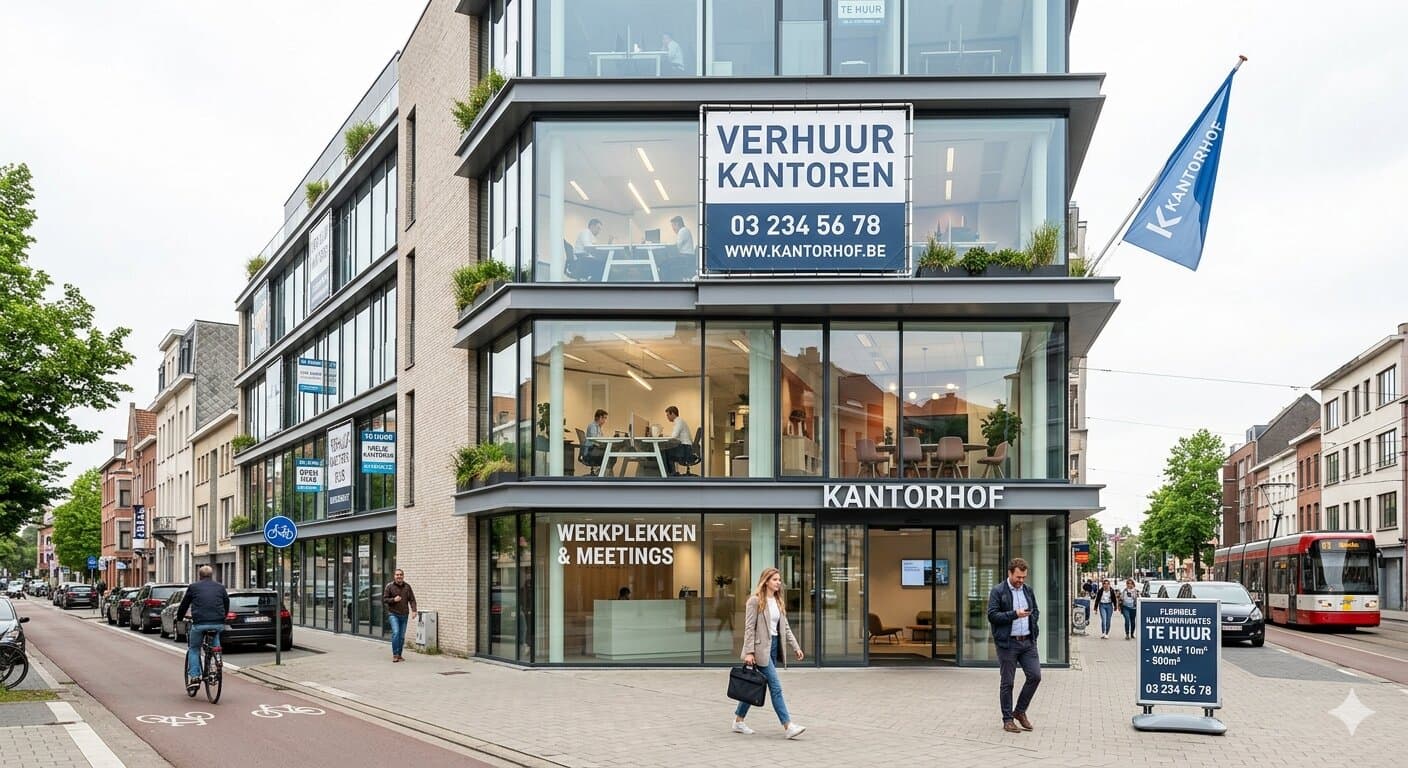
Anyone involved in renting out office space in Belgium quickly discovers that this segment works very differently from residential property. Companies do not look solely at the rent - they also consider accessibility, flexibility, layout, energy efficiency and overall image. As a result, office letting today is as much about positioning as it is about square metres.
The office market has also changed considerably in recent years. Hybrid working has sharpened tenant requirements, while companies scrutinise their accommodation costs more carefully than ever. For owners, this means a property can no longer simply be "available" - it must genuinely match the way organisations work today.
Market and demand
Demand for office space varies considerably by city and by building type. In Brussels, Antwerp, Ghent and Leuven, location is often the decisive factor, whereas in peripheral municipalities, accessibility and parking options carry more weight. The letting strategy for an office in Brussels is therefore not the same as for one in a more regional market.
A growing number of tenants are also looking for move-in-ready spaces. Companies want to get up and running quickly, without heavy investment in fit-out or technical modifications. This makes offices with a flexible layout and a modern finish considerably more attractive than larger but outdated properties.
What tenants look for
When renting office space, tenants typically weigh up five factors. First and foremost is location - employees, clients and suppliers must be able to reach the premises easily. Mobility also plays a major role: public transport links, parking facilities and cycling infrastructure can all influence the final decision.
✦ 100% free & No obligation
Sell your property with the best agent
Compare the top 3 agents in your region for free and save on commission.
Compare agents →Tenants also pay close attention to surface area and layout. A 300 m² office is not automatically better than a 180 m² one if the space is not organised efficiently. Comfort, natural light, meeting rooms and technical facilities are often decisive factors today.
How to set the rent
The rent for office space depends on much more than gross floor area alone. Location, condition of the building, service charges, parking, energy costs and amenities all contribute to market value. A well-located, move-in-ready office can therefore command significantly more than the same floor area in a less attractive setting.
For owners, it is wise not to set the price on gut feeling alone. Look at comparable properties, current demand in the area and the type of tenant you want to attract. A price that is too high prolongs vacancy, while a price that is too low needlessly erodes returns.
Presentation and finish
An office lets more quickly when it is presented professionally. Good photographs, a clear floor plan and a well-written description help prospective tenants assess more quickly whether the property suits their organisation. In many cases, that first online impression already makes a significant difference.
The physical condition of the property also matters. A tidy entrance hall, good lighting and well-maintained sanitary facilities inspire confidence. It therefore pays to carry out small improvements before bringing the space to market. This need not be expensive, but it does noticeably increase the property's appeal.
Lease contract and terms
In office letting, the lease agreement is at least as important as the space itself. Companies want clear terms covering duration, notice periods, indexation, service charges and repairs. The more transparent those terms are, the more smoothly negotiations tend to go.
For owners, it is sensible to decide in advance what flexibility is on the table. Some tenants look for short contracts or expansion options, while others want stability over several years. The better you align those expectations from the outset, the greater the chance of a long-lasting tenancy relationship.
Avoiding vacancy
Vacancy is one of the biggest risks in office property. Every month without a tenant means lower returns and often additional maintenance costs. Speed in the commercial approach therefore matters - especially if the market in your area has become more selective.
A well-priced and correctly positioned office generally lets more quickly. If there is little interest, do not look at the price alone - also review the presentation, the target tenant profile and the conditions on offer. Sometimes the solution lies in a small adjustment rather than a large discount.
Office letting as an investment strategy
For some owners, renting out office space is part of a broader real-estate investment strategy. In that case, it is not only about monthly rental income, but also about preserving value over the long term. A quality office in a strong location can remain an interesting asset even when the market temporarily cools.
That said, office property requires more active management than residential letting. Tenants are more business-minded, negotiations are more substantive and expectations tend to be higher. A professional approach is therefore not a luxury - it is a necessity.
What makes an office attractive
An attractive office combines comfort, accessibility and flexibility. Companies want the ability to grow or downsize without having to relocate immediately. Spaces with a modular layout, multiple meeting zones and solid technical infrastructure therefore tend to perform better on the market.
Sustainability is also weighing increasingly heavily in tenant decisions. Energy-efficient buildings, good insulation and an effective climate-control system are more and more often taken into account when choosing a lease. This is especially true for companies that are themselves strongly focused on cost control and corporate image.
Practical mistakes to avoid
A common mistake is leaving an office empty for too long while waiting for the perfect tenant. In practice, every month of vacancy costs money and often weakens the owner's negotiating position. A realistic approach to the market is therefore almost always more effective than waiting it out.
Another mistake is paying too little attention to the usability of the space. An attractive building is not automatically an easy one to let. If the layout is impractical or accessibility falls short, companies will walk away more quickly. In office letting, functionality usually wins over appearance alone.
Link to a broader property strategy
Those involved in office letting often also keep an eye on the long-term resale value of their property. A well-let office can be a strong investment asset, but market value still depends on location, tenant profile and technical quality. It is therefore worthwhile to monitor not only the letting market but also the capital value of the property.
Owners who are weighing up whether to let, sell or reposition their property would do well to have it assessed objectively. This helps determine whether finding a new tenant is really the best option, or whether a different strategy would generate better returns. Particularly in a dynamic market, that decision can make a very significant difference.
Conclusion
Would you like to bring your office space to market effectively and find the right tenant more quickly? Start with a realistic assessment of the value and request a free valuation.
Frequently asked questions
What factors influence the rent for office space in Belgium?
The rent depends on location, building condition, service charges, parking, energy costs and amenities - not just the floor area. A well-located, move-in-ready office can command significantly more than the same floor area in a less attractive setting.
What do companies typically look for when renting office space?
Tenants weigh up five main factors: location, mobility options (public transport, parking, cycling infrastructure), surface area and layout, comfort and natural light, and technical facilities such as meeting rooms. A well-organised 180 m² space can be more attractive than a poorly laid-out 300 m² one.
How can I reduce vacancy periods for my office property?
Start with a realistic price and make sure the presentation, target tenant profile and lease conditions are well-aligned with current demand. If interest is low, a small adjustment to layout, presentation or terms often works better than simply offering a large discount.
Is sustainability a factor when letting office space?
Yes, energy-efficient buildings, good insulation and effective climate-control systems are increasingly taken into account by tenants - especially companies focused on cost control and corporate image.
What lease terms do office tenants typically want clarity on?
Tenants look for transparent terms covering duration, notice periods, indexation, service charges and repairs. Some tenants prefer short contracts or expansion options, while others want stability over several years, so aligning expectations early helps build a lasting tenancy relationship.
"Real estate expert focused on quality control and strategic partnerships."