
Sell first or buy first: what is the best order for your home?

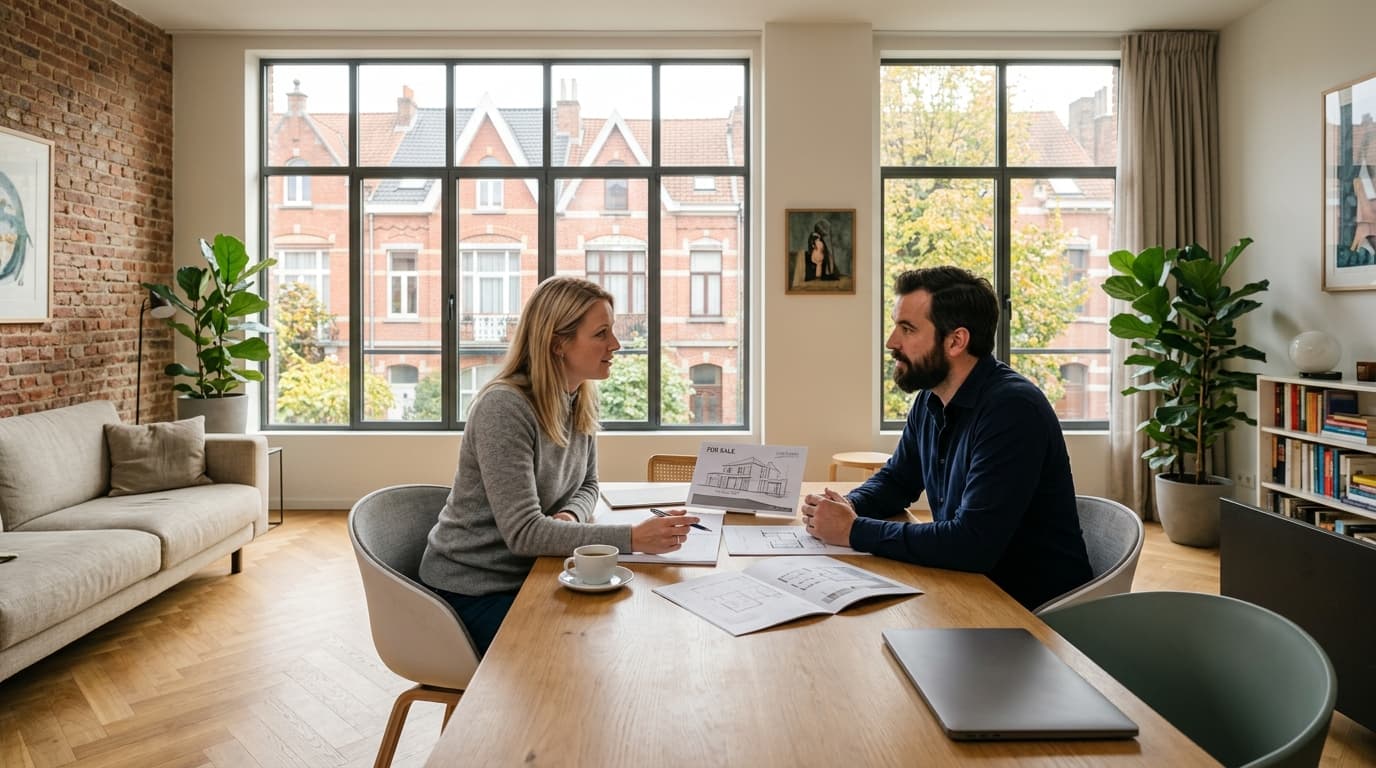
Sell first or buy first: what is the best order for your home?
Anyone who moves sooner or later runs into the question: sell first or buy first. There is no single right answer for everyone. It depends on your financial buffer, on how quickly homes sell in your area and on how much uncertainty you can handle. In this article we put both options side by side, with the risks, the in-between solutions and the questions you should ask your bank and your estate agent in advance.
Why the order makes such a difference
Selling a home and buying another one are two processes, each with its own pace. A sale can go quickly, but it can also drag on for months if the asking price is off or the market in your municipality is slower. A purchase, on the other hand, requires you to decide fast when the right property comes along. Those two rhythms rarely line up neatly.
The order determines which risk you take. If you buy first, you run the risk of having to finance two homes for a while. If you sell first, you run the risk of temporarily having no roof over your head, or of buying something under time pressure that is not quite right. Both risks are manageable, but only if you assess them beforehand and not once the sales agreement has already been signed.
A realistic view of the value of your current home is the starting point. If you overestimate the proceeds, you think you have more to spend than you do and run into trouble when you buy. A free valuation of your home gives you a first basis for those calculations.
Selling first: certainty about your budget
If you sell first, you know exactly how much money becomes available. After deducting the balance of your current loan and the selling costs, you can see in black and white how much of your own money you can put into the next home. That makes the conversation with the bank easier, and you negotiate as a buyer without the condition that you still need to sell first. Sellers prefer that kind of offer.
✦ 100% free & No obligation
Sell your property with the best agent
Compare the top 3 agents in your region for free and save on commission.
Compare agents →You also avoid paying double costs. No two loans at the same time, no paying property tax, insurance and maintenance twice. For people with a small buffer, this is often the safest route.
The downside is the gap in time. Between the deed of your sale and the keys to your new home there may be a period in which you have to rent temporarily or stay with family. Moving twice costs money and energy. One in-between solution is to agree with the buyer that you stay in the home for a limited period after the deed, for a fee or under a clear arrangement. Always put such an agreement in writing in the sales agreement, with a date and conditions, and have the notary check it.
The length of the sale also matters. How long that process takes in practice is explained in our article on how long it takes to sell a house.
Buying first: not letting your dream home slip away
In a tight market, the home you are looking for can be gone quickly. If you buy first, you can act as soon as the right house comes up, and you only move once. You also do not have to rush the sale of your current home, which keeps your negotiating position as a seller intact.
The risk lies in the financing. As long as your old home has not been sold, you may be paying two loans, or a loan plus a bridging loan. If the sale takes longer than planned, or the price turns out lower than you had counted on, your budget comes under pressure. That sometimes leads to a rushed sale below market value, exactly what you wanted to avoid.
Buying first works mainly for people with a solid buffer, or for those who own a property in a municipality where comparable homes sell quickly. A local estate agent can tell you how fast homes like yours change hands in your area. By comparing estate agents you get that assessment from several agencies.
Bridging loans and other in-between solutions
A bridging loan is a short-term loan with which the bank covers the period between the purchase and the sale. The bank advances you part of the expected proceeds of your current home so you can pay for the new one. After the sale, you repay the bridging loan in one go.
How much the bank is willing to advance, at what interest rate and for what term differs per bank and per case. The bank usually bases itself on a valuation of your current home and keeps a safety margin. So always ask what happens if the sale is not completed within the agreed term. That is the scenario you need to be able to handle.
Tax also plays a role. When you buy a new home, each region has its own rules for registration duties on your only own home. In Flanders, under certain conditions, you can get the reduced rate if you sell your previous home within a set period. Current rates and conditions are on vlaanderen.be, or with the FPS Finance and the regional tax services for Brussels and Wallonia. Have your notary work this out for your situation before you sign.
If you have a mortgage running on your current home, it has to be repaid when you sell. How that works, including any reinvestment fee, is explained in our article on selling a house with an outstanding mortgage.
How to make the decision in five steps
Start with an honest valuation of your current home. Not the price you hope for, but the price at which comparable homes in your area actually sold in recent months.
Then work out how many months you can carry two homes without getting into trouble. Include the loan, the property tax, the insurance, energy and maintenance. If that is less than a few months, selling first makes more sense.
Ask your bank in advance what it can offer: a bridging loan, adjusted repayments or another arrangement. Ask for it in writing, not only once you have already made an offer.
Look at the market in your municipality. In some municipalities homes sell quickly, in others it takes longer. An estate agent with local sales figures gives you more certainty here than general market reports.
Finally, set out a plan B. What will you do if the sale takes three months longer than planned? If you know that answer in advance, you make calmer decisions. For timing within the year, read our article on the best time to sell your home.
Frequently asked questions
Is selling first or buying first the safest option?
Selling first is the safest option financially, because you know exactly how much money becomes available and you never have to finance two homes at once. The downside is that you may have to rent temporarily or move twice.
What is a bridging loan?
A bridging loan is a short-term loan in which the bank advances part of the expected sale proceeds of your current home. You repay it as soon as your home is sold. Conditions, interest rate and term differ per bank.
Can I stay in my home for a while after the sale?
Yes, if the buyer agrees. You then set out in the sales agreement until when you will stay in the home and for what fee. Always have such an agreement checked by the notary.
How do I know how quickly my home will sell?
A local estate agent can estimate how long comparable homes in your area stay on the market. By comparing several estate agents, you get a more realistic picture of price and selling time.
To conclude
The choice between selling first or buying first is a trade-off between financial certainty and flexibility. If your buffer is small, selling first is usually the better choice. If you have room to manoeuvre and own a home that sells easily, you can buy first with a bridging loan as a safety net. Either way, a good decision starts with a realistic value and a sound estimate of the selling time.
Want to know what your home is worth and how quickly it sells in your area? On ImmoMakelaarVergelijker.be you compare up to 3 licensed estate agents in your region, free and without obligation. Or start with a free valuation.
"Real estate expert focused on quality control and strategic partnerships."