
Selling a home with solar panels: what do you need to arrange as a seller?

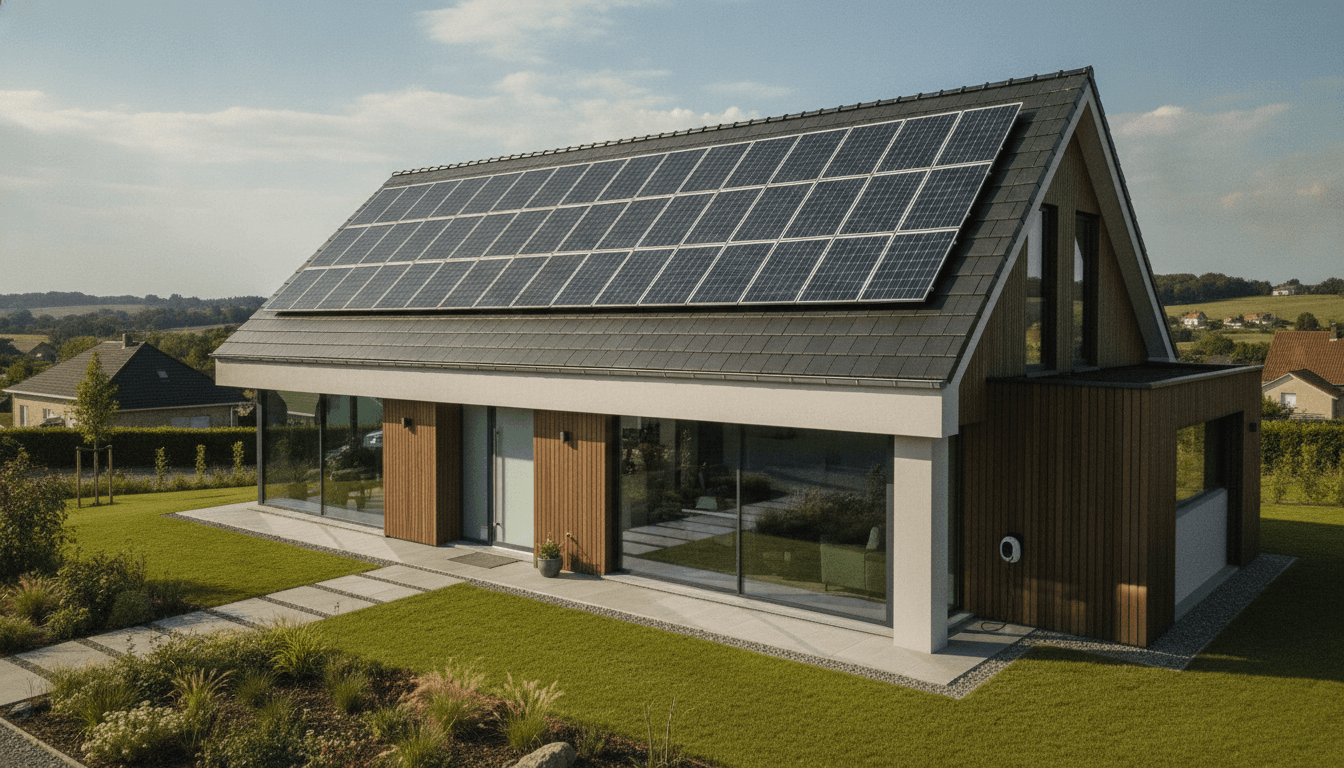
If you want to sell a home with solar panels, you hold an extra card, but you also have a few extra questions to answer. Do the panels go with the sale? Are they actually yours? Which documents will the buyer ask for, and how does the installation count towards the EPC? This article sets out the practical side, so the panels help your sale instead of slowing it down.
Do the solar panels go with the sale?
In most cases, yes. Solar panels that are fixed to the roof and connected to the electrical installation legally form part of the building. They count as immovable property and therefore pass to the buyer, just like the windows or the boiler.
If you want to take the panels with you to your next home, this has to be stated explicitly in the sales agreement. Do expect the buyer to be less than keen. Removing them leaves mounting points on the roof, and the home loses an argument you may well have used to market it. A lower price then becomes the obvious outcome.
Doubt more often arises over the equipment around the panels. A home battery, a charging point or a separate monitoring module is not always as clearly fixed to the building. So note in the sales agreement what is and is not included. That prevents arguments on handover day, when nobody still feels like negotiating.
Are the panels really yours? Watch out for leasing and building rights
Not every installation on a Belgian roof belongs to the occupant. Some owners had panels installed through a third party: a leasing scheme, an energy cooperative or a company that finances the installation in exchange for part of the yield. You use the electricity, but the panels themselves remain the property of that party.
✦ 100% free & No obligation
Sell your property with the best agent
Compare the top 3 agents in your region for free and save on commission.
Compare agents →With this kind of arrangement, a right of superficies is sometimes established on the roof. That right is registered and comes to light during the notary's searches. If it only surfaces at that stage, the sales agreement has often already been signed, and the conversation becomes an awkward one.
So put the contract on the table from the start. Check whether the buyer can take it over, what an early buyout costs and whether the third party has to give consent. Mention the arrangement in the listing or, at the latest, in the sales agreement. A buyer who knows where they stand is far less likely to pull out than one who only hears about it afterwards.
Which documents do the buyer and the notary ask for?
A buyer pays for what they can verify. The more complete your file on the installation, the less room there is for doubt or for a lower offer. Gather these documents before the property goes online:
- the invoice for the installation, with the date, number of panels and output;
- the technical data sheets for the panels and the inverter;
- the inspection report for the solar installation, drawn up when it was commissioned;
- the inspection report for the home's electrical installation;
- the warranty certificates and any service records;
- confirmation of registration with the grid operator;
- an overview of the annual yield, for example from your inverter's app.
Those production figures are often forgotten, while for a buyer they are the most tangible proof. A graph of several years of yield says more than any promise in a listing. If the inverter has already been replaced, add that invoice too. It is the component buyers ask about first.
Solar panels and the EPC: only what you can prove counts
Solar panels can improve your home's EPC label. That is a strong selling point, especially now that buyers pay more and more attention to the label and, in Flanders, a renovation obligation applies after buying a home with a poor label. A better label makes your home attractive to a wider group of buyers.
There is one condition, though. The energy assessor who draws up the EPC works with what they can observe and with the supporting documents you provide. If data on the output or the installation is missing, they fall back on cautious default values. Your panels then carry less weight in the result than they could have.
If your EPC dates from before the panels were installed, the certificate does not accurately reflect the home as it is now. A new EPC costs money, but it can be worth it if the label moves up a class as a result. Give the assessor the invoice and the technical data sheets straight away, so the installation counts in full.
What do solar panels do for the selling price?
Solar panels increase a home's value, but rarely by the full amount you paid at the time. A buyer looks ahead: how much longer will the installation last, and how much will it save them on the energy bill?
Age weighs heavily. Panels usually last 25 years or more and lose a small share of their efficiency each year, often around half a percent. The inverter is the weak point and usually needs replacing after 10 to 15 years. A buyer will therefore value a twelve-year-old installation with its original inverter differently from a recent one.
The condition of the roof matters too. Panels on a roof that needs replacing within a few years mean extra costs for removing and refitting them.
Want to know what your home with panels is worth today? A free valuation gives you an initial starting point. If you want to hear how buyers in your area respond to such an installation, you can also compare estate agents in your region and set their assessments side by side.
Meter readings, grid operator and regional rules at handover
On handover day, you record the meter readings together with the buyer. With a digital meter, that means both consumption and injection. Record them in an energy handover document and send them to your energy supplier, so your final bill is correct.
The new owner also has to transfer the generating installation into their name with the grid operator. If that is left undone, post about the installation can keep landing with you for months.
Caution is called for when it comes to support schemes. Whether green power certificates or a net metering arrangement are still attached to your installation depends on the region and the year it was installed, and those rules have changed several times in recent years. Check the current situation with your grid operator or the regional regulator: the VREG in Flanders, the CWaPE in Wallonia or Brugel in Brussels. Do not promise a buyer anything about ongoing support unless you have it in writing.
How to prepare the sale of a home with solar panels
Get the file on your installation ready before the first viewers arrive. Check that the panels are fully yours, collect invoices, inspection reports and production figures, and make sure your EPC reflects the installation correctly. Set out in the sales agreement what is included and what is not.
An estate agent who handles these files regularly knows which questions buyers ask and how to present the panels in the listing without exaggerating. Through ImmoMakelaarVergelijker.be you can compare up to three BIV-accredited estate agents in your region, free and without obligation, so you choose someone who brings your home to market at the right value.
Frequently asked questions
Do solar panels automatically transfer to the buyer when selling a home?
Yes, in most cases they do. Solar panels fixed to the roof and connected to the electrical installation legally form part of the building, so they pass to the buyer like any other fixed element. If you want to keep the panels, this must be stated explicitly in the sales agreement.
What if the solar panels on my roof were installed through a leasing scheme - can I still sell the house?
Yes, but you need to handle it carefully. If a third party owns the panels through a leasing or financing arrangement, a right of superficies may be registered on your roof, which will surface during the notary's searches. You should put the contract on the table from the start and clarify whether the buyer can take it over, what an early buyout costs, and whether the third party needs to give consent.
Which documents do I need to provide as a seller of a home with solar panels?
You should gather the installation invoice, technical data sheets for the panels and inverter, the inspection reports for both the solar installation and the electrical system, warranty certificates, confirmation of registration with the grid operator, and an overview of annual yield. Having these ready before the property goes online leaves less room for doubt or lower offers from buyers.
Do solar panels improve the EPC label of my home?
They can, but only if you provide the energy assessor with the supporting documents such as the invoice and technical data sheets. Without this documentation, the assessor falls back on cautious default values, and the panels carry less weight in the result than they could. If your EPC was drawn up before the panels were installed, getting a new one may be worth the cost if it moves your label up a class.
What needs to be arranged with the grid operator when selling a home with solar panels?
On handover day, you record the meter readings together with the buyer and send them to your energy supplier for a correct final bill. The new owner also needs to transfer the generating installation into their name with the grid operator - if this is left undone, correspondence about the installation can keep arriving at your address for months.
Redactie ImmoMakelaarVergelijker
"We write about selling, valuing and costs in Belgium. Articles are drafted with the help of AI from official sources and checked by our team."