
Handing over the keys when selling a house: when and how do you hand them over?

Handing over the keys when selling a house: when and how do you hand them over?
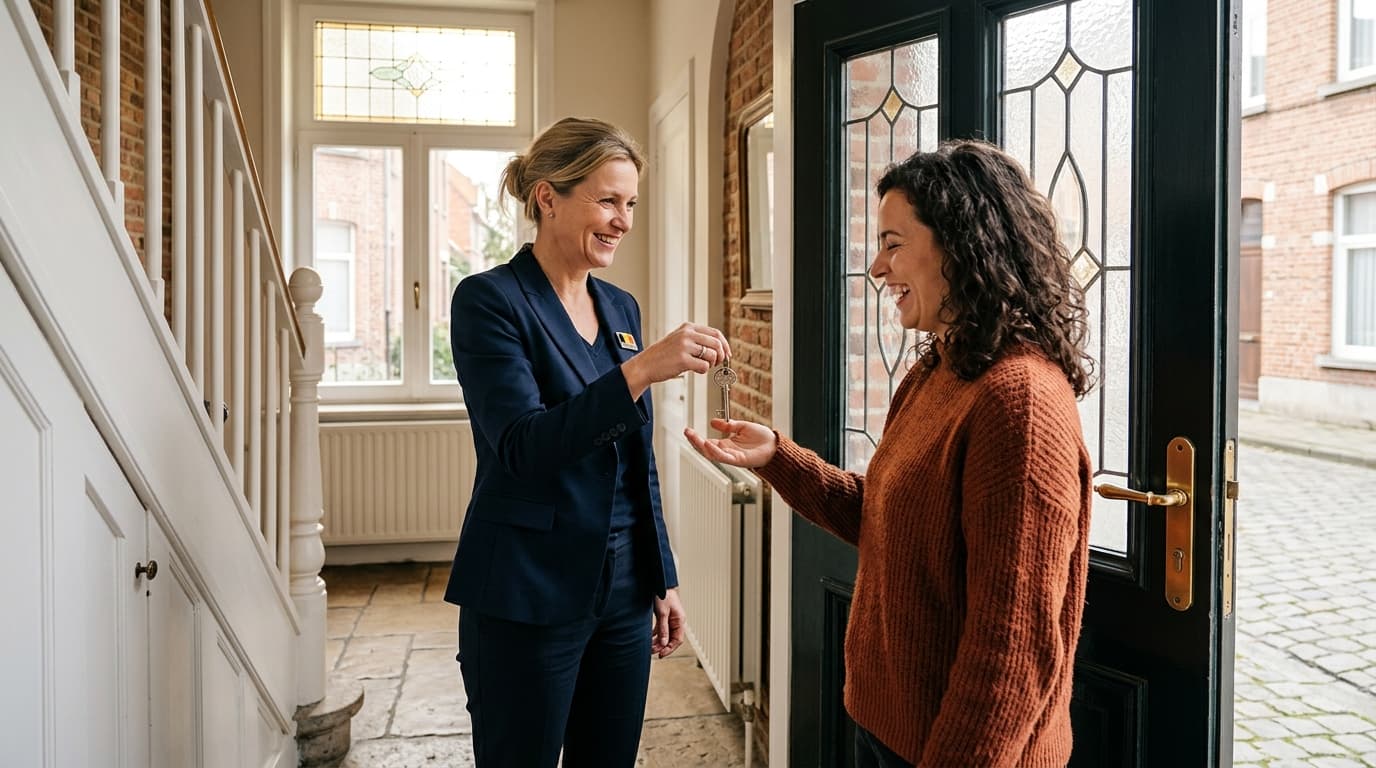
Handing over the keys when selling a house is the moment the buyer actually takes possession of the property. In Belgium this usually happens on the day of the notarial deed, once the full purchase price has been paid. Handing over the keys too early or preparing poorly exposes you to needless risk. Below you can read when to hand over the keys, what to arrange that day and how to avoid disputes afterwards.
When do you hand over the keys?
Once the compromis (preliminary sale agreement) is signed, the sale is in principle concluded, but most sale agreements state that ownership, risk and the use of the property only pass when the authentic deed is executed. So the usual rule is simple: the buyer gets the keys on the day of the deed, as soon as the notary confirms that the full purchase price and costs are in the notary's escrow account. Only then can you as the seller be sure of your money.
Read the compromis carefully, because it states the agreed date on which the buyer can take possession. Sometimes that date is tied to the deed, sometimes it is later because you stay in the house a little longer. There are usually a few months between the compromis and the deed. Our article on the time between the compromis and the deed explains how that period is set. Not yet sure how to approach the sale? Through IMV you can compare estate agents for free and without obligation, professionals who guide this process every day.
Handing over the keys before the deed: what are the risks?
Buyers sometimes ask to get the keys earlier, for example to start painting or to leave their own home sooner. That is understandable, but for you as the seller it is a risk. Until the deed has been executed, you remain the owner and you generally bear the risk of damage. If the sale still falls through, for example because the financing does not come through, someone is meanwhile living in your house without any ownership right to it.
If you do agree, put everything in writing. Agree on what the buyer may and may not do (only take measurements or also carry out work), who pays for utilities, whether any compensation is due and that the buyer takes out their own insurance. Preferably have such an agreement checked or drafted by the notary. A short accompanied visit, or a key kept by the estate agent for appointments, is often a safer middle ground than handing over the keys entirely.
✦ 100% free & No obligation
Sell your property with the best agent
Compare the top 3 agents in your region for free and save on commission.
Compare agents →Staying in the house after the deed
The reverse also happens: you sell, but your new home is not ready yet. You can then agree with the buyer that you stay in the property for a while after the deed. This too must be clearly set out on paper, ideally already in the compromis. Record the end date, any amount you pay for that period, who bears the fixed costs and utilities, and the condition in which you leave the house.
In such cases buyers sometimes ask for a deposit or have part of the price held back by the notary until the keys have actually been handed over. This is a common way to give both parties certainty. Keep in mind that the buyer is the owner from the day of the deed: you are then living in a house that is no longer yours, and your rights and obligations depend entirely on what you have agreed. The better you plan your move, the shorter that period can be. Our article on what to arrange when you move will help you with that.
Meter readings, utilities and insurance
On the day of the key handover, you and the buyer note the meter readings for electricity, gas, water and, if applicable, the heating oil tank. Take a photo of each meter with the date visible. Many grid operators and suppliers use an energy takeover document that both parties fill in and sign. Send it to your supplier quickly, so the final bill is correct and you do not pay for the new owner's consumption. Also notify the water company and cancel or transfer your internet, television and other subscriptions.
As for fire insurance: under Belgian insurance law, your policy continues to cover the buyer as well for a limited period after the deed, unless the buyer is already insured. Ask your insurer exactly when your cover ends and only cancel your policy once the buyer fully takes over the house. If you stay in the house after the deed, arrange explicitly who takes out which insurance. If you have solar panels, there are a few extra steps to take with the grid operator.
What do you hand over together with the keys?
The key handover is about more than the front door key. Make a list in advance and go through it together with the buyer. Think of all the keys for doors, windows, letterbox, storage room and garden shed, the remote controls for the garage door and sun shading, the codes for the alarm and any access systems, and the badges for an apartment building. Add the manuals and warranty documents for the boiler, kitchen appliances and other installations included in the sale, as well as the boiler's service log if you have one.
Also check that the house is in the condition stated in the compromis. It often says the property will be handed over empty and swept clean, so without furniture, rubbish or materials left behind in the cellar or attic. A final walk-through together prevents disputes. Briefly record what you hand over and which meter readings you noted together, and have both parties sign. If you are selling an apartment, let the building manager (syndic) know who the new owner is and from when. Finally, do not forget to have your post redirected and to give your new address to your municipality.
Frequently asked questions
Can the buyer get the keys before the deed?
That is possible if you both agree, but it is not an obligation. Until the deed has been executed, you remain the owner. Always put early possession in writing, with agreements on use, costs and insurance.
Who pays for utilities between the compromis and the deed?
As long as you are using the house, you generally pay for the utilities. From the key handover, the buyer takes them over. That is why you note the meter readings on the day the keys change hands.
What if the house is not empty at the handover?
If the compromis states that the property will be handed over empty and something is left behind, the buyer can ask you to have it removed or to bear the cost. A final walk-through before the deed avoids that discussion.
Does the notary have to be present at the key handover?
No. The keys are often handed over right after the deed at the notary's office, but you can also meet at the house itself. What matters is that the purchase price has been paid and the agreements are on paper.
Well prepared for the final step
The key handover is the last step of your sale and goes most smoothly when everything has been agreed in advance: the date, the condition of the house, the meter readings and everything you hand over. An experienced estate agent keeps an eye on those agreements from the compromis to the deed. Want to know what your home is worth first? Request a free valuation. Ready to sell? Compare up to 3 recognised estate agents in your area, free and without obligation.
"Tech entrepreneur and strategist focused on digital transformation in the real estate sector."