
Selling a house with an alarm system: declaration, contract and codes

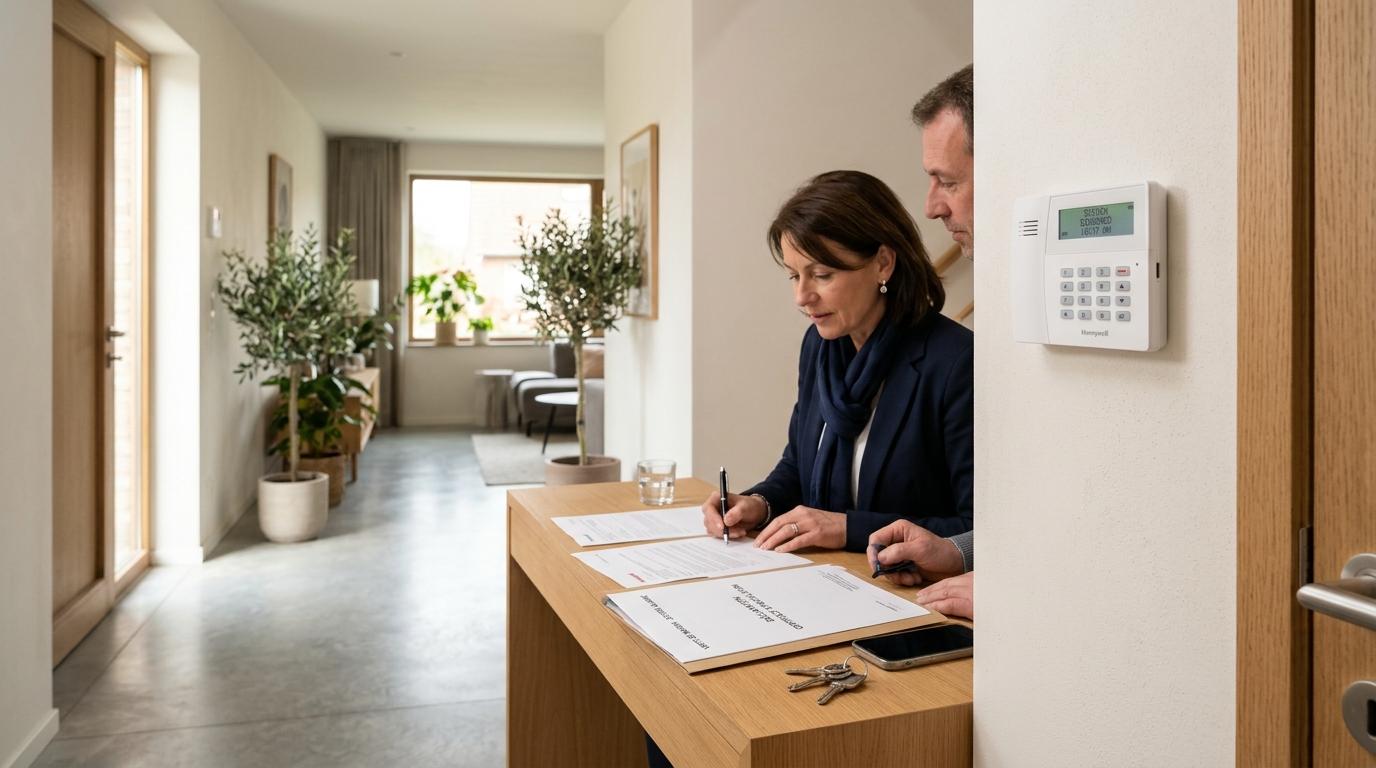
If you want to sell a house with an alarm system, you are selling more than a few sensors on the wall. Such a system comes with a declaration to the police, often a contract with a monitoring centre and a set of codes and app accounts that are currently in your name. Buyers like to see an alarm, but they want to be sure that after the deed they are the only ones who operate it. Below you can read what to arrange in advance as a seller.
What an alarm system means for your sale price
An alarm system rarely pushes the sale price up visibly. Buyers look first at the location, the condition of the house, the EPC and the price per square metre in the area. A well-functioning alarm is mainly a comfort for them: it saves an investment and gives a feeling of safety during the first nights in a new home.
The reverse can play a role, though. A system that has not been maintained for years, or that still communicates with the monitoring centre via an old landline or an outdated mobile network, is more likely to be seen by a buyer as a cost. They then factor a replacement into their offer. The older and the more poorly documented the system, the bigger that discount in their head.
Want to know what your home is worth in its current condition, with or without a recent alarm? Request a free valuation. A local estate agent also knows how buyers in your municipality value extras like these. In a quiet neighbourhood with few burglaries an alarm carries less weight than in a city where buyers ask about it unprompted.
The police declaration: stopping it and declaring again
In Belgium, the user of an alarm system declares that system to the police through the online platform Police on web. That declaration is in the user's name and not tied to the address alone. It also states who the police or the monitoring centre should call when the alarm goes off. Today those are your contact persons: your neighbours, family or yourself.
✦ 100% free & No obligation
Sell your property with the best agent
Compare the top 3 agents in your region for free and save on commission.
Compare agents →When you sell, that means two steps. You amend or stop your declaration from the day you leave the house, so the police no longer call you about an address where you no longer live. The buyer then makes a new declaration themselves with their own details and contact persons. Agree on this clearly, because there must be no period between the deed and the new declaration in which nobody knows who is responsible.
The exact rules and the form are on the Police on web website. If you work with an installer or a monitoring centre, you can check with the FPS Home Affairs whether that company is licensed. Pass this information on to the buyer too, so they know who to contact.
The contract with the monitoring centre and any rental
Many alarm systems are connected to a monitoring centre that alerts the police or a security guard when an alarm is triggered. This works through a subscription, and that subscription is a contract between you and the company. It does not pass automatically to the buyer when the house changes owner.
So read your contract in good time. Pay attention to the minimum term, the notice period and whether a transfer to the buyer is possible. Some companies let the new owner take over the running contract, others require a new contract with new terms. A cancellation sent too late can still cost you a few months of subscription fees for a house that is no longer yours.
Also check whether the equipment is yours. There are plans where you rent or lease the control panel, the sensors and the cameras. In that case you cannot sell them as part of the house. Tell the buyer and the notary, and agree with the supplier whether the equipment stays in place under a new contract or is collected.
Put the key details on one sheet: brand and model, installer, year of installation, last service, monthly cost and what the subscription covers. Buyers ask these questions anyway, and a clear overview makes a better impression than a vague answer during the viewing.
What you record in the compromis
An alarm system that is permanently built into the house, with wired sensors, a control panel on the wall and an outdoor siren, normally belongs to the house. Even so, it is wise to mention it explicitly in the compromis. That way you avoid discussion at the final inspection or after the deed.
Record that the system stays and works on the day of the deed, that you hand over the codes, badges and remote controls, and that you stop or transfer your subscription as agreed. Loose components, such as a wireless camera, a smart doorbell or a battery-powered siren, are listed separately. If you want to take them with you, write that down and repair the holes in the wall.
If the alarm is connected to its own circuit in the fuse box, that circuit is also covered by the electrical installation inspection when selling. That is not a separate inspection of the alarm, but a point of attention if the installer did not follow the rules at the time.
Unsure about the wording? An estate agent or the notary can help. By comparing estate agents you receive proposals from up to three local agents who put agreements like these into a compromis every day.
Viewings, codes and the day of the deed
During the sale period, the estate agent must be able to get in without setting off the alarm. Give them a temporary user code and not your master code, so you can easily delete it after the sale. If there are indoor cameras that record footage, switch them off during viewings or state clearly that they are on. Visitors do not expect to be filmed in the living room, and that feeling can spoil a viewing.
On the day of the deed you hand over the system completely. That means: passing on the master code and the installer code or having the installer reset the system, deleting your account in the app, removing shared access for family or neighbours and stopping any cloud storage of footage. Also hand over the manual, the spare badges and the installer's contact details.
If the alarm is linked to other smart devices in the house, such as lighting or a smart lock, also read our guide to selling a home with home automation. There you can read how to transfer accounts and access properly, so that from day one the buyer decides who can open their door.
Frequently asked questions
Do I have to report my alarm system when I sell?
Yes, to the buyer it is best to mention it in the description and in the compromis. With the police, you amend or stop your declaration via Police on web, after which the buyer makes their own declaration.
Can I take my alarm system with me when I move?
A permanently built-in alarm system normally belongs to the house. Taking it with you is only possible if you agree this with the buyer and record it in the compromis, and you then repair the walls where components were mounted.
Does my monitoring centre subscription pass automatically to the buyer?
No. The subscription is a contract in your name. You cancel it according to the terms or you arrange a transfer with the company, if that company offers the option.
Does an alarm system increase the value of my home?
Usually only a little. Buyers see a well-functioning, documented alarm as a comfort. An outdated system is more likely to be counted as a cost that they deduct from their offer.
Well prepared for the deed
An alarm system becomes an asset if the buyer can take it over without questions: a clear declaration, a settled contract, agreements in the compromis and codes that change owner on the day of the deed. Want someone to prepare the whole sale with you, from valuation to deed? Compare up to three estate agents in your area for free and without obligation.
Frequently asked questions
Do I need to update my police declaration when I sell my house with an alarm system?
Yes. You amend or stop your declaration via Police on web from the day you leave the house, so the police no longer contact you about an address where you no longer live. The buyer then makes a new declaration with their own contact details.
Does my monitoring centre subscription automatically transfer to the buyer?
No, the subscription is a contract in your name and does not pass to the buyer automatically. You need to cancel it according to the terms or arrange a transfer with the company, if they offer that option.
Can I take the alarm system with me when I move?
A permanently built-in alarm system normally belongs to the house. You can only take it with you if you agree this with the buyer, record it in the compromis, and repair the walls where components were mounted.
What should I hand over to the buyer on the day of the deed?
You hand over the master code and installer code, delete your app account, remove shared access for family or neighbours, stop any cloud storage of footage, and also pass on the manual, spare badges and the installer's contact details.
Does an alarm system raise the sale price of my home?
Usually only a little - buyers see a well-functioning, documented alarm as a comfort rather than a reason to pay more. An outdated or poorly maintained system is more likely to be counted as a cost that buyers deduct from their offer.
Follow us on Google
Pick Immomakelaar Vergelijker as a preferred source and you will see our articles more often in Google, including in AI answers.
Redactie ImmoMakelaarVergelijker
"We write about selling, valuing and costs in Belgium. Articles are drafted with the help of AI from official sources and checked by our team."