
Selling a house with a fitted kitchen: what stays, and what counts in the price?

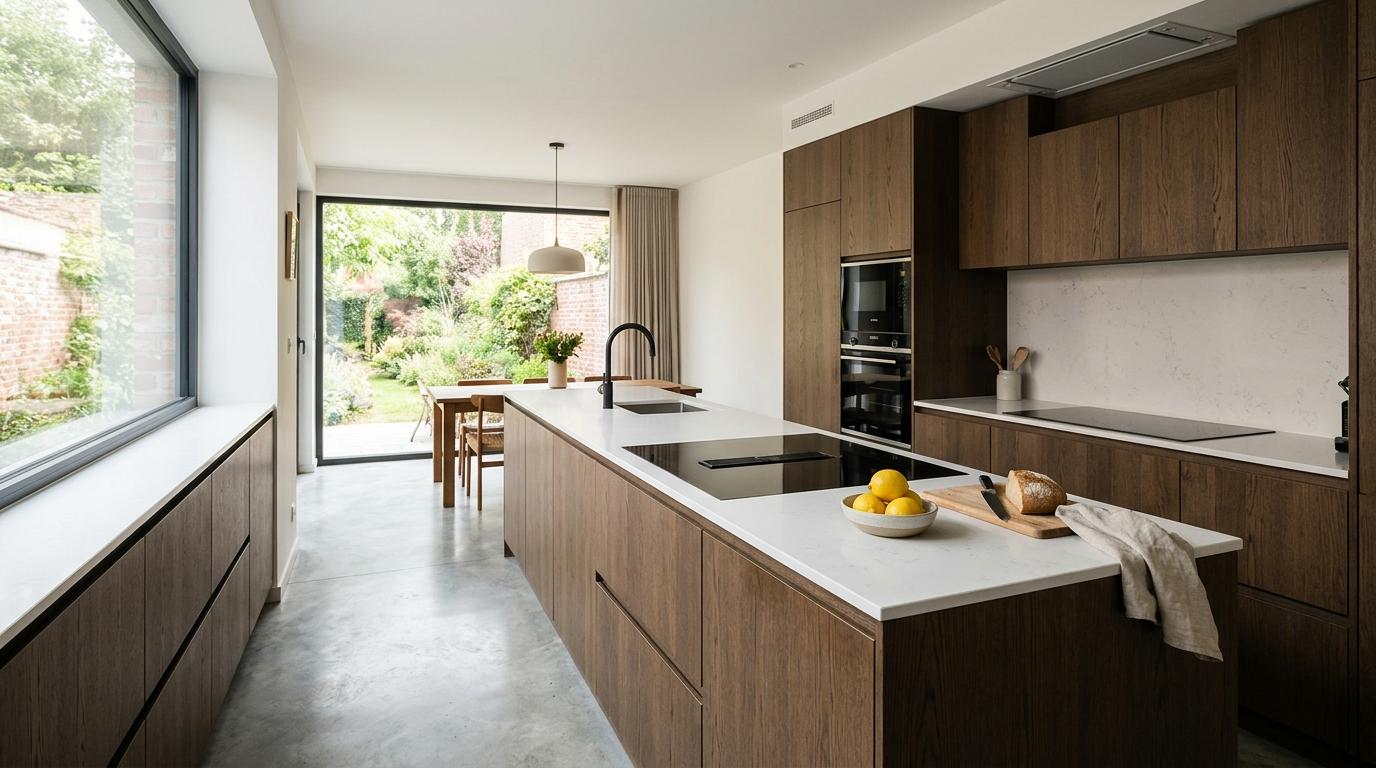
If you want to sell a house with a fitted kitchen, the kitchen is in principle sold along with it. A kitchen that is permanently built into the home legally belongs to the house. Even so, the kitchen is a surprisingly common source of disagreement: about the appliances, about what is still there at the key handover and about whether a new kitchen pushes the price up. Below you can read what to arrange in advance as a seller.
What legally belongs to the house?
Belgian law distinguishes between immovable and movable property. A fitted kitchen is permanently attached to the home: the units are installed to measure, the worktop is connected to the water supply and drainage and the appliances are built into the cabinets. Such a kitchen is considered part of the building. If you sell the house without agreeing otherwise, the kitchen goes to the buyer.
Loose items are a different matter. A freestanding fridge, a microwave on the counter, a coffee machine or a table with chairs are movable. You take them with you in principle, unless you agree with the buyer that they stay. The grey area is the appliances. A built-in oven or a hob set into the worktop belongs to the kitchen. An American-style fridge that stands in a recess but is connected with a plug is obviously included for one buyer and not at all for another.
That is exactly why it pays to leave nothing to chance. What seems logical to you is not always logical to the buyer.
Record in the sale agreement what stays
Most disputes about kitchens arise on the day of the key handover. The buyer expects a dishwasher that is no longer there, or finds an old freezer in the utility room that they did not want. You avoid this with a short list in the private sale agreement (the compromis).
✦ 100% free & No obligation
Sell your property with the best agent
Compare the top 3 agents in your region for free and save on commission.
Compare agents →Note for each appliance whether it stays or goes: oven, hob, extractor hood, dishwasher, fridge, freezer, combination microwave and any extras such as a water softener or a boiling-water tap. Also state the condition you leave them in, for example "working and cleaned". An estate agent adds such a list to the file as standard. If you sell yourself, ask your notary to include the list in the compromis.
Also agree what happens if an appliance breaks down between the compromis and the deed. A short sentence is enough: the seller hands over the appliances in working order, or the buyer accepts them in the condition they are in. How to handle the handover itself in practice is explained in our article on handing over the keys when selling a house.
Does a fitted kitchen increase the sale price?
A well-kept kitchen makes a home easier to sell. During a viewing, buyers judge the kitchen and the bathroom most strictly, because they know replacing them is expensive and a lot of work. A recent, neutral kitchen in good condition takes that worry away. A dated kitchen with damaged fronts sets buyers calculating, and that calculation almost always comes out higher than the actual cost.
That does not mean a new kitchen pays for itself when you sell. A kitchen is personal: the colour, the layout and the appliances you chose do not appeal to every buyer. If you install a completely new kitchen shortly before the sale, you rarely recover that full investment in the sale price. A small refresh usually works better: repairing or re-wrapping the fronts, cleaning the worktop thoroughly, replacing worn hinges and having a faulty appliance repaired.
Not sure whether your kitchen lowers the price or actually helps? An estate agent who knows the local market can assess this during a visit. With a free valuation you get a first idea of the value of your home in its current condition.
Registration duties and the kitchen in the deed
When buying a home, the buyer pays registration duties. These are calculated on the price of the immovable property. Sometimes a buyer suggests listing part of the price in the deed as "movable goods", because no registration duties are due on those. For loose furniture and freestanding appliances that is possible, provided the amount matches their actual value.
A fitted kitchen, however, is not movable property. Listing it separately and overvalued in the deed to save tax can be challenged by the tax authorities, resulting in an additional assessment and a fine. That risk lies first and foremost with the buyer, but as the seller you sign too. Let the notary decide what can be listed separately. Current rates and rules are available from Vlaanderen.be or the competent regional tax service in Brussels and Wallonia.
Defects, inspection and documents
Is the dishwasher leaking, does a cooking zone not work or is there damp behind the base units? Tell the buyer. A sale agreement usually contains a clause that releases the seller from liability for hidden defects, but that protection does not apply to defects you knew about and kept quiet. Being open costs you at most a small price reduction and saves you a possible dispute after the deed.
The kitchen is also covered by the electrical installation inspection that is mandatory when you sell. The hob, the oven and other heavy appliances are often on their own circuits. Problems with those circuits therefore end up in the inspection report. You can read more in our article on the electrical inspection when selling. If you have smart appliances linked to an app or your account, also take a look at our guide to selling a home with home automation.
Finally, gather the manuals, the warranty certificates and the kitchen invoice. A buyer who can see when and by whom the kitchen was installed and what warranty is still running has more confidence in its condition. Hand those documents over at the key handover.
Frequently asked questions
Do I have to leave my fitted kitchen behind when I sell my house?
Yes, unless you agree otherwise. A fitted kitchen is permanently attached to the home and therefore legally belongs to the house. If you want to take appliances or units with you, record that explicitly in the sale agreement.
Can I take my freestanding fridge with me?
Yes. A freestanding fridge is movable property and is not automatically part of the sale. To avoid discussion, note in the compromis which appliances stay and which you take with you.
Is it worth installing a new kitchen before the sale?
Usually not. You rarely recover the full cost of a brand-new kitchen when you sell, because buyers have their own taste. A small refresh, such as repairing the fronts and having faulty appliances fixed, gives a better return in proportion.
Can the kitchen be listed separately in the deed to save registration duties?
A fitted kitchen is immovable and is part of the price of the home. Only loose furniture and freestanding appliances can be listed separately at their actual value. The tax authorities can challenge an overvalued amount, so let the notary assess this.
Your kitchen as an asset in the sale
A fitted kitchen in good condition helps your home sell faster, provided the buyer knows in advance what they are getting. Record the appliances in the compromis, report known defects and gather the documents. That way you avoid discussion on the day of the key handover.
Want to know how an estate agent assesses your kitchen and your home? Through ImmoMakelaarVergelijker.be you can compare up to 3 recognised estate agents for free in your area. You decide who you continue with, with no obligation. Start your comparison here.
Frequently asked questions
Do I have to leave my fitted kitchen when I sell my house?
Yes, unless you agree otherwise in writing. A fitted kitchen is permanently attached to the home and legally belongs to it. If you want to take certain appliances or units with you, record that explicitly in the sale agreement.
Can I take my freestanding fridge or other loose appliances with me when I sell?
Yes. Freestanding appliances are movable property and are not automatically part of the sale. To avoid disputes at the key handover, note clearly in the compromis which items stay and which you take with you.
Is it worth installing a new kitchen before selling my house?
Usually not - you rarely recover the full cost of a new kitchen in the sale price, since buyers have their own taste. A small refresh like repairing the fronts or fixing faulty appliances typically gives a better return proportionally.
Can a fitted kitchen be listed separately in the deed to reduce registration duties?
No. A fitted kitchen is considered immovable property and must be included in the home's sale price. Only loose furniture and freestanding appliances can be listed separately at their actual value - let the notary decide what qualifies.
What should I do if I know about a defect in the kitchen before selling?
You are required to tell the buyer. The hidden defects clause in a sale agreement does not protect you for defects you knew about and stayed silent on, which could lead to a dispute after the deed is signed.
Follow us on Google
Pick Immomakelaar Vergelijker as a preferred source and you will see our articles more often in Google, including in AI answers.
Redactie ImmoMakelaarVergelijker
"We write about selling, valuing and costs in Belgium. Articles are drafted with the help of AI from official sources and checked by our team."