
Selling a house during a separation: options, agreements and pitfalls

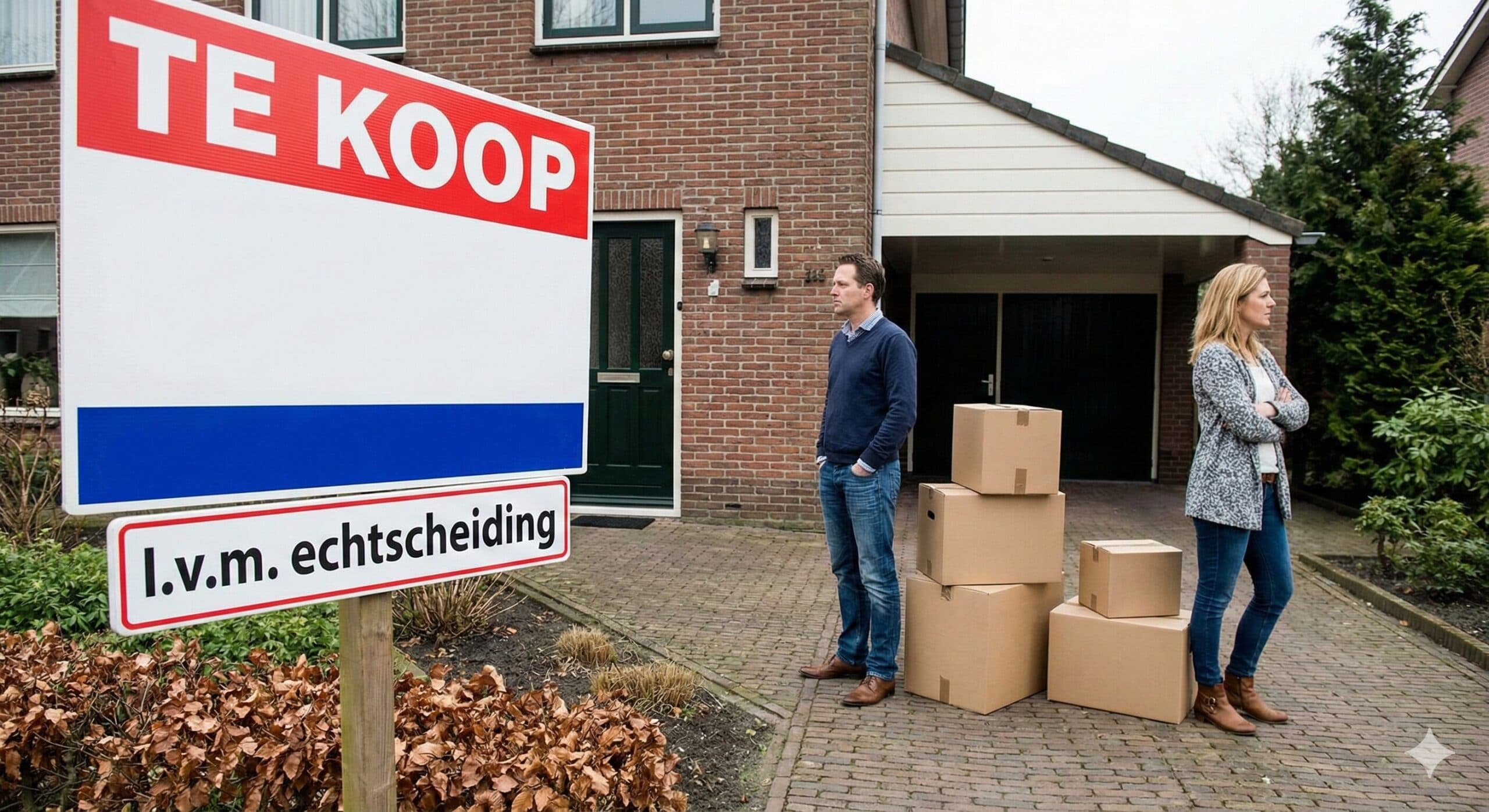
When you separate and jointly own a property, you will sooner or later face the same question: what do we do with the house during the separation? Selling the house during a separation is one of the three classic scenarios, alongside a buy-out by one partner and keeping the property temporarily in joint ownership. The family home is often the largest shared asset, carrying both a strong emotional weight and a complex administrative and financial reality. In this guide we walk through your options step by step, explain how the sale works in practice and highlight the pitfalls to watch out for to avoid conflict and financial loss.
1. The three basic options during a separation
When you separate - whether you were married, legally cohabiting or living together informally - there are broadly three possible solutions for the shared home:
- Option 1: sell the house during the separation.
You sell to a third party, pay off the mortgage and divide the remaining proceeds according to each partner's ownership share. - Option 2: buy-out.
One partner buys out the other and becomes the sole owner. The departing partner receives their share in cash or through a set-off, often combined with a refinancing arrangement with the bank. - Option 3: maintain joint ownership.
You remain co-owners, for example to allow the children to stay in the home temporarily, agreeing to sell or buy out at a later stage.
In this article we focus on selling the house during a separation, but that choice should always be considered in light of the other two options. A good conversation with the bank and an objective valuation sometimes reveals that a buy-out or a period of continued joint ownership is actually more advantageous.
2. Selling the house during a separation: when does it make sense?
Selling the house during a separation is often the most appropriate course of action when:
- neither partner wants or is able to stay in the property;
- the monthly costs become too heavy for one person alone;
- the relationship has broken down to the point where long-term joint ownership is no longer a realistic option;
- you deliberately want a financial and emotional fresh start, free from ongoing mutual dependency.
A sale makes several things possible.
✦ 100% free & No obligation
Sell your property with the best agent
Compare the top 3 agents in your region for free and save on commission.
Compare agents →- pay off the joint mortgage;
- divide the remaining equity (or negative equity) in a clear-cut way;
- give both partners financial breathing room for a new beginning.
The downside is that you have to let go of the property and its surroundings, and that the timing of the sale is not always ideal (market conditions, children, work).
3. Step 1: map out the ownership shares and matrimonial regime
Before selling the house during a separation, you need to know exactly who owns which share. This depends on:
- the matrimonial regime (community of property, separation of assets, with or without a marriage contract);
- the contribution made at the time of purchase (personal savings, inheritances, gifts);
- how the property is registered in the title deed (50/50, 60/40, 100/0, …).
For married couples under the legal community-of-property regime, the family home is in principle jointly owned, but deviations are possible due to personal contributions or specific clauses. For cohabiting partners, it depends on what was recorded in the notarial deed of purchase at the time.
This ownership split is important for dividing the sale proceeds later on. A notary can draw this up clearly, so that you know exactly what percentage of the rights each person holds.
4. Step 2: a realistic valuation of the property
You then need to know what the property is worth today. Without an objective valuation, the question of selling the house during a separation quickly gets bogged down in arguments about prices being "too low" or "too high".
A good valuation:
- takes into account the location, state of maintenance, EPC, floor areas, outdoor space and comparable properties recently sold in the neighbourhood;
- considers any renovation work that buyers will factor into their offer;
- gives you a concrete price range from which you can set an asking price.
Especially if one partner is torn between buying the other out and selling, a neutral figure from a local expert is indispensable. It prevents one of you from feeling short-changed, or the file from stalling because someone "doesn't want to give the house away".
5. Step 3: agree on the sales strategy
If you decide to sell the house during the separation, you need to settle a number of strategic questions together:
- When do we start the sale?
Before, during or after the separation procedure. Legally everything is possible; in practice, you need to see what is workable. - Do we use an estate agent or sell ourselves?
An estate agent can take on many tasks (pricing, marketing, negotiations), which often adds real value in an emotionally charged situation. - What asking price and what minimum price do we set?
Ideally you agree on this together, based on the valuation and the market. - Who handles viewings and communication with the agent?
Appoint one main contact, but make sure the other partner is kept informed transparently.
Preferably put these agreements in writing (for example in a mutual agreement or in the settlement deed for a divorce by mutual consent). That prevents the sale from being blocked later because one of you changes their mind.
6. Step 4: dealing with the mortgage and the bank
When selling the house during a separation, the mortgage has to be taken into account:
- On the sale, the outstanding loan is in principle repaid in full from the proceeds.
- Any early repayment penalties or costs of early repayment are also borne by the sellers.
- What is left after repaying the loan is your net equity, which is then divided according to each person's share.
Important: until the sale, you are both legally responsible for paying the mortgage instalments. So agree clearly:
- who pays what until the deed (mortgage, fire insurance, property tax);
- how these payments will be settled in the final account.
Without a clear agreement, one partner may stop paying essential costs, leading to arrears, reminders and extra charges.
7. Step 5: dividing the sale proceeds
After the sale and the repayment of the loan, the notary draws up a distribution statement. It takes into account:
- each person's share (50/50, 60/40, and so on);
- any personal contributions (for example an inheritance that one partner put in at the time of purchase);
- costs incurred for the sale (major renovations, structural work, certificates).
In an "ordinary" situation with equal ownership and no special contributions, the net equity is simply split 50/50. In more complex cases, the notary makes the appropriate adjustments. That is also why an accurate inventory and documentation of contributions and works are so important.
8. What if one partner refuses to sell?
A common question in practice: what happens if one partner refuses the sale of the house during the separation?
There are then several options:
- Mediation: through a mediator or the notary, you try to reach an agreement on the sale or a buy-out.
- Preferential allocation (for married couples): the family court can decide to allocate the family home to one partner, provided that partner buys out the other's share.
- Ending joint ownership: if there is no agreement, one partner can go to court to ask for the jointly owned property to be divided. The judge can then appoint a notary, who may proceed with a (public) sale.
As a rule, it is wiser to reach an amicable agreement before it comes to that. Proceedings cost time, money and energy, and the final proceeds of a forced sale are often lower than those of an ordinary sale on the market.
9. Emotional and practical tips
Selling a house during a separation is never just a financial transaction. It touches on memories, expectations and sometimes feelings of guilt. A few useful tips:
- Do not mix the separation and the sale in your discussions. As far as possible, try to deal with the emotional side (the break-up) and the practical side (the property) separately.
- Work with objective figures. A professional valuation and a clear overview of costs take away part of the tension.
- Be transparent. Share documents, agreements and steps with the other person, even if you are no longer on good terms.
- Think of the children. Make decisions that are not only legally correct but also workable in daily life (school, custody, stability).
10. Why an independent valuation is a good starting point
Without an objective valuation, the discussion about selling the house during a separation often stays stuck on impressions and gut feelings. An independent valuation by a local estate agent:
- gives you a clear picture of the market value;
- helps you choose a realistic asking price;
- forms the basis for a fair split or a correct buy-out amount.
About to separate, or in the middle of a separation, and want a clear view of where the property stands? Then request a free valuation. A local estate agent who knows the market in your area can not only give you a realistic value but also advise you on the best sales strategy in this delicate situation. That brings calm to the negotiations and helps you come out of the separation financially stronger.
Frequently asked questions
What are the three main options for dealing with a shared home during a separation?
The three options are: selling the house to a third party and dividing the proceeds, one partner buying out the other to become sole owner, or keeping the property in joint ownership temporarily. Each option depends on personal circumstances, financial capacity and the state of the relationship.
When does selling the house during a separation make the most sense?
It makes sense when neither partner wants or can afford to stay in the property, when the monthly costs are too heavy for one person, or when both partners want a clean financial and emotional break. It also helps when continued joint ownership is simply not a realistic option.
How are the sale proceeds divided between partners?
The proceeds are divided according to each partner's ownership share, which is recorded in the original title deed and depends on factors like the matrimonial regime and personal contributions made at the time of purchase. A notary can map this out clearly before the sale takes place.
Does the type of relationship - married, legally cohabiting or informally living together - affect how the house is handled?
Yes, it does. For married couples under community of property, the family home is generally jointly owned, while for cohabiting partners the split depends on what was recorded in the notarial deed at the time of purchase. Deviations are possible based on personal contributions or specific contractual clauses.
Why is a property valuation needed before selling during a separation?
An objective valuation is needed to establish what the property is worth today, so that the sale process does not get stuck in disputes over price. Without a realistic figure agreed upon by both parties, negotiations can quickly become difficult.
"Real estate expert focused on quality control and strategic partnerships."