
Step-by-step guide to selling your house: how to go about it

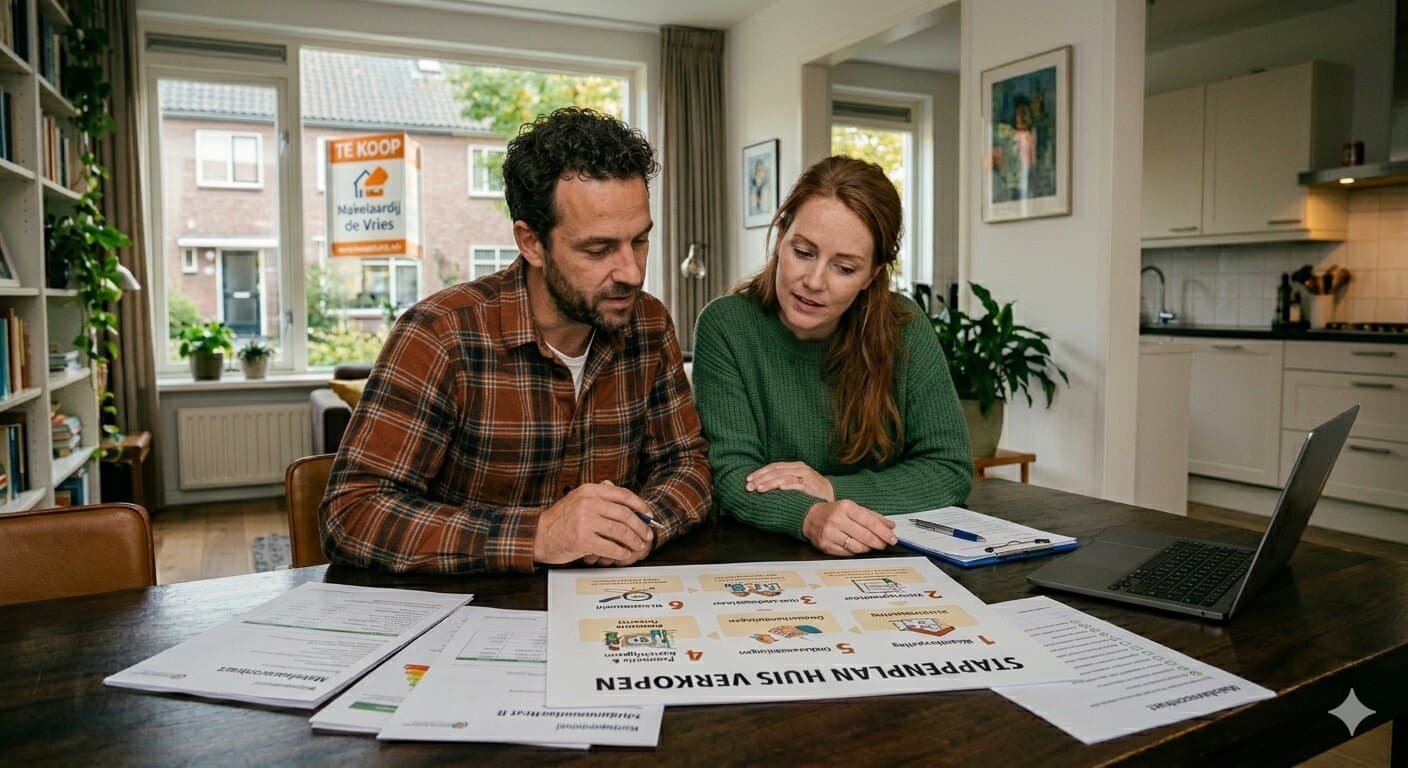
Selling a house is not something you do every day. There is far more to it than taking photos and posting an ad online. With a clear step-by-step guide to selling your house, you stay on top of things and avoid costly mistakes. From valuation and certificates to negotiating and signing the notarial deed: every step has its own points to watch.
Step 1: Define your strategy and timing
Before you put anything online, it makes sense to start by defining your strategy and timing.
- Will you sell privately or work with an estate agent?
- When do you want to put your property on the market, and when do you need to have moved out at the latest?
- Do you need to buy first and then sell, or the other way around?
A solid plan will prevent you from feeling rushed or ending up with two sets of housing costs at the same time.
Step 2: Valuation and asking price
The next step in any selling guide is a realistic valuation.
- Compare recent sales in your neighbourhood.
- Make use of an online valuation tool if you wish.
- Have your property valued by an estate agent or an independent expert.
Based on that information, you set an asking price that attracts buyers while respecting your own minimum threshold.
✦ 100% free & No obligation
Sell your property with the best agent
Compare the top 3 agents in your region for free and save on commission.
Compare agents →Step 3: Gathering mandatory certificates and documents
Before you can sell officially, you need to put together a range of mandatory documents.
These include:
- an energy performance certificate (EPC);
- an asbestos certificate (for older buildings);
- a soil certificate;
- an electrical inspection report;
- town-planning information;
- the title deed and cadastral data;
- a post-intervention file for recently built or renovated properties.
Without these documents, the notary cannot finalise the sale, and some of this information must already appear in your listing.
Step 4: Getting your house ready to sell
Next, you get your property ready to sell.
- Declutter thoroughly and create a neutral feel;
- carry out minor repairs;
- make the most of natural and artificial light;
- consider a fresh coat of paint or some simple styling.
A fresh, neutral property leads to better photos and a better first impression during viewings.
Step 5: Professional photos and listing
Good presentation is important.
- Have professional photos taken if at all possible.
- Write a clear, honest description covering all the key information, including the EPC rating and flood-risk data.
- Choose the right channels: property websites, social media, your personal network, and possibly an estate agency network.
The stronger the first online impression, the more enquiries you tend to receive.
Step 6: Organising viewings
Now organise the viewings.
- Schedule time slots that work for you.
- Make sure the property is tidy and well ventilated each time.
- Provide honest and complete information about both the strong points and the points to watch.
After each viewing you can gauge interest and collect feedback, so you can adjust your approach if needed.
Step 7: Negotiating the price
Once offers come in, the negotiation phase begins.
- Decide on your minimum price in advance.
- Look beyond the price itself - also consider the conditions: financing, timing, and suspensive clauses.
- Take into account any competition between prospective buyers.
A clear step-by-step guide helps you stay rational rather than making decisions purely on emotion.
Step 8: Preliminary agreement and notarial deed
Once an agreement is reached, the first step is the preliminary sales agreement (private deed), followed by the notarial deed.
- The preliminary agreement sets out the price, conditions, deadlines and certificates. Always have it reviewed by the notary.
- The buyer usually pays a deposit (often 10%).
- Within roughly 3 to 4 months, the authentic deed is signed before the notary, at which point the sale becomes final.
Make sure all documents are still valid and that any agreements - for example regarding movable items - are clearly included.
Step 9: Handover and practical wrap-up
Finally comes the handover.
- Read and pass on the meter readings.
- Hand over the keys.
- Update your insurance policies and direct debits.
- Follow up on any agreements regarding outstanding works or movable items.
This allows you to close the sales process correctly, both legally and practically.
In summary
A good step-by-step plan for selling your house starts with strategy and valuation, then moves through certificates, presentation and viewings to negotiations, the preliminary agreement and the notarial deed. Anyone who works through each step carefully and takes care of the legal requirements in good time increases their chances of a smooth sale and a strong final selling price.
Frequently asked questions
What mandatory documents do I need to sell my house in Belgium?
You need several certificates and documents, including an energy performance certificate (EPC), an asbestos certificate for older buildings, a soil certificate, an electrical inspection report, town-planning information, the title deed and cadastral data, and a post-intervention file for recently built or renovated properties. Without these, the notary cannot finalise the sale, and some must already appear in your listing.
How long does it take between the preliminary agreement and the final notarial deed?
After signing the preliminary sales agreement, it typically takes around 3 to 4 months before the authentic deed is signed before the notary. At that point the sale becomes final, and the buyer usually pays a deposit of around 10% at the preliminary agreement stage.
Should I set my asking price before or after getting a proper valuation?
You should set your asking price based on a proper valuation first - compare recent sales in your neighbourhood, use an online valuation tool, or have the property valued by an estate agent or independent expert. This helps you attract buyers while still respecting your own minimum threshold.
Can I sell my house privately without an estate agent?
Yes, the guide mentions selling privately as a valid option alongside working with an estate agent. The choice is part of defining your strategy before putting your property on the market.
What happens during the handover once the sale is finalised?
During the handover you read and pass on the meter readings, hand over the keys, update your insurance policies and direct debits, and follow up on any agreements regarding outstanding works or movable items. This closes the sales process both legally and practically.
"Real estate expert focused on quality control and strategic partnerships."