
Is a house on a ground lease unsellable in Belgium?

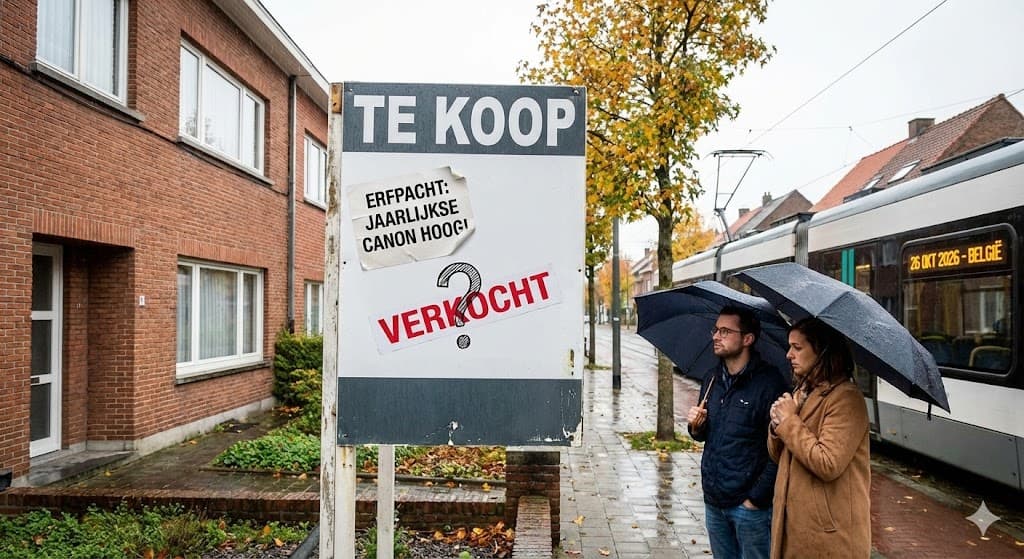
A house on a long lease does sell, simply more slowly and usually for less than an identical property in full ownership. Unsellable it is not. What sets the price nearly always comes down to three things: how many years are left, what the annual ground rent is, and what happens to the buildings when the right ends.
What you are actually selling
Under a long lease, the land, and often the building as well, belongs to someone else: a municipality, a social housing company, a church body or a private owner. You hold a right in rem to use the property as if it were yours, against a payment known as the canon or ground rent. That right can be sold, let and even mortgaged.
Since the reform of Belgian property law, in force since 1 September 2021, a long lease runs for at least fifteen and at most ninety-nine years. A right to build can likewise run up to ninety-nine years. Your deed states which term applies to you and when it started.
The remaining term makes the price
A buyer buys the years that are left, not eternity. On a lease with eighty years still to run, the value comes close to that of full ownership. With fifteen years left, the buyer is mainly acquiring an occupancy right that expires, and that shows in the offer.
Then there is the bank. Lenders want the term of the mortgage to fit inside the remaining lease and value the security more cautiously. Fewer banks say yes, so fewer candidates get their financing together. That is the real reason these properties sell slowly, not any legal prohibition.
✦ 100% free & No obligation
Sell your property with the best agent
Compare the top 3 agents in your region for free and save on commission.
Compare agents →Ground rent, indexation and what the deed imposes
The canon is the yearly payment to the landowner. It can be symbolic or distinctly heavy, and it is often indexed. A buyer adds it to their monthly outgoings, so a high ground rent weighs on the price as much as a short term.
Read the detailed clauses too. Some agreements require the landowner's consent to transfer or let, impose maintenance or building obligations, or provide that unpaid ground rent passes to the buyer. Ask your notary to check those points explicitly before you promise anything to a candidate.
What happens at the end
When the lease ends, the buildings in principle go to the landowner by accession. Whether compensation is due depends on the deed. That is exactly the point every well informed buyer wants in black and white, because it determines what their purchase is worth in the long run.
If the end is approaching, the question becomes whether the term can be extended or renewed. With a municipality or a social housing company that is often open to discussion, but it remains the owner's decision. Ask in writing before you go to market, because an extension on paper changes the price more than any sales technique.
And the renovation obligation?
In Flanders the renovation obligation also applies when a long lease or a right to build is created or transferred. If the property carries EPC label E or F, the acquirer has to reach label D or better within six years of the deed. In Wallonia and Brussels the framework differs, but a poor label weighs on offers anywhere.
How to run the sale
Have three documents ready before the first viewing: the lease deed, a recent statement of the ground rent with its indexation, and the energy certificate. A candidate who gets all three straight away is less likely to drop out at their banker's first question.
Then aim at the buyers for whom the formula makes sense. Someone who does not need to own the land and looks mainly at the monthly cost often finds a long lease an affordable route. An agent who has handled such a file before knows how to explain that difference. Compare a few agencies from your municipality and ask explicitly about their experience with long leases before you sign.
Frequently asked questions
Is a house on a long lease unsellable?
No. The right can be sold, let and even mortgaged. The sale simply takes longer and the price is lower than with full ownership, mainly because of the remaining term and the ground rent.
How long does a long lease run in Belgium?
Since the reform of property law, in force since 1 September 2021, from fifteen to ninety-nine years. A right to build can also run up to ninety-nine years. The deed states the term and the starting date.
Why do banks sometimes refuse a mortgage on a long lease?
Because the term of the loan has to fit inside the remaining lease and the bank values the security more cautiously. Fewer banks accept, so fewer candidates get their financing together.
What happens to the buildings when the lease ends?
They go to the landowner by accession in principle. Whether compensation is due depends on the deed. Also check whether an extension is negotiable, because that changes the value considerably.
Does the renovation obligation apply to a long lease?
In Flanders it does: it also applies when a long lease or a right to build is created or transferred. With EPC label E or F the acquirer has to reach label D or better within six years of the deed.
"Tech entrepreneur and strategist focused on digital transformation in the real estate sector."