
Selling a house during a renovation: how to handle it while the works are still ongoing

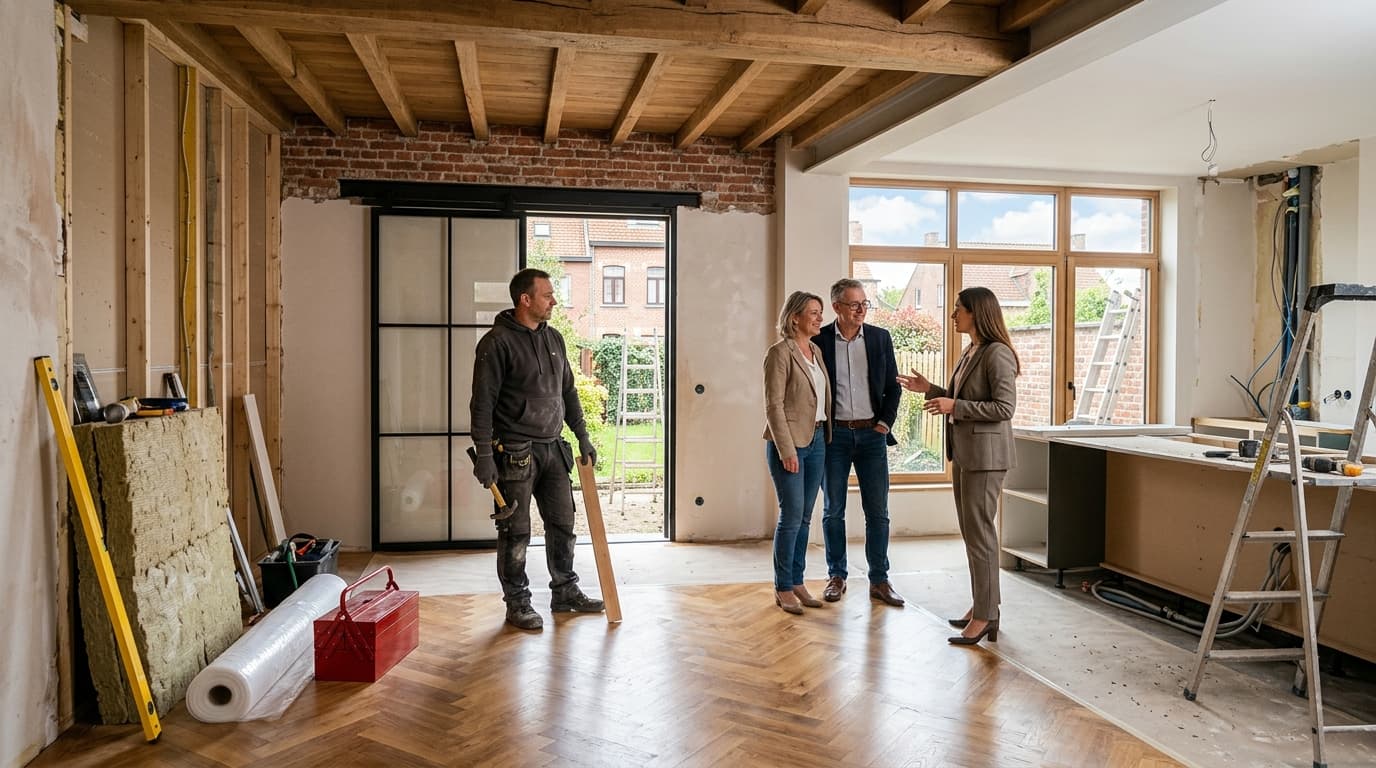
If you want to sell your house during a renovation, you face a different question from someone still choosing between renovating and selling. The works are already under way. There is a contractor, often a permit and sometimes a loan that is drawn down in instalments. Below you can read what to do with each of those threads, and how to sell a half-finished home so that buyers see an opportunity in it rather than a problem.
First decide: finish, pause or sell as it is
Broadly speaking there are three routes. You can still finish the phase you are working on, you can stop the works at a logical point, or you can sell the home in its current state, as a renovation project.
Finishing pays off mainly for works that leave the house open. A roof without roofing, windows that have been taken out or a bathroom without pipes scare buyers off, and that buyer's bank also takes a critical look at a property that is not wind- and watertight. Completing a phase costs you money, but it removes a big question mark.
Stopping at a logical point is the middle road. Think of a house that is closed and dry, with the shell finished but no interior finishing. Many buyers actually want to choose the kitchen, floors and tiles themselves. For them, a home that is "ready for finishing" is more attractive than a home decorated to your taste.
Selling as it is makes sense when the works have only just started or when you need to sell quickly. In that case, expect buyers to factor the remaining works, the uncertainty and the hassle into their offer. If you are weighing up a refresh against selling straight away, also read our article on getting your home ready to sell and the one on whether to renovate first.
✦ 100% free & No obligation
Sell your property with the best agent
Compare the top 3 agents in your region for free and save on commission.
Compare agents →What you need to arrange with your contractor
Your construction contract is an agreement between you and the contractor. It does not automatically pass to the buyer. If you sell the home, you decide yourself what happens to the ongoing job: you have the agreed phase carried out, or you end the contract early.
Ending a construction contract early is possible, but it is not free. The law allows you as the client to terminate the contract unilaterally, provided you compensate the contractor. That compensation usually covers the work carried out, the costs incurred and part of the profit the contractor misses out on. Many contracts contain their own rules on this. Read them first and preferably agree the termination in writing, with a clear final statement of account.
Also have a record made of what has actually been carried out. A handover report or a statement of the works, together with the invoices, will later be your evidence towards the buyer. For larger structural works, the ten-year liability of the contractor and the architect also comes into play. In principle it is tied to the building and therefore follows the home to the new owner. Ask the notary to check how to word this in the sales agreement.
Permit, planning information and what you have to disclose
A planning permit (in Flanders, the omgevingsvergunning) is tied to the plot, not to you as a person. A buyer can therefore in principle continue to use a current permit. Do watch the deadlines: work under a permit must start within a certain period, and a permit can lapse if the works stand still for too long. Check the status of your permit with your municipality before you present it as a selling point in your listing.
For every sale, the notary requests the planning information. It shows which permits have been issued for the home. In Flanders, part of that information must also appear in your advertising and in the preliminary sales agreement. If renovation work was done without the required permit, our article on selling a house without a planning permit explains the options you have.
Describe the ongoing works honestly in the preliminary agreement: what is finished, what is not, and what the buyer takes over. The more concrete that description, the smaller the chance of a dispute after the deed. A buyer who knew exactly what they were buying will find it hard later to claim that something was kept from them.
EPC, inspections and the condition you sell in
The EPC must be available as soon as you put the home up for sale, and it describes the home as it is at the moment it is drawn up. Works that are not yet finished do not count. Even completed measures only count if the energy assessor can verify them or if you have supporting documents, such as invoices and technical data sheets. So keep those safe.
If you complete an energy phase, such as roof insulation or new windows, a new EPC can show a better label. Whether that is worth it depends on the difference. In Flanders, the label plays a part in the renovation obligation that rests on the buyer, so buyers look at it closely. You will find the rules per region in our overview of EPC obligations when selling.
The inspection of the electrical installation is also part of the sale. An installation that has been half renewed, with loose wiring or a temporary connection, often leads to a negative report. That does not block the sale, but the buyer must then have the defects fixed within a set period. You can read more in our article on the electrical inspection when selling.
Your loan and a realistic asking price
Renovations are often financed with a loan that is drawn down in instalments, each time on presentation of invoices. On the sale, the notary repays the outstanding balance out of the sale price. On the part not yet drawn, the bank often charges a commitment fee for as long as the loan runs, and early repayment can trigger a reinvestment fee. Ask your bank for a statement in advance. How the rest of the process works is explained in our article on selling a house with an outstanding mortgage.
When it comes to the price, the trap is to work with the value the home would have after the renovation. A buyer does not do that. They start from the current condition, add the remaining works and keep a margin for setbacks. A valuation of the home as it is today gives you a fair starting point. Request a free valuation for that. How completed works weigh on that value is covered in our article on the impact of renovation work on the valuation.
How to present a half-finished home
With a renovation project you are not only selling a home, but also a plan. Put together a file with the plans, the permit, the invoices for what has already been done and quotes for what still needs to be done. A quote gives the buyer a figure instead of an anxious guess. Photos of works that are now hidden behind walls or under floors, such as new pipes or insulation, are worth their weight in gold.
Clear up the site before viewings. Rubble, loose materials and open sockets make a home look smaller and more dangerous than it is. Make sure every room has light and there is a safe way through.
Finally, choose an estate agent who knows this kind of property. Not every agency likes selling a house that is half stripped out, and the right buyers are often in a different network from the one for move-in-ready homes. You can compare up to three agents in your area for free and without obligation, and ask how they would bring your project to market.
To conclude
Selling a home while the works are still ongoing is very doable if you tie up the loose ends beforehand: a clear agreement with your contractor, an accurate picture of the permit and the EPC, a statement for your loan and a price that starts from the current condition. With that file in order, you reach buyers who are looking for exactly this kind of project. Want to know how agents in your municipality would handle your home? Compare their proposals and make an informed choice.
"Real estate expert focused on quality control and strategic partnerships."