
Selling a house without a planning permit for a renovation: what should you do?

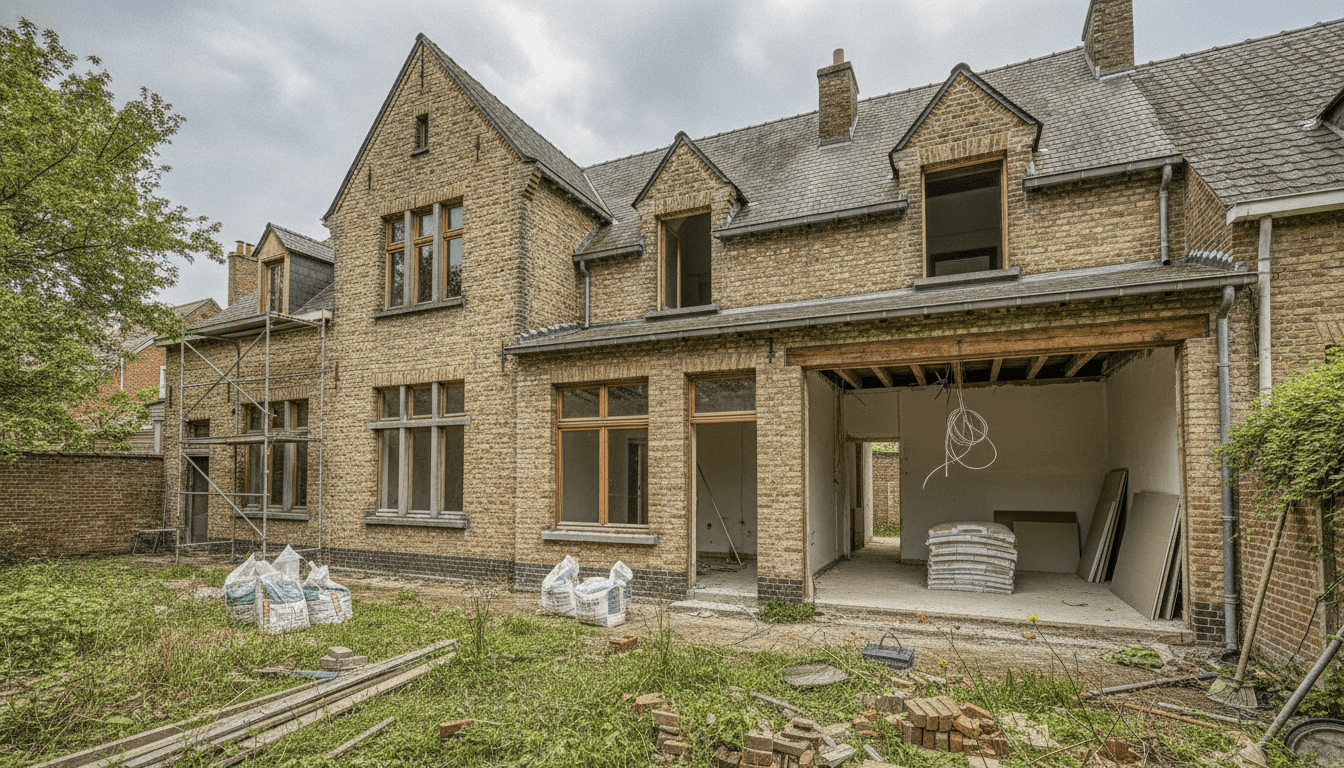
Want to sell your house without a planning permit for a renovation? In Belgium that is not prohibited. It does become a problem if you keep quiet about it. An extension, a converted garage or an extra dormer built without a permit will surface at the notary sooner or later. This article explains what you must disclose as a seller in Flanders, which options you have and how to stop the sale from stalling at the last minute.
When do you actually need a permit?
Since 2018, the planning permit in Flanders has officially been called the environmental permit for urban planning works. In everyday speech the old name is still common. A permit is required for works that change the volume, use or structure of a building: an extension or conservatory, an extra storey, a garage turned into living space, splitting a home into several units or fitting a large dormer.
Not everything needs a permit. The Flemish exemption decree allows a range of smaller works without a permit, such as interior renovations that do not touch the load-bearing structure or a small outbuilding in the garden within certain dimensions. Unsure about a garden shed or storage building? Read our article on how large a garden shed can be without a permit.
Worth knowing: works that required a permit at the time remain unauthorised, even if you bought the house later and the previous owner carried out the renovation. As the owner, you inherit the situation.
What you are required to disclose as a seller
The Flemish Spatial Planning Code places a duty of disclosure on sellers. Both the advertisement and the private sale agreement (the compromis) must state, among other things, whether a planning permit or environmental permit has been issued for the property, what its zoning designation is and whether a court-ordered restoration measure or an administrative measure has been imposed.
✦ 100% free & No obligation
Sell your property with the best agent
Compare the top 3 agents in your region for free and save on commission.
Compare agents →Your notary also requests the planning information from the municipality and checks the permit register. A renovation that is not recorded there but is visible on plans, photos or during a viewing will therefore usually be spotted. The land registry can also paint a different picture from the actual situation.
If you conceal a planning breach you knew about, you risk the buyer later seeking to have the sale dissolved or annulled, or claiming damages. A correct disclosure in the compromis protects you, even if the situation is not ideal. For the other paperwork you need, see our overview of the documents needed to sell a home.
Could your renovation be deemed permitted after all?
For older structures, Flanders applies a presumption of permit. Structures built before 22 April 1962 are deemed permitted. For structures built between that date and the entry into force of the regional zoning plan in your area, there is a presumption that the authorities can rebut under certain conditions. For renovations carried out after the zoning plan, the presumption does not apply.
So it pays to first establish exactly when the works were carried out. Old aerial photos, invoices, the original building plans and the data in the permit register will help. The spatial planning department of your municipality can tell you which permits are on record for your address. Through the Omgevingsloket of the Flemish government you can find the more recent files.
If your home is in Brussels or Wallonia, different rules and different time limits apply. In that case, ask the municipality or the notary about the regional legislation.
Your options: regularise, restore or sell as is
As a seller, you broadly have three options.
1. Regularise before the sale. You apply retrospectively for an environmental permit for the works already carried out. This is only possible if the renovation complies with the current rules and plans. You will usually need an architect to survey and draw the existing situation. Allow a few months, as the municipality handles a regularisation like an ordinary application. The advantage: you sell a property with no question marks, which usually gets the best price.
2. Restore the original situation. If the renovation does not comply with the rules, regularisation is not possible. You can then undo the works. That costs money and does not always make sense, but it can save a sale if buyers would otherwise walk away.
3. Sell in its current state, with full disclosure. You can also sell the home as it is, provided the buyer is properly informed beforehand and the compromis clearly states who bears the risk. The buyer then takes over the regularisation or restoration. Expect this to be reflected in the price, though, and some lenders to be hesitant.
What a planning breach does to your sale price
An unpermitted renovation rarely leaves the price untouched. A buyer factors the cost of an architect, the time a regularisation takes and the risk of refusal into their offer. With an unpermitted extra bedroom or living space in the garage, a buyer may also argue that the space does not legally count as living area.
That is why a realistic valuation of your home in its current legal situation makes sense. An experienced estate agent knows local municipal practice and can judge whether regularising is worth it compared with a price reduction. Get a free valuation and mention the renovation straight away, so the figure is accurate. Would you like guidance from a local specialist? Compare up to 3 BIV-registered estate agents in your area.
Frequently asked questions
Can I sell a house with an unpermitted renovation?
Yes. A sale is not prohibited, but you must inform the buyer correctly. The duty of disclosure in the Flemish Spatial Planning Code requires the permit status to appear in the advertisement and in the compromis. Keeping quiet can lead to the sale being dissolved or a damages claim.
Am I liable if the previous owner renovated without a permit?
The unpermitted situation stays with the property. As the current owner, you must disclose what you know. If you bought the home yourself with an unpermitted renovation, check your own purchase deed: it often already states how the permit status was described at the time.
How long does a regularisation take in Flanders?
A regularisation is an ordinary application for an environmental permit. Including the preparation by an architect, the process often takes a few months. The exact time depends on the procedure and on your municipality.
Will the notary notice an unpermitted renovation?
Usually, yes. The notary requests the planning information and compares it with the description of the property. Differences between the permit register, the land registry and the actual situation come to light this way, often just before the compromis.
In closing: facts first, then the sales strategy
A renovation without a permit does not have to block your sale. What does cause trouble is a buyer who only hears about it at the notary. So first find out when the works were carried out and what the municipality knows about your property. Then decide whether to regularise, restore or sell at an adjusted price. An estate agent who knows local practice will help you make that choice and inform the buyer properly. Compare up to 3 estate agents for free and without obligation and start your sale with a clear file.
"Real estate expert focused on quality control and strategic partnerships."