
Selling a vacant home in Flanders: register, levy and sale price

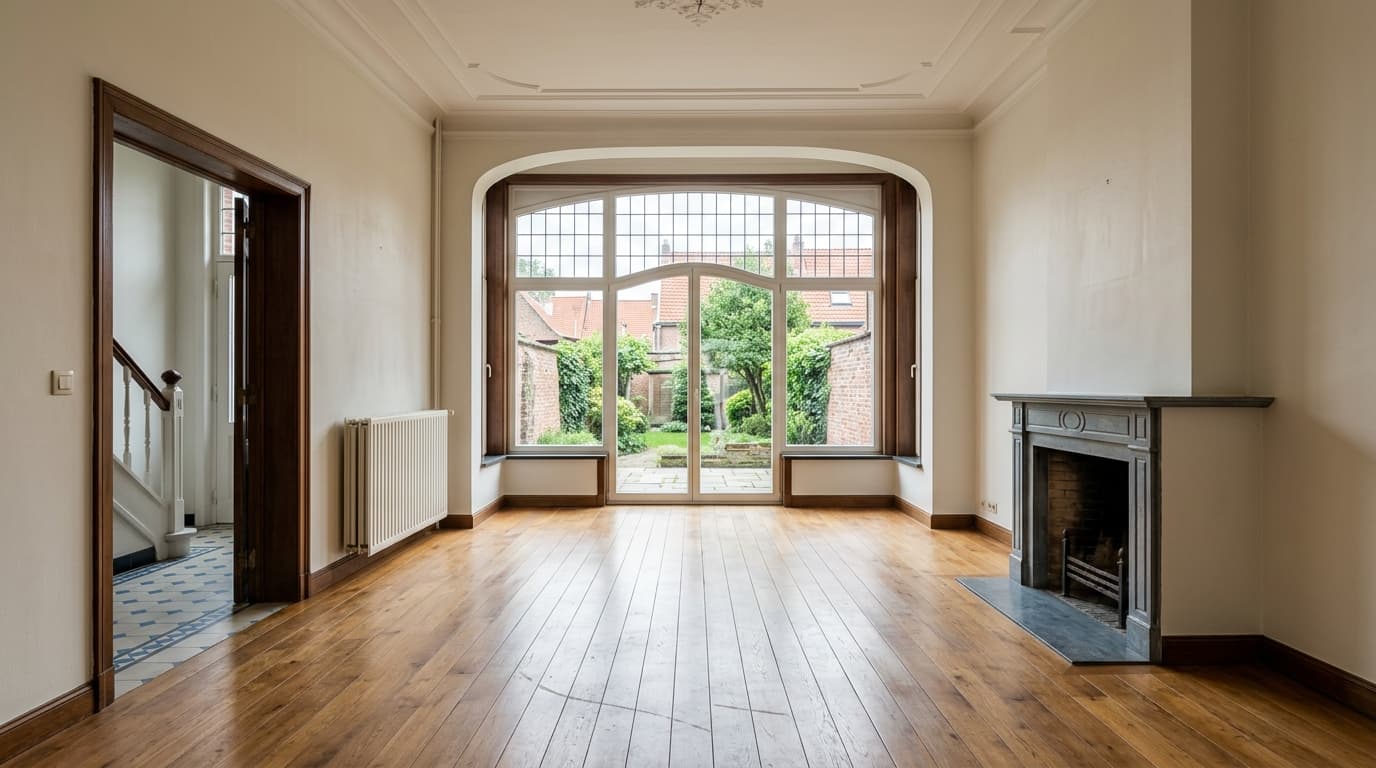
If you want to sell a vacant home in Flanders, you are dealing with more than an ordinary sale. A home that has not been lived in for a long time may be listed in the municipal vacancy register, a levy may be running, and buyers look differently at a house that has stood empty for years. In this article you will learn how the register works, what happens to the levy when you sell, and how to estimate the price realistically.
When is a home considered vacant in Flanders?
Flemish regulations consider a home vacant when it has not been used in line with its residential purpose for at least twelve consecutive months. Nobody lives there, and nobody is registered in the population register at that address. A home where someone drops by now and then, or where furniture is still in place, therefore still counts as vacant as long as nobody actually lives there.
The municipality keeps its own vacancy register. An official draws up an administrative record of the findings, and you as the owner receive a notification. You can appeal against the listing with the municipality within a set period. Every municipality works with its own regulations, so the exact deadlines, supporting documents and procedures differ from place to place.
Vacancy is not the same as neglect or unfitness. A home can also be listed in the Flemish inventory of neglected homes, or be declared unfit or uninhabitable. Those listings have their own consequences and their own levies. So first find out exactly which registers your home is in, because that determines what you need to tell a buyer.
The vacancy levy: who pays and what happens when you sell?
Since the vacancy levy became a municipal responsibility in Flanders, each municipality decides for itself whether to introduce a levy, how high it is and which exemptions apply. In many municipalities the levy rises the longer the home stays in the register. Amounts of a few thousand euros a year are not unusual, but the only correct figure for your home is in your municipality's tax regulations.
✦ 100% free & No obligation
Sell your property with the best agent
Compare the top 3 agents in your region for free and save on commission.
Compare agents →The levy is owed by whoever is the owner (or holds the property right) on the anniversary of the listing in the register. If you sell before that date, the next levy in principle falls to the buyer. That is why most regulations provide an exemption for a new owner for a certain period after the purchase, giving them time to renovate or move in. How long that exemption lasts differs per municipality.
For you as the seller, that means two things. A levy that has already been assessed remains your debt, even after the sale. And a buyer who reads the regulations knows they will not inherit a bill straight away. That removes part of the uncertainty that would otherwise weigh on the price. Ask your municipality for the regulations and an overview of outstanding levies before you put the home on the market.
What do you need to tell the buyer, the notary and the municipality?
A listing in the vacancy register is information a buyer needs to know. The notary requests planning information and register data while preparing the sale, but you are expected to inform the buyer correctly before the compromis (the preliminary sale agreement). A buyer who only discovers at the deed that the home is in a register may feel misled, which leads to arguments about the price or even about the validity of the sale.
So state clearly in the sales information and in the compromis that the home is listed in the vacancy register, since when, and whether any levies are outstanding. Municipal regulations also require the transfer of ownership to be reported to the municipality, with the details of the new owner. Follow the procedure set out in your municipality's regulations. Without that notification, the municipality may continue to treat you as the owner.
The usual sale obligations apply as well. Even for a vacant home you need an EPC, an asbestos certificate for homes built before 2001, a soil certificate and an inspection of the electrical installation. In a home that has been empty for a long time, electricity and water are sometimes cut off. Have them reconnected in good time, because the inspector needs power.
How does vacancy affect the sale price?
A home that has stood empty for years often loses more value than its age alone would explain. Without heating and ventilation, damp problems, mould and damage to pipes set in. The garden grows wild and the facade looks neglected. Buyers factor in those defects and add a margin on top for what they cannot see.
Vacant homes also often have a poor energy label. In Flanders, homes with an EPC label E or F come with a renovation obligation for the buyer, who must reach a better label within a set period after the deed. That obligation rests on the buyer, not on you, but it does count in their budget and therefore in their offer. You can read more in our article on EPC obligations when selling.
On the other hand, a vacant home is available immediately. There is no tenant who has to leave and no occupant to schedule viewings around. For renovators and investors, that is actually an advantage. A realistic price therefore starts from the condition of the home, the work required and demand in your municipality. A free valuation gives you a first starting point, and a local agent can refine that figure after a visit.
Sell as it is or renovate first?
With a vacant home, the temptation to renovate first is strong. It rarely pays off in full. Major works take time, and as long as the home is in the register, the levy can keep running. You are also investing in choices a buyer might have made differently.
What often does pay off is emptying and cleaning the home, tidying the garden, airing it out and doing small repairs that visibly limit damage. A dry, tidy home inspires more confidence than a house full of old belongings. Our article on getting your home ready to sell lists which interventions are worth the money.
If you want to dispose of the home quickly, selling to a property buyer is an option, but expect a noticeably lower offer. In our article on selling a house to a property buyer you can read when that makes sense. Finally, check your fire insurance: many policies limit cover once a home has been unoccupied for longer than a certain period. A fire or water damage during the sale period without cover costs you far more than the premium.
Choosing an agent for a vacant home
A vacant home calls for an agent who knows the local market and understands how your municipality's regulations work. A good agent helps you check the registers and levies, arranges the required certificates and aims the sale at the right buyers: families who want to renovate, investors or property developers. Because you do not live there, the agent also handles the viewings and keeps an eye on the property.
When you first meet, ask about their experience with vacant or renovation homes in your area, their sales strategy and their fee. Through ImmoMakelaarVergelijker.be you compare up to 3 BIV-accredited agents in your region, free and without obligation. That way you get several estimates side by side and choose on the basis of approach and results rather than gut feeling.
Selling a vacant home takes some preparation: knowing which register it is in, what the municipality charges and what you need to tell the buyer. With that information on paper, the sale runs more smoothly and you avoid disputes afterwards. Want to know what your home is worth today and which agent best suits your situation? Then compare agents in your municipality.
"Tech entrepreneur and strategist focused on digital transformation in the real estate sector."