
Selling your house to a property buyer: when does it make sense?

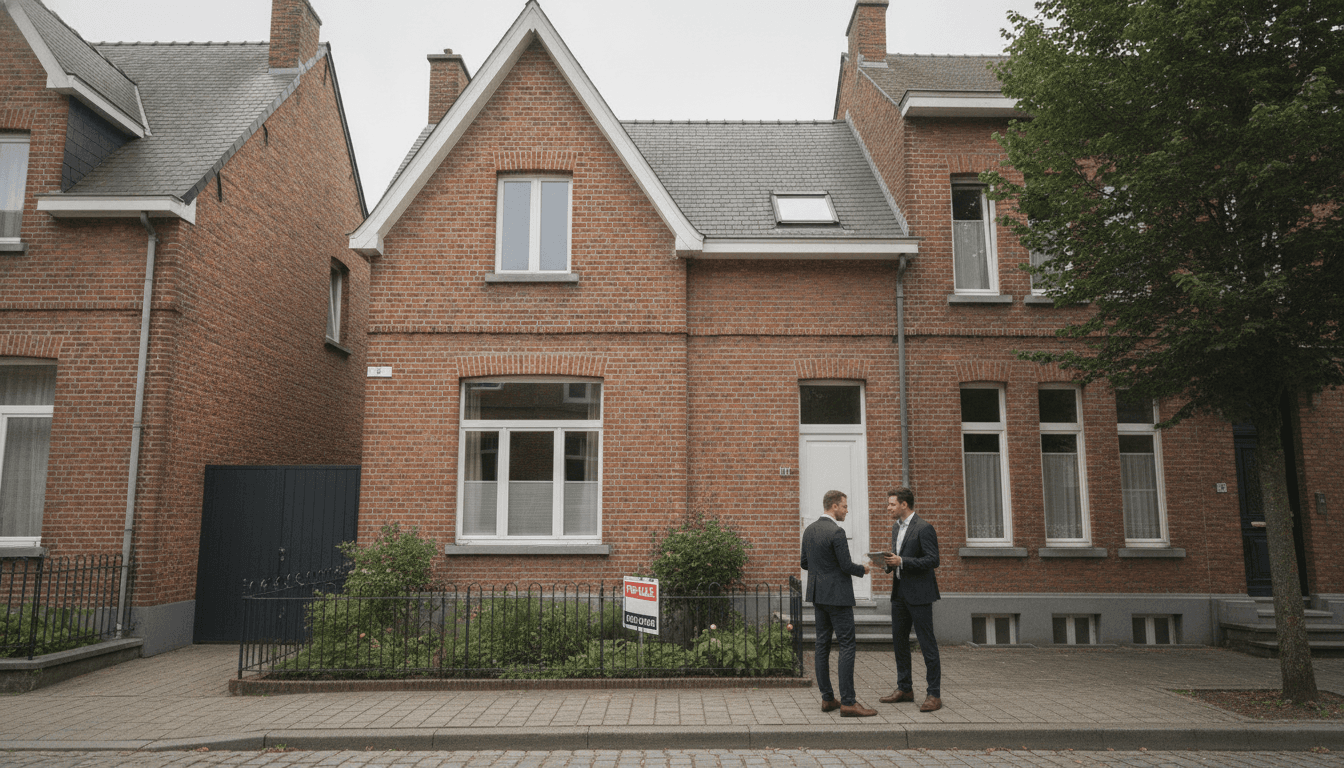
If you are thinking about selling your house to a property buyer, you trade part of the sale price for speed and certainty. A property buyer purchases your home as it stands, often within a few weeks and without viewings. That sounds simple, but the offer is usually well below market value. In this article you will read how such a sale works in Belgium, when it can make sense and how to compare a buyer's offer fairly with a sale through an estate agent.
What is a property buyer and how does it work?
A property buyer is a company or investor that buys homes with its own money in order to renovate, rent out or resell them. You will recognise them from adverts such as "we buy your house" or "sold within 7 days". The process is almost always the same: you fill in a few details online, the buyer visits once and you receive an offer within a few days.
If you accept, you sign a sale agreement (the compromis) and the notarial deed follows. That step remains mandatory, even with a property buyer. In Belgium, a home only officially changes hands when the deed is signed before the notary, and the buyer usually has up to four months after the compromis to have that deed executed. A buyer who claims everything can be done "without a notary" should therefore make you wary.
The advantage lies in what falls away: no photos, no viewings, no negotiations with several prospective buyers and usually no condition precedent tied to a mortgage. A property buyer often finances the purchase itself, so the risk of the sale falling through at the bank is smaller.
Why a property buyer's offer is lower
A property buyer is not an end user. They need to make a profit on resale, and that margin comes out of the purchase price. On top of that, they factor in the costs they bear themselves: registration duties, notary fees, renovation work, financing costs during the works and the risk that the home sells more slowly than planned. Every uncertainty about the condition of the house is priced into the offer, and usually generously.
✦ 100% free & No obligation
Sell your property with the best agent
Compare the top 3 agents in your region for free and save on commission.
Compare agents →How much lower the offer turns out depends on the property, the region and the buyer. There is no fixed percentage. What is certain: you can only judge an offer if you know what your home is worth on the open market. So first get an independent free valuation before you respond to a proposal. That way you can see, in euros, the difference between speed and proceeds.
Be careful with the argument "you pay no costs" as well. In a regular sale in Belgium, the buyer already pays the registration duties and the costs of the deed. So that is not an extra advantage of a property buyer. As the seller, you pay for the mandatory certificates yourself in both cases, and for the release of your mortgage where applicable. You can read more about this in our overview of the costs of selling a house.
When selling to a property buyer can make sense
For most sellers, a sale on the open market brings in more. Still, there are situations in which a property buyer is a reasonable choice:
- Time pressure: you need the money at short notice, for example because you have already bought another home and want to avoid a bridging loan.
- Major renovation: the home is badly outdated, has structural problems or would put off many prospective buyers in a regular sale.
- No appetite for a sales process: you live far away, the property is empty or you do not want to organise viewings.
- Complex situations: with an inheritance or a divorce, all parties sometimes mainly want a quick, clear-cut outcome.
Even then, it remains important to make the choice with the figures in hand. A home that seems "unsellable" often still finds a buyer through a good estate agent, someone who wants to renovate themselves, and who usually pays more than a property buyer working with a fixed margin.
Your obligations as a seller stay the same
Legally, a sale to a property buyer is an ordinary sale. Your duty to inform does not disappear because the buyer is a professional or buys the home "as is". In Flanders you need, among other things, a valid EPC, an asbestos certificate for homes built before 2001, a soil certificate, an inspection of the electrical installation and the urban planning information. Without these documents, the notary cannot prepare the deed properly.
Also read the sale agreement carefully before you sign. Pay particular attention to:
- Conditions precedent: a clause that makes the sale depend on a later inspection or "approval by investors" gives the buyer a way out or a chance to lower the price later on.
- The deposit: with a compromis, it is customary to pay a deposit that is held by the notary. If there is none, you are in a weaker position if the buyer pulls out.
- The date of the deed: a promise of speed means little if the compromis does not state a clear deadline.
- Costs or advance payments on your side: a reliable buyer will never ask you to pay money up front.
Also check who the buyer is. Look up their company number in the Crossroads Bank for Enterprises (KBO/BCE) and ask your notary to review the compromis before you sign it.
Property buyer or estate agent: how to compare fairly
The fairest comparison is not "property buyer versus estate agent", but net proceeds versus time. To do this, put three amounts side by side: the property buyer's offer, the estimated market value of your home and that market value minus an estate agent's fee. Then weigh how much extra time a regular sale takes and what that time costs you, for example in double mortgage payments.
It often turns out that an agent who knows your area well can also sell quickly, especially if the asking price is realistic from the start. Through ImmoMakelaarVergelijker.be you can compare estate agents and receive free, no-obligation proposals from up to three accredited agents in your area. Ask them explicitly how long a sale takes on average in your municipality and what price they consider achievable.
If you want to sell entirely on your own, that is an option too. Our article on selling a house without an estate agent explains everything that involves. And if you end up with several offers, our guide on negotiating an offer as a seller will help.
Final thoughts
Selling your house to a property buyer can be a deliberate choice when speed and certainty matter more to you than the highest price. Only make that choice once you know the market value of your home and what an agent in your area considers achievable. Request no-obligation proposals through our page to compare estate agents and set them against the property buyer's offer. Then you decide on the basis of figures, not on the basis of a promise.
"Tech entrepreneur and strategist focused on digital transformation in the real estate sector."