
Sewer inspection when selling a home: what sellers in Flanders need to arrange

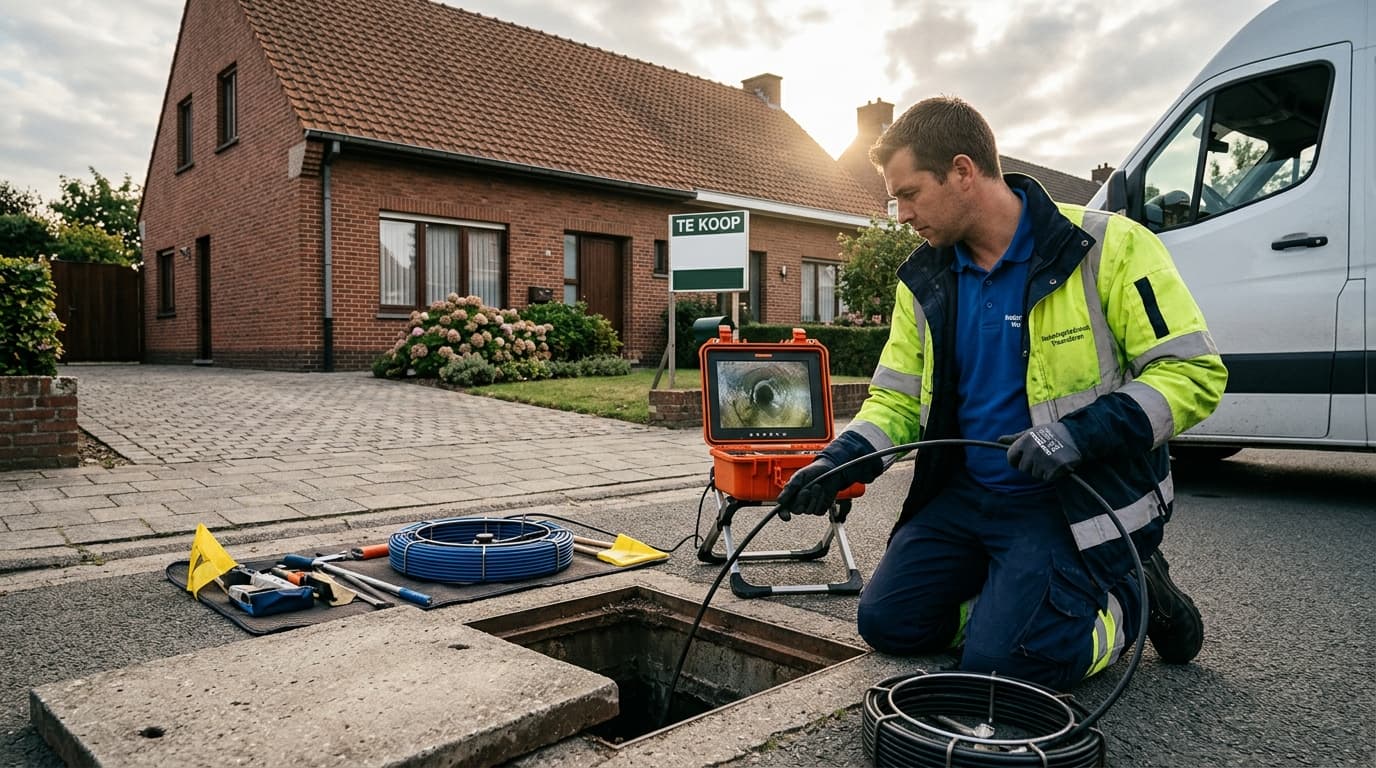
If you sell a home in Flanders, you have needed an extra document since 1 July 2025: the sewer inspection when selling a home, officially the inspection of the private drainage system (keuring van de private waterafvoer). A certified inspector checks whether rainwater and wastewater are drained correctly. In this article you will read when the inspection is mandatory, how it works, what a negative certificate means and how to schedule it without delays. Brussels and Wallonia have their own rules.
What is the sewer inspection and why does it exist?
The private drainage system is everything on your own plot: the pipes from the kitchen, bathroom and toilet, the drainage from gutters and paved areas, any pits or tanks and the connection to the street sewer. Many streets now have a separate system, with one pipe for wastewater and a separate pipe or ditch for rainwater. That only works if every home is connected to it correctly. A faulty connection sends clean rainwater to the treatment plant, or dirty water into a stream.
In Flanders the inspection is governed by the General Water Sales Regulation (Algemeen Waterverkoopreglement). It already applied to new connections and after disconnection works. Since 1 July 2025 it also applies when a home is sold. The aim is twofold: the buyer knows the condition of the drainage, and faulty connections disappear step by step. For you as a seller, it is above all a document that has to be ready for the signing, just like the asbestos certificate or the inspection of the electrical installation.
When is the inspection mandatory for a sale?
The obligation applies to the sale of a building in Flanders that is connected to the public drainage network. For a standard single-family home it is simple: you need an inspection certificate. For apartments, buildings with several housing units and homes without a connection, for example with a septic tank or an individual treatment system in an area without sewers, the rules are different. In that case, ask your sewer operator what exactly needs to be inspected.
Your sewer operator is the organisation that manages the sewers in your municipality. Sometimes that is the municipality itself, often a water company or an intermunicipal company. You will find its name on your water bill or on your municipality's website. If a certificate already exists, for example because you recently had disconnection works carried out, it may be enough. A certificate does have a limited period of validity, though, and loses its value if you change anything in the drainage afterwards. So check the date and the details before you send it to the notary. An overview of all the paperwork is in the article on which documents you need to sell your home.
✦ 100% free & No obligation
Sell your property with the best agent
Compare the top 3 agents in your region for free and save on commission.
Compare agents →How does a sewer inspection work?
You choose a certified inspector yourself. Your sewer operator can point you to the list of approved inspectors. The inspector comes on site and follows the pipes from the drainage points to the connection at the street. For that, the covers of pits and inspection chambers must be accessible. Dye or a camera is often used to check which water goes where.
Among other things, the inspector checks whether rainwater and wastewater stay separate where required, whether there is a rainwater tank or infiltration system, whether rainwater ends up in the wastewater pipe anywhere or the other way round, and whether the connection to the public sewer is in order. For a home with a septic tank or treatment system, that is checked as well.
A few practical tips: make sure the inspector can access every room, the cellar and the garden, have plans of earlier works ready and mention any renovations you know about. The better the inspector can follow the drainage, the smaller the chance of an incomplete certificate. The price differs per inspector and per home, so ask for a quote in advance. What all the certificates cost together is explained in kosten attesten verkoop huis (in Dutch).
What if the certificate is negative?
A negative certificate means that the drainage does not comply. This is common in older homes, where rainwater and wastewater run through a single pipe while the street already has a separate system. A negative certificate does not prevent the sale. It informs the buyer about the condition of the drainage, so they know work still needs to be done.
Who carries out and pays for the adjustments is a point of negotiation. You can have the work done yourself before the sale and then have a new certificate drawn up. You can also agree that the buyer will do it, with a price reduction as compensation. The deadline for bringing the drainage into compliance follows from your sewer operator's rules. Record whatever you agree clearly in the sales agreement (compromis), so there is no discussion afterwards. Keeping quiet is not an option: a known drainage problem falls under your duty to inform, as you can read in the article on hidden defects when selling.
An experienced estate agent knows how buyers in your area react to such a certificate and how to factor it into the asking price. Through ImmoMakelaarVergelijker.be you can compare up to three recognised estate agents near you for free.
When is the best time to schedule the inspection?
Have the inspection carried out before you put the home on the market. That way you know the result before the first viewing and can inform buyers correctly from the start. If you wait until there is an offer, you risk the signing of the sales agreement being delayed because no inspector is available, or a negative certificate reopening the negotiation.
Align the timing with the other documents. The soil certificate, the planning information extract and the EPC each have their own lead time, and some of them are requested from the municipality. Requesting everything in one go saves weeks. An estate agent often arranges these documents for you and knows which inspectors in your area are available quickly.
Would you also like to know what your home is worth today, taking into account the condition of the drainage and other works? Then request a free valuation.
Final thoughts
The sewer inspection has become a standard part of selling a home in Flanders. It asks little of you if you schedule it in time: an appointment with an inspector, free access to pits and pipes, and a clear agreement with the buyer if the certificate is negative. Having the document ready when the sale starts prevents delays at the notary and surprises during the negotiation. Not sure about the approach or the impact on your asking price? Compare estate agents in your area and get advice from someone who knows the local market.
"Tech entrepreneur and strategist focused on digital transformation in the real estate sector."