
Selling a home with a home battery: what do you need to arrange as a seller?

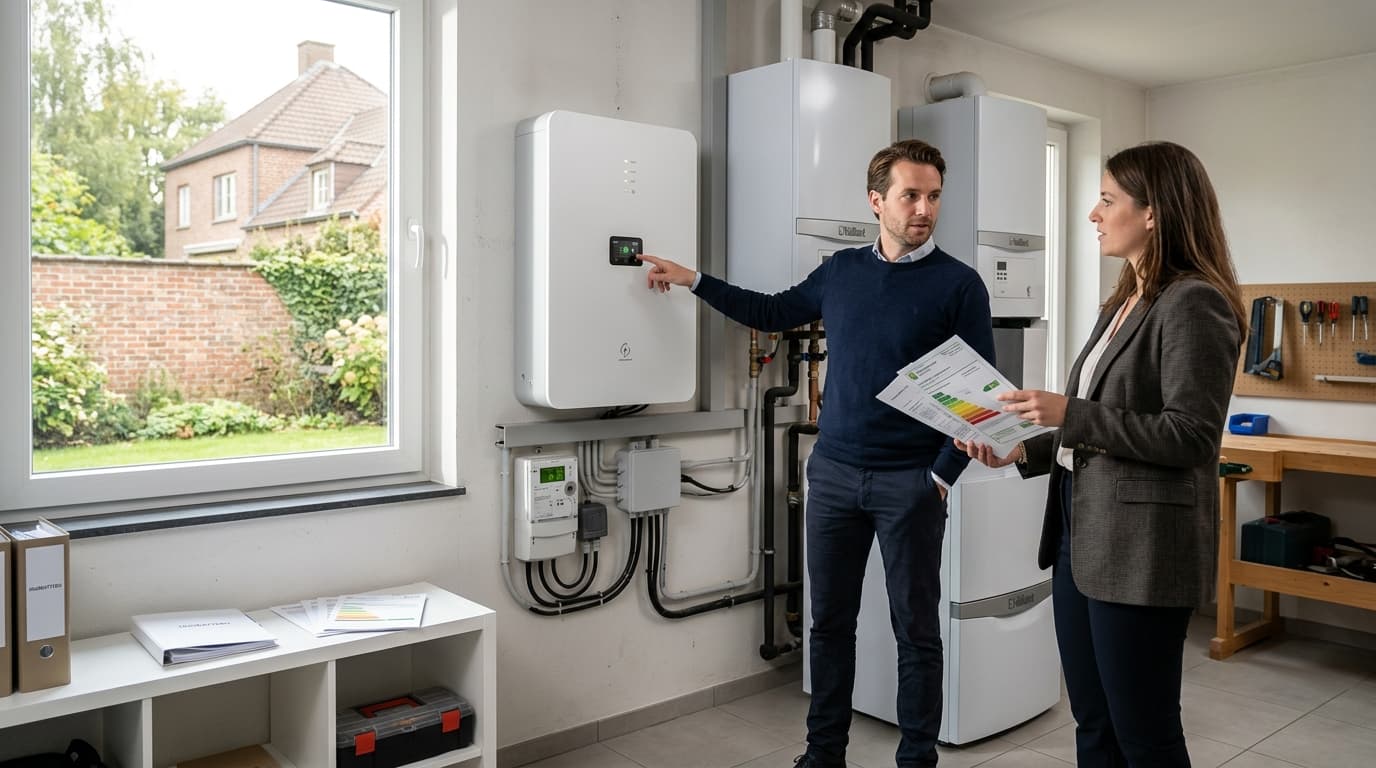
If you want to start selling a home with a home battery, you will get questions that never come up in an ordinary sale. Does the battery stay for the buyer? Was it installed and registered correctly? And what is it actually worth to a buyer? In this article we go through what you need to arrange as a seller for the battery itself. If you also have solar panels, the rules for that installation are covered in our article on selling a home with solar panels.
Is the home battery included in the sale?
A home battery that is fixed to the wall or stands on a base, and is connected to the electrical installation and the inverter through its own circuit, is as a rule considered part of the property. Unless agreed otherwise, it therefore goes to the buyer, just like the solar panels on the roof or the boiler in the basement.
If you want to take the battery with you to your next home, this must be stated explicitly in the sales agreement (compromis). Think about what you leave behind. A removed battery often leaves an inverter that was set up for a battery, an empty circuit in the fuse box and mounting points on the wall. Agree on who pays for the removal and who has the installation inspected again afterwards.
Because the line between fixed and loose items is not always clear to a buyer, it is best to note in the sales agreement which parts are included: the battery, the inverter, the energy management system and any monitoring modules. That avoids arguments on the day the keys are handed over.
Does the battery actually belong to you?
Most home batteries in Belgian homes were bought by the owner. That is not always the case, though. Some batteries were installed through a rental or lease formula, through an energy supplier that controls the battery in exchange for a fee, or through financing that is still running. In those cases you are not always free to simply sell the battery along with the house.
✦ 100% free & No obligation
Sell your property with the best agent
Compare the top 3 agents in your region for free and save on commission.
Compare agents →Look up the contract and check who the owner is, what happens if you move and whether a buyer can take over the contract. If a loan or instalment plan is running for the battery, also check whether it has to be repaid early when you sell. If the battery is not yours, state that clearly in the listing or at the latest in the sales agreement.
Also watch out for subscriptions to an app or smart energy management. These are usually in your name and do not transfer to the buyer automatically. Cancel them in time or agree on a takeover, if the provider allows it.
Inspection, registration and safety
When you sell a home, an inspection of the electrical installation is mandatory. The home battery and its circuit are part of that installation. A battery placed by an installer and inspected when it was commissioned normally causes no problems. A battery you connected yourself without an inspection can lead to remarks in the report. How the sale inspection works and what happens with a negative report is explained in our article on the electrical inspection when selling a house.
In addition, a home battery generally has to be registered with the grid operator. Check whether this was done and keep the confirmation. If the registration was forgotten, it is best to sort it out before the property goes online. A notary or a well-prepared buyer asks about it more and more often.
Do not forget the insurance either. Some fire insurers want to know whether there is a battery in the home and where it is. The buyer takes out a new policy and gets the same question, so a clear technical data sheet helps them along.
Which documents does a buyer expect?
A buyer pays for what they can check. The more complete your file, the less room there is for doubt or a lower offer. Gather these documents before the sale starts:
- the invoice for the battery, with the date, brand, type and storage capacity in kWh;
- the technical data sheet of the battery and the inverter;
- the inspection report from the installation;
- the single-line diagram and layout plan showing the battery circuit;
- the confirmation of registration with the grid operator;
- the warranty terms and the installer's details;
- any rental, lease, financing or energy management contracts.
An overview from the battery's app tells a buyer more than a general promise of savings.
What is a home battery worth when you sell?
For some buyers a home battery is a plus, but it is rarely an amount you can add to the price separately. A buyer looks ahead: how long will the battery last and what will it deliver for them? Age and remaining warranty weigh heavily here. Manufacturers often give a warranty for a number of years or for a minimum remaining capacity, and over the years a battery loses part of what it can store.
How the battery is used also matters. In Flanders, part of the grid costs depends on your highest monthly peak, through the capacity tariff. A battery that is controlled smartly can limit that peak. That is a concrete argument, but it depends on the consumption of the new occupants. So do not promise a fixed saving.
Have the value of your home assessed as a whole, with the battery as one of the elements. Our free online valuation gives you a first indication. If you want to hear how buyers in the area react to an installation like this, you can compare estate agents in your region and put their assessments side by side.
EPC and grants: do not promise what you cannot prove
The EPC is about the energy performance of the building: insulation, heating, ventilation, domestic hot water and any solar panels. A home battery stores electricity but does not produce it. It therefore usually does not improve your label. If in doubt, ask the energy assessor who draws up your EPC, and do not sell the battery as a way to raise the label.
If you received a grant or another benefit when you bought it, that was linked to you as the owner. Such support does not pass to the buyer, and the rules have changed several times in recent years. To find out what applies today, check with the Flemish government, the grid operator or the regional regulator: the VREG in Flanders, the CWaPE in Wallonia or Brugel in Brussels.
How to prepare the sale
Start with the ownership question: is the battery yours, or is there a contract running? Then decide whether it stays and record that in the sales agreement. Check that the battery has been inspected and registered, and put together the file described above. In the listing, mention the battery factually, with its capacity, age and remaining warranty, without making it bigger than it is. If you also have a charging point, read our article on selling a home with an EV charger.
Finally
A home battery does not make the sale complicated, provided you know in advance what you are selling. Clear agreements in the sales agreement, a complete file and an honest presentation in the listing take most questions off the table. ImmoMakelaarVergelijker.be puts you in touch with up to three BIV-accredited estate agents in your region, free of charge and without obligation. Compare estate agents near you and choose who will market your home best.
Frequently asked questions
Does a home battery automatically go to the buyer when selling?
Yes, a home battery that is fixed to the wall and connected to the electrical installation is generally considered part of the property and goes to the buyer. If you want to take it with you, this must be stated explicitly in the sales agreement.
What if the home battery is not fully paid off or was installed through a lease?
If a loan, instalment plan, or lease contract is still running, you may not be free to simply sell the battery with the house. You need to check the contract for what happens when you move and whether the buyer can take over the contract or whether early repayment is required.
Does a home battery need to be registered with the grid operator before selling?
Yes, a home battery generally has to be registered with the grid operator. You should check whether this was done and keep the confirmation, as notaries and well-prepared buyers ask about it more and more often.
Which documents should a seller gather before putting a home with a battery on the market?
You should gather the invoice, technical data sheet, installation inspection report, single-line diagram, confirmation of registration with the grid operator, warranty terms, installer details, and any rental, lease, or financing contracts. An overview from the battery's app can also be useful for buyers.
Does a home battery improve the EPC label of a property?
No, a home battery stores electricity but does not produce it, so it generally does not improve the EPC label. If you are unsure, it is best to ask the energy assessor who draws up your EPC.
Follow us on Google
Pick Immomakelaar Vergelijker as a preferred source and you will see our articles more often in Google, including in AI answers.
Redactie ImmoMakelaarVergelijker
"We write about selling, valuing and costs in Belgium. Articles are drafted with the help of AI from official sources and checked by our team."