
Selling a house with a damp problem: disclose, repair or adjust the price?

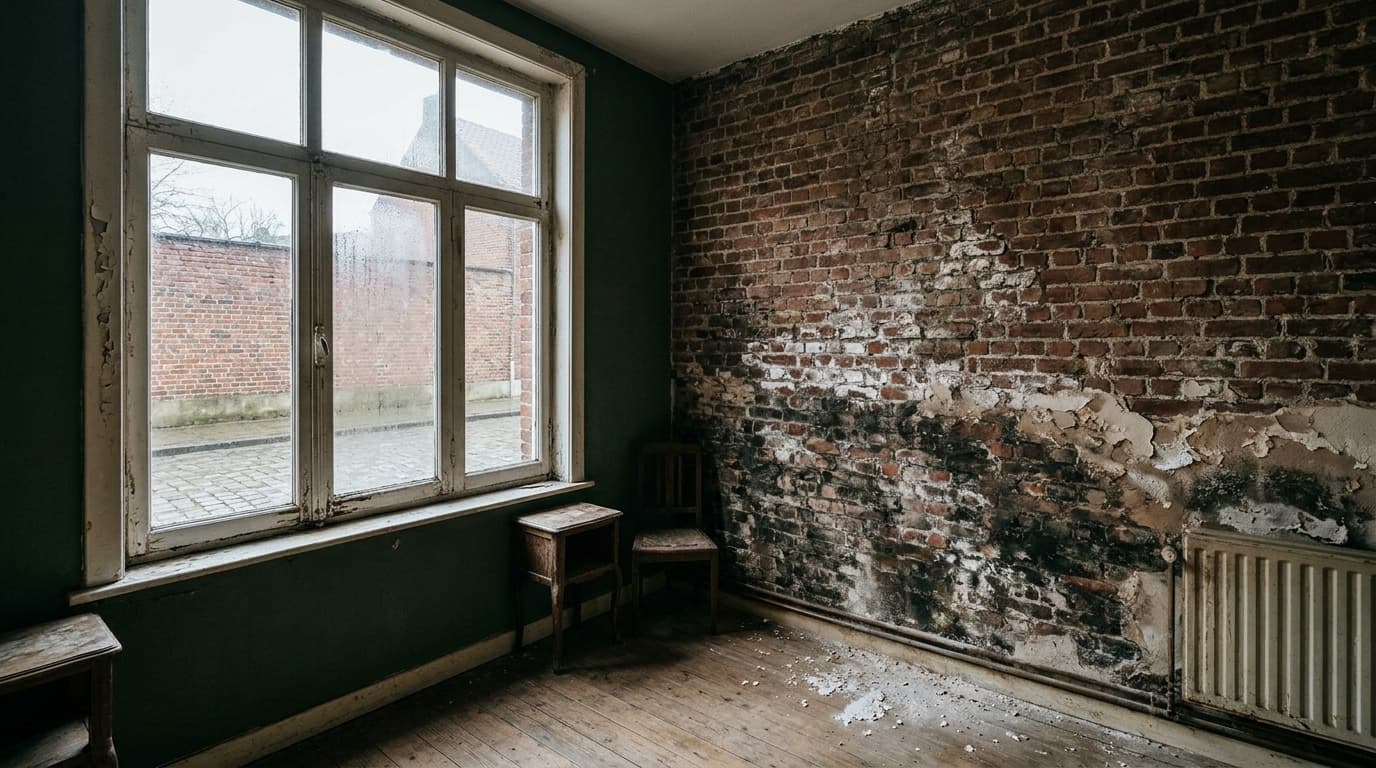
Selling a house with a damp problem: disclose, repair or adjust the price?
Selling a house with a damp problem is possible, provided you disclose the problem honestly and know where it comes from. Damp patches, mould or a musty smell put buyers off, but they do not make a sale impossible. What matters is the type of damp, roughly what the repair will cost and how you reflect that in the asking price. In this article you will read which options you have as a seller and how to avoid legal disputes after the sale.
What type of damp problem does your home have?
Not every damp problem is equally serious. For the sale, it makes a big difference whether it is a small patch in the bathroom or water that is structurally soaking into the walls. Broadly speaking, there are four types.
- Rising damp: groundwater that rises up through the walls, often recognisable by salt deposits and plaster coming loose at the bottom of the wall. It mainly occurs in older homes without a proper damp-proof course.
- Penetrating damp: rainwater that gets in through the facade, poor pointing or a damaged gutter.
- Condensation: water vapour from cooking, showering and breathing that settles on cold surfaces. Often a matter of ventilation and insulation, not of the structure.
- Leaks: a faulty pipe, a leaking roof or a broken drain.
Condensation and a local leak are usually fairly easy to fix. Rising damp and serious penetrating damp often require bigger works. If you do not know the cause, you cannot properly estimate the impact on the price either. That is why selling a home with a damp problem starts with a clear diagnosis, ideally by an independent specialist who does not sell treatments themselves. That way you get an objective report you can also show to prospective buyers.
Do you have to disclose a damp problem to the buyer?
Yes. A seller who knows there is a damp problem must tell the buyer. Belgian law protects buyers against hidden defects: defects that were not visible during a normal viewing and that make the property less usable. Damp behind a freshly painted wall or behind a cupboard is a classic example.
Most sale agreements (compromis) contain a clause stating that the buyer purchases the property in its current condition, without any warranty against hidden defects. That clause only protects a private seller for defects they were not aware of themselves. If you knew about the damp and kept quiet about it or covered it up, that protection falls away. The buyer can then ask for a price reduction, in some cases have the sale dissolved, and claim damages. Read more about this liability in our article on hidden defects when selling a house.
✦ 100% free & No obligation
Sell your property with the best agent
Compare the top 3 agents in your region for free and save on commission.
Compare agents →So disclose the problem in writing, preferably in the sale agreement itself: which rooms, what type of damp, which repairs have already been done and what report exists. Your notary or estate agent can help you word that passage correctly.
Repair first or sell as it is?
That depends on the cause, the costs and your own timeline. There are three common routes.
1. Repair everything before the sale. This makes sense if the cause is clear and the works remain manageable, such as a repaired gutter, new pointing or better ventilation in the bathroom. Keep invoices, photos and any guarantee certificates. Those documents convince buyers more than a verbal promise. Do let repaired walls dry out properly before you paint: a fresh coat of paint on a wet wall mainly raises suspicion.
2. Sell with a quote. Do not have the works carried out, but ask one or more licensed contractors for a quote. The buyer can then do the maths and knows where they stand. This works well for bigger jobs, where the buyer often prefers to decide how and when to renovate.
3. Sell as it is. For a house that needs renovating anyway, the damp problem is one of many items on the list. Buyers looking for that kind of property factor in the renovation. Clear information is still needed in that case.
What does a damp problem do to the sale price?
There is no general percentage. The impact depends on how serious it is, the cost of the repair and the rest of the property. Buyers usually reason simply: what would it cost to fix, and how much uncertainty am I taking on? The second part is often the most expensive. An unclear problem leads to a much lower offer, because the buyer builds in a margin for the unknown.
That is why it pays to remove the uncertainty with a diagnostic report and a quote. You then negotiate over a concrete amount instead of over fear. Make sure your asking price reflects that too. A home with a known damp problem that is priced too high stays on the market for a long time, which puts even more pressure on the price later.
Would you like to know roughly what your home is worth today? Start with a free online valuation and then have it refined by an estate agent who views the property in person. A local agent knows how buyers in your area react to this kind of defect.
How to prepare the sale in practice
With good preparation, you sell a home with damp more calmly and with fewer disputes afterwards.
- Have a diagnosis carried out. An independent report with the cause and a proposed approach is your most important document.
- Collect supporting documents. Invoices for earlier repairs, guarantees on an injection treatment and before-and-after photos.
- Air and heat the home. A home that smells musty during a viewing sells less well, even if the problem is small. Make sure the air is dry and the temperature normal.
- Hide nothing. Do not put cupboards in front of damp patches and do not paint walls that are still wet. That could later be seen as fraud.
- Choose an experienced estate agent. A good agent presents the problem honestly, explains it to prospective buyers and defends your price with the right documents.
Through ImmoMakelaarVergelijker.be you can compare up to 3 estate agents in your area, free of charge and without obligation. That way you quickly see who has experience with homes that still need work.
Frequently asked questions
Can I sell a house with damp without repairing it?
Yes. You are not obliged to fix a damp problem before the sale. You do have to disclose it to the buyer if you know about it. The buyer then decides with full knowledge and takes the repair into account in their offer.
What if the buyer discovers damp after the sale?
If the damp is a hidden defect that you knew about and did not disclose, the buyer can hold you liable for a price reduction or damages, and in serious cases have the sale dissolved. If you genuinely did not know about the problem and the sale agreement contains an exclusion clause, you are usually protected as a private seller.
Does a damp report help in negotiations?
Yes. An independent report with the cause and a cost estimate removes the uncertainty. Buyers then negotiate over a concrete amount instead of building in a large safety margin.
Is condensation also a damp problem I have to disclose?
If you know that mould or condensation regularly appears, it is best to disclose that too, along with the cause, such as insufficient ventilation. It is usually less serious than rising damp, but complete information prevents disputes afterwards.
In conclusion
A damp problem does not have to block your sale. Know the cause, disclose the problem in writing and give buyers a concrete picture of the costs. You then sell at a fair price and with peace of mind after the deed. Unsure about the approach or the asking price? Compare up to 3 estate agents for free who know your area and get advice before you put your home on the market.
Follow us on Google
Pick Immomakelaar Vergelijker as a preferred source and you will see our articles more often in Google, including in AI answers.
Redactie ImmoMakelaarVergelijker
"We write about selling, valuing and costs in Belgium. Articles are drafted with the help of AI from official sources and checked by our team."