
Selling a tenanted property: your rights, your options and your price

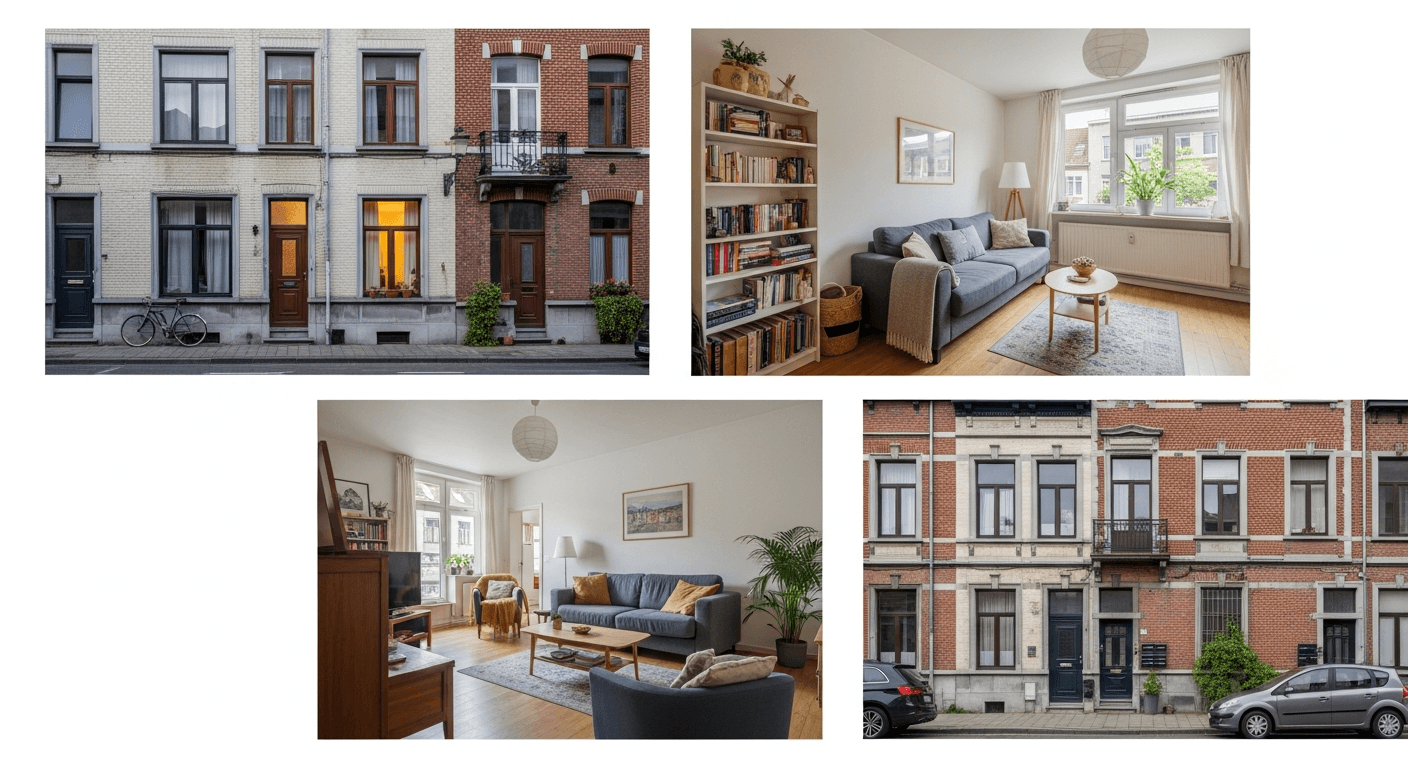
Selling a tenanted property is not an ordinary sale. You are not only selling bricks, but also a running contract with someone who lives there and has rights. That determines who your buyers are, what you may organise in practice and which price is realistic. Below you can read what happens to the lease, which two options you have, and what to look for when choosing your estate agent.
Selling with a tenant or waiting for vacant possession: two different sales
In practice you have two routes. Either you sell the property as it is, with the tenant and the lease in place. Or you wait until the property is empty and sell it vacant. Both are possible, but they produce a different result.
Selling in tenanted condition is faster and your rental income continues until the deed. You do address a smaller market: mainly investors, and they calculate with yield. Selling vacant opens the door to families who want to live there themselves, and that is usually the group that pays the most. The downside is time and risk. You must be able to end the lease correctly, you miss rental income in the intervening period and you carry the costs of an empty property.
Watch out for a misunderstanding that often comes up: the fact that you want to sell is in itself usually not a valid ground for termination. The rules on termination also differ per region, because residential lease law is a regional competence. So have your contract checked before you promise anything to a prospective buyer.
Sale does not break lease: what the buyer takes over
The basic principle in Belgium is known as sale does not break lease. Selling your property does not simply make the lease disappear. The buyer steps into your place in the lease agreement and becomes the new landlord, with the same rights and obligations as you have today.
✦ 100% free & No obligation
Sell your property with the best agent
Compare the top 3 agents in your region for free and save on commission.
Compare agents →How strong your tenant stands depends to a large extent on the registration of the lease. A registered contract with a certain date gives the tenant the strongest protection against the new owner. If the contract is not registered, that position is weaker, but it does not mean a buyer has a free hand. Deadlines and conditions apply even then.
What the buyer can do afterwards, for example giving notice in order to live there themselves, is bound by strict conditions and deadlines that differ per region. So never sell on the basis of a verbal promise about how quickly a buyer will get the property vacant. Put the facts on paper, add the lease to the sales file and have your notary or estate agent confirm the concrete deadlines.
What a running lease does to your sale price
A tenanted property is valued differently from an empty home. An investor looks at the rent, the quality of the contract and the yield that remains after costs. A family that wants to live there themselves looks at the property itself and often pays more. That difference is the core of your decision.
Something else plays a part too. A rent that has been below market level for years pushes down the value for an investor, because that investor takes over the contract. A properly indexed rent with a reliable tenant does exactly the opposite. The condition of the property also weighs more heavily, because in an occupied home you can hardly freshen things up before the sale.
So work with figures instead of a feeling. Request a free valuation of your property and compare what the property would fetch empty with what it fetches tenanted. Set the missed rental income and the waiting time against that. Often the difference is smaller or in fact larger than expected, and only then does the choice become straightforward.
What to prepare before you put it on the market
A tenanted sale stands or falls with your file. Prospective buyers and their bank want to know exactly what they are taking over.
Prepare at least this: the full lease with all its annexes, the proof of registration, the inventory of fixtures drawn up on entry, the rental deposit and where it is held, an overview of the indexations of recent years and the tenant payment record. In addition, the usual sales documents still apply: the EPC energy certificate, the inspection report for the electrical installation, the town planning information and, in Flanders, the asbestos certificate for homes built before 2001.
Be honest about ongoing discussions as well. Arrears, a repair that has been dragging on for months or a dispute about the deposit will come up at the notary anyway. Reporting early usually costs you a little on price. Reporting late costs you the buyer. A well-assembled file shortens the negotiation and removes the uncertainty discount buyers otherwise build in.
Arranging viewings without conflict with your tenant
This is where things most often go wrong in practice. Your tenant lives there and is entitled to quiet enjoyment of the home. You need viewings in order to sell. Those two collide as soon as nothing has been agreed.
Start with a conversation before your property goes online. Explain what is happening, what it means for the tenant and that the lease simply continues. Then agree fixed viewing slots, for example two blocks per week, and confirm them in writing. Some leases already contain a clause about viewings in the event of a sale, so check that first.
A tenant who feels respected keeps the property tidy and lets people in without fuss. A tenant who has to find out from a sign board does the opposite, and you see that back in your price. Rely on your estate agent for this too: grouping viewings and accompanying them personally is part of the job.
Which estate agent to choose for this
Not every estate agent sells a tenanted property smoothly. You are looking for someone who has investors on their books, who can present a yield calculation to a prospective buyer and who deals easily with tenants.
So ask three things at an introductory meeting. How many tenanted properties did you sell over the past year? How do you handle viewings with a tenant on site? And what price do you arrive at, vacant and tenanted, with what supporting evidence? The answers vary more widely than you would think.
So always compare more than one agency. Through ImmoMakelaarVergelijker.be you can compare up to 3 local estate agents free and without obligation who know your municipality and the local investor market. You place their approach, their commission and their price estimate side by side and only then decide.
In short
Selling a tenanted property works perfectly well, as long as you know exactly what you are selling. The lease transfers to the buyer, so your contract and your file help determine the price. Choose deliberately between selling quickly in tenanted condition or waiting for an empty property, and work through both scenarios instead of guessing. Involve your tenant from the start. And present your property to several agencies: compare up to 3 estate agents in your region before you sign.
Frequently asked questions
Does selling my property automatically end the lease with my tenant?
No, in Belgium the principle is 'sale does not break lease'. The buyer steps into your place as the new landlord and takes over the same rights and obligations, so the lease simply continues under new ownership.
What documents do I need to prepare before selling a tenanted property?
You need the full lease with annexes, proof of registration, the entry inventory of fixtures, details of the rental deposit, an overview of recent rent indexations, and the tenant's payment record. Standard sales documents like the EPC certificate, electrical inspection report, and town planning information are also required.
Will I get a lower price if I sell my property with a tenant still living there?
A tenanted property typically attracts investors rather than families, and investors calculate based on rental yield, which can result in a lower price. However, a properly indexed rent with a reliable tenant can work in your favour, so it is worth requesting a valuation for both scenarios before deciding.
Can I end my tenant's lease just because I want to sell the property?
No, wanting to sell is generally not a valid legal ground for termination. Termination rules also differ per region in Belgium since residential lease law is a regional competence, so you should have your contract checked before making any promises to prospective buyers.
How should I handle viewings when a tenant is still living in the property?
Talk to your tenant before the property goes on the market, explain the situation, and agree on fixed viewing slots in writing. Some leases already include a clause covering viewings during a sale, so check your contract first and rely on your estate agent to group and accompany viewings professionally.
"Tech entrepreneur and strategist focused on digital transformation in the real estate sector."