
Organising viewings as a seller: how to get more out of every visit

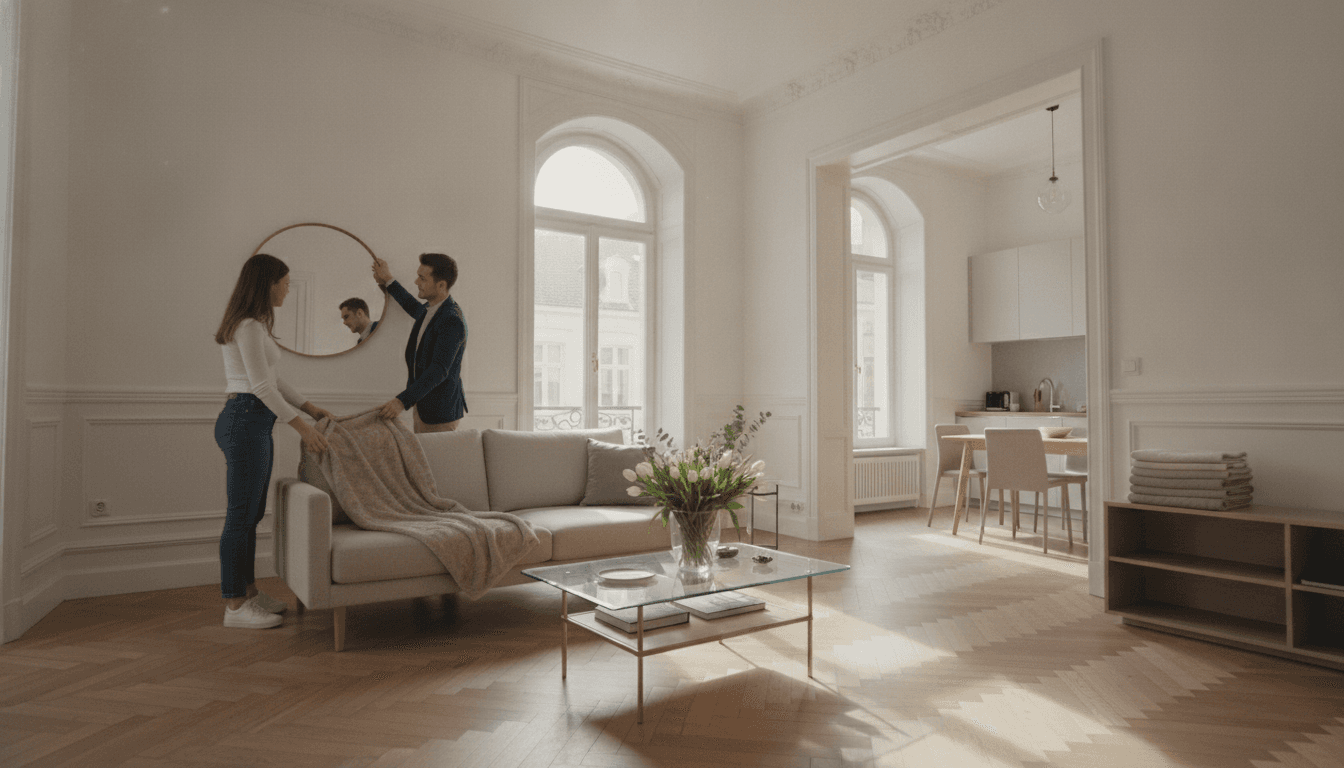
Organising a viewing as a seller is the moment when your preparation either earns money or costs money. The property is ready, the photos are online, and then a stranger walks in with half an hour to decide whether your house stays on their list. This article is not about cleaning or painting, but about the visit itself: the scheduling, who shows people around, what you say and how you turn a visit into an offer.
Schedule viewings in blocks, not spread over weeks
Giving every candidate their own evening costs you time and momentum. Put the first viewings together in one or two half-day blocks, with about fifteen minutes between appointments. That quarter of an hour is not a luxury: you can air the rooms, switch the lights back on and see one visitor out before the next one rings the bell.
Two candidates crossing paths in the doorway is no disaster, by the way. It shows there is interest, as long as it does not feel like a production line. Do avoid the group viewing where five families walk through the rooms at the same time. Nobody asks a question any more and you hear nothing useful afterwards.
Choose the hour deliberately as well. A south-facing garden shows best when the sun is on it, an apartment with little daylight is better seen in the early afternoon than at dusk. In the darker months that means working at the weekend. Plan so that every viewing takes place in daylight, even if it costs you your Saturday.
Who shows people around: you, your agent or neither
There are three scenarios and they rarely produce the same result.
✦ 100% free & No obligation
Sell your property with the best agent
Compare the top 3 agents in your region for free and save on commission.
Compare agents →You show people around yourself. You know the property better than anyone. The drawback is that buyers do not dare to criticise it in your presence, and criticism is exactly what you need in order to know where you stand. Sellers who handle it alone often get friendly visits and silent drop-outs.
Your agent does the viewing alone. That is usually the best approach. A candidate will tell an estate agent that the bathroom is disappointing. Ask at the start of the assignment who does the viewings: the agency owner you spoke to, or an employee who has never seen your property. You hear that difference in the feedback. If you want to put that question to several agencies, you can first compare agents in your municipality.
You and your agent together. This combination goes wrong most often. The buyer does not know who they are talking to, you add to what the agent says, and negotiating becomes difficult the moment the other side has heard you say that you want to leave quickly. Pick one.
What you tell them, and what you keep to yourself
About the property you are open. A defect you know about and keep quiet can come back after the sale, because as a seller you have a duty to inform your buyer. A treated damp patch, a flat roof that will need replacing within a few years, an arrangement with the neighbours about the driveway: name it, preferably with the document to hand. Buyers are less alarmed by a defect you raise yourself than by one their contractor finds later.
About yourself you are sparing. Why you are selling, when you have to leave, whether you have already bought something else, how much you need as a minimum: these are not details but negotiating positions. Let slip that you want to be gone within two months and every offer drops by whatever your haste is worth.
Keep the price out of the conversation too. The asking price is in the advertisement and that is enough. If the question comes anyway, "we will look at that with a concrete offer" is a complete answer. If you doubt whether your asking price still holds, ask for a free valuation of your property.
Safety and privacy: a viewing is not an open house
You are letting strangers into a house full of belongings, on the strength of a phone number. A few habits keep that manageable.
Note down the name, phone number and address of whoever is coming, and confirm the appointment by message. An estate agent does this as standard and usually asks for proof of identity at a first viewing. If you are selling yourself, do the same and make sure you are not home alone during the tour.
Put away what nobody needs to see. Laptops, jewellery, car keys, medication and cash do not belong in a room where a visitor is left alone for a moment. The same goes for paperwork: the tax assessment on the desk, a letter from the bank on the kitchen table, the alarm code on a sticky note. Someone who knows your financial situation negotiates differently.
Finally, think about what is already visible online. Your address, the floor plan and a photo of every room are in the advertisement. Do not let the tour add another layer on top of that, and go up the stairs last so that you can see where your visitors are walking.
From feedback to an offer
Ask for a reaction within a day of every viewing, including a negative one. If you work with an agent, agree that you get it verbatim and not summarised as "they thought it was lovely". After three or four viewings a pattern appears, and that pattern tells you what needs to happen:
- Many viewings, no offer, remarks about the price: your asking price is above the market.
- Many viewings, no offer, remarks about the layout or condition: the property disappoints after the photos.
- Few viewings at a correct price: the problem is in the advertisement, not in the visit.
A second viewing is the real signal. Anyone who comes back with a partner, a parent or a contractor is doing the sums. Give them room and have the file with the certificates ready.
If someone makes an offer on the spot, do not answer with "agreed". In Belgium a sale comes about as soon as buyer and seller agree on the property and the price, even without a signature. Ask for the offer in writing, with an expiry date and conditions, and sleep on it. Compare a few agencies beforehand and choose one that handles that conversation for you.
Frequently asked questions
Do I need to be present at the viewing of my property?
No, and it is usually better if you are not. If you work with an agent, let them do the viewings alone: candidates give more honest feedback in your absence. If you are selling yourself, make sure you are not home alone.
How many viewings is it best to schedule back to back?
Put them in half-day blocks, with about fifteen minutes between each appointment. That way you receive everyone separately and have time to air the rooms. Showing five families around at once produces little useful feedback.
What if a candidate makes an offer during the viewing?
Do not say yes straight away. In Belgium the sale comes about as soon as buyer and seller agree on the property and the price, even verbally. Ask for the offer in writing, with an expiry date and conditions, and only then decide.
May I refuse a viewing?
Yes. You decide who enters your property and when, and you may refuse or move an appointment. If your property is let, you set the viewing times in consultation with your tenant.
The viewing is your last chance to steer
Between the photos and the preliminary sales agreement lies a moment where you can still steer the outcome: the visit itself. Plan in blocks and in daylight, let one person show people around, be open about the property and closed about yourself, put away what nobody needs to see and read every reaction as information. How to get the property itself ready is covered in getting your home ready to sell. What a buyer is looking at meanwhile is in the viewing checklist for buyers.
Frequently asked questions
Should I be present during viewings of my property?
It is usually better if you are not. Candidates give more honest feedback in your absence, and that feedback helps you understand where you stand.
How many viewings should I schedule back to back?
Plan viewings in half-day blocks with about fifteen minutes between each appointment. This gives you time to air the rooms and receive every candidate separately, rather than walking five families through at once.
What should I do if a buyer makes an offer during the viewing?
Do not agree on the spot. In Belgium a sale is legally binding as soon as buyer and seller agree on the property and the price, even verbally, so ask for the offer in writing with an expiry date and conditions before you decide.
What information should I share with potential buyers during a viewing?
Be open about the property itself - known defects, a treated damp patch, a flat roof that needs replacing - because as a seller you have a legal duty to inform buyers. Keep your personal situation private, including why you are selling, your timeline, and your minimum price, as these are negotiating positions.
How can I protect my privacy and safety during viewings?
Note down the name, phone number and address of each visitor and confirm the appointment by message. Put away laptops, jewellery, car keys, medication, cash and any financial paperwork before the visit, and make sure you are not home alone.
"Real estate expert focused on quality control and strategic partnerships."