
What is my home worth? How to calculate a realistic price

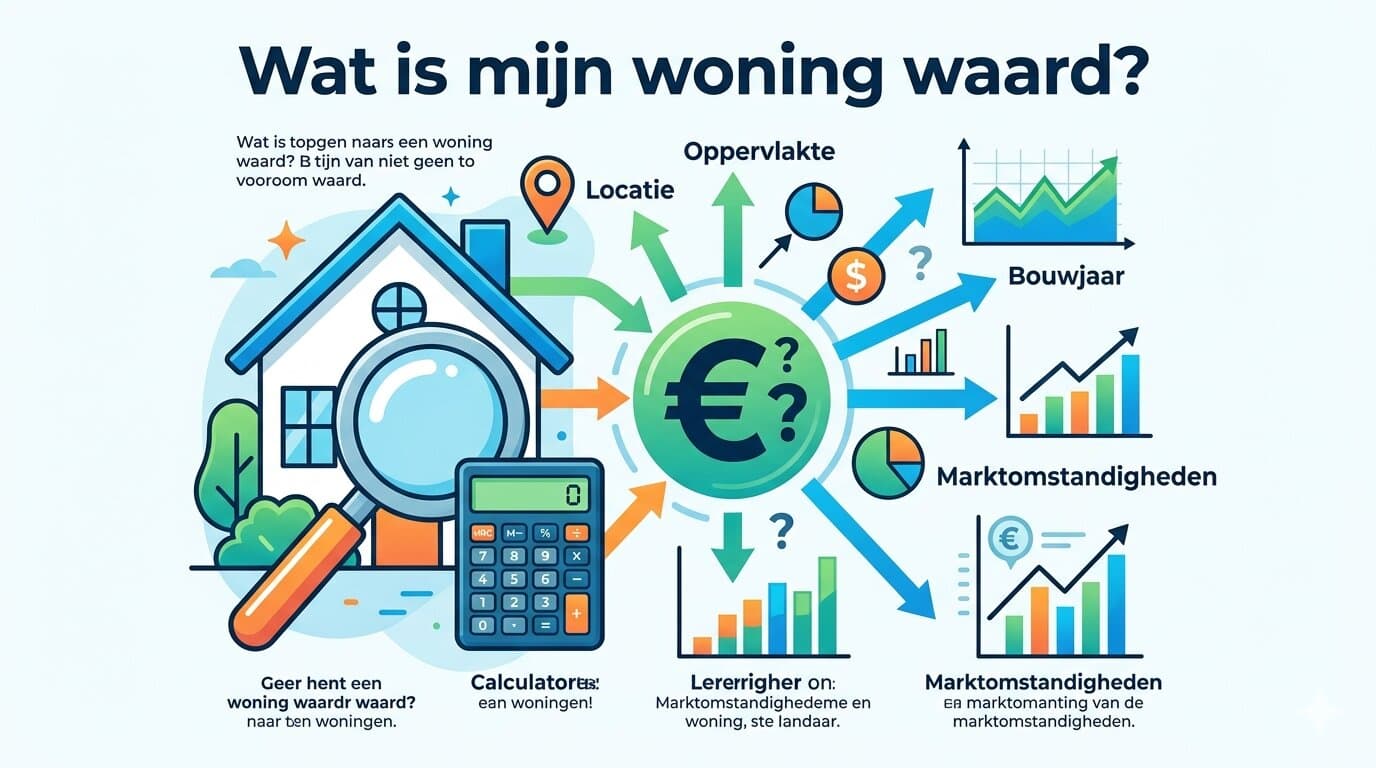
Anyone asking what their home is worth is usually thinking about selling, refinancing, or simply wants an up to date picture. The value depends on far more than the asking price of the house two streets away. Location, floor area, condition, layout and the energy certificate all play a part, and in 2026 that last one weighs heavier than it did a few years ago. A usable estimate is therefore always a mix of figures, comparisons and market knowledge.
What decides the value of your home?
Location sets the floor. Within the same Belgian municipality the gap between two neighbourhoods can run to hundreds of euro per square metre, depending on schools, transport links, noise and the type of street. Then comes the property itself: habitable area, plot size, year of construction, the number of bedrooms and the layout. A fourth bedroom or a garage changes who the buyers are, and a wider audience means more candidates.
Condition follows. Roof, joinery, heating and electrics decide what a buyer still has to spend after the purchase, and that comes straight off their offer. The EPC puts that sum on a single page. A home with an F label sells more slowly and for less than the same home with a C label, now that buyers put the renovation bill in their budget from the start.
Finally there are the details that cost little and return much: a tidy front garden, a bright living room, a terrace facing south, a kitchen that is not from the previous century. They do not change the value fundamentally, but they do decide how fast you sell and how much room a buyer sees to negotiate.
Making a first estimate yourself
Start with the price per square metre in your own municipality. Statbel publishes median prices per municipality and the notaries put out a quarterly barometer, so you do not have to guess at the trend. Divide the price of recently sold, comparable homes by their habitable area and you have a rough reference. How to read those figures without tripping up is set out in our guide to the price per square metre by municipality.
✦ 100% free & No obligation
Sell your property with the best agent
Compare the top 3 agents in your region for free and save on commission.
Compare agents →Then correct that base figure for your own situation. A garden, a garage, a recent boiler or a good energy label push the price up. Single glazing, an old oil boiler or a layout nobody asks for any more push it down. Work with a range rather than a single number, because even two valuers rarely land on exactly the same amount.
Be careful with the prices you see on property portals. Those are asking prices, not sale prices. In a quiet market the gap between the two easily runs to several percent, and that gap is precisely what you want to know.
What an online valuation can and cannot do
An online valuation is free, takes two minutes and gives you a first range based on address, floor area, year of construction and energy label. For an ordinary terraced house in a municipality with plenty of sales, that is surprisingly usable as a starting point.
The limits are just as clear. An algorithm does not see a damp patch, a new bathroom or a view of an industrial estate. The more unusual your property, the wider the margin of error: a farmhouse, a loft or a house with a shop on the ground floor falls outside the statistics such tools run on. Use the number to calibrate your expectations, not to set your asking price.
When you need a sworn valuer and when an agent is enough
If you are selling on the open market, the opinion of two or three local agents is usually the most useful. They see every week what actually sells and at what price, and they back their proposal with recent files from your own street. How to run that valuation step by step is covered in our article on valuing a house.
If a third party has to accept the value, in an inheritance, a divorce or a court case, you need an independent report. That is where a sworn valuer comes in, with a report that stands up before the notary, the tax authority or the court.
The mistakes that undermine an asking price
The classic one is overvaluing. Owners count the memories, or they take the most expensive advertisement in the neighbourhood as their reference, while that home may have been on the market for eight months. Renovations are often valued too optimistically: a new kitchen costing 20,000 euro rarely adds 20,000 euro of value. And an owner who ignores the energy label finds out at the first viewings that buyers do not.
The other side exists too. Starting too low to sell quickly costs money you never get back, because in a market with limited supply a correct price attracts several candidates by itself. The first two weeks online largely decide what you end up with.
From value to asking price
A valuation is a starting point, not a conclusion. The final price comes from the market: what a buyer with an approved mortgage is willing to pay for your home today. So put your own calculation next to at least two professional opinions before you publish a figure.
If you want to know where your property stands today, request a free valuation of your home. If your real question is who should handle the sale, compare a few agents from your municipality and put their price proposal, their commission and their sales plan side by side.
Frequently asked questions
How do I work out what my home is worth myself?
Start with the median price per square metre in your municipality, through Statbel or the quarterly notary barometer, and compare with recently sold homes of the same type. Then correct for garden, garage, condition and energy label, and work with a range rather than one number.
Is an online valuation reliable?
As a starting point, yes. An online tool works from address, floor area, year of construction and energy label, but it does not see a damp problem, a new bathroom or the view. The more unusual your property, the wider the margin of error.
What is the difference between the asking price and the sale price?
The asking price is what appears in the advertisement; the sale price is what ends up in the deed. In a quiet market the sale price is often several percent lower, so never base your own price on portal listings alone.
Does the EPC affect the value of my home?
Yes. Buyers add the renovation bill to their budget, so a home with an F label sells more slowly and for less than the same home with a C label. The energy label also has to appear in every advertisement.
When do I need a sworn valuer?
As soon as a third party has to accept the value: an inheritance, a divorce or a court case. For an ordinary sale on the open market, a valuation by a few local agents is enough.
"Tech entrepreneur and strategist focused on digital transformation in the real estate sector."