
Selling a house outside a residential zone in Flanders: what to watch for

Selling a house outside a residential zone in Flanders: what to watch for
If you want to sell a house outside a residential zone (a "zonevreemde woning" in Flanders), you are selling a home that, according to the regional zoning plan (gewestplan) or a spatial implementation plan, is not located in a residential area but, for example, in an agricultural, forest or nature area. Such a home is perfectly sellable. The buyer will ask more questions, though, the bank will look more critically and you have to disclose the planning situation correctly. This article explains what that means in practice and how to prepare well.
What exactly is a house outside a residential zone?
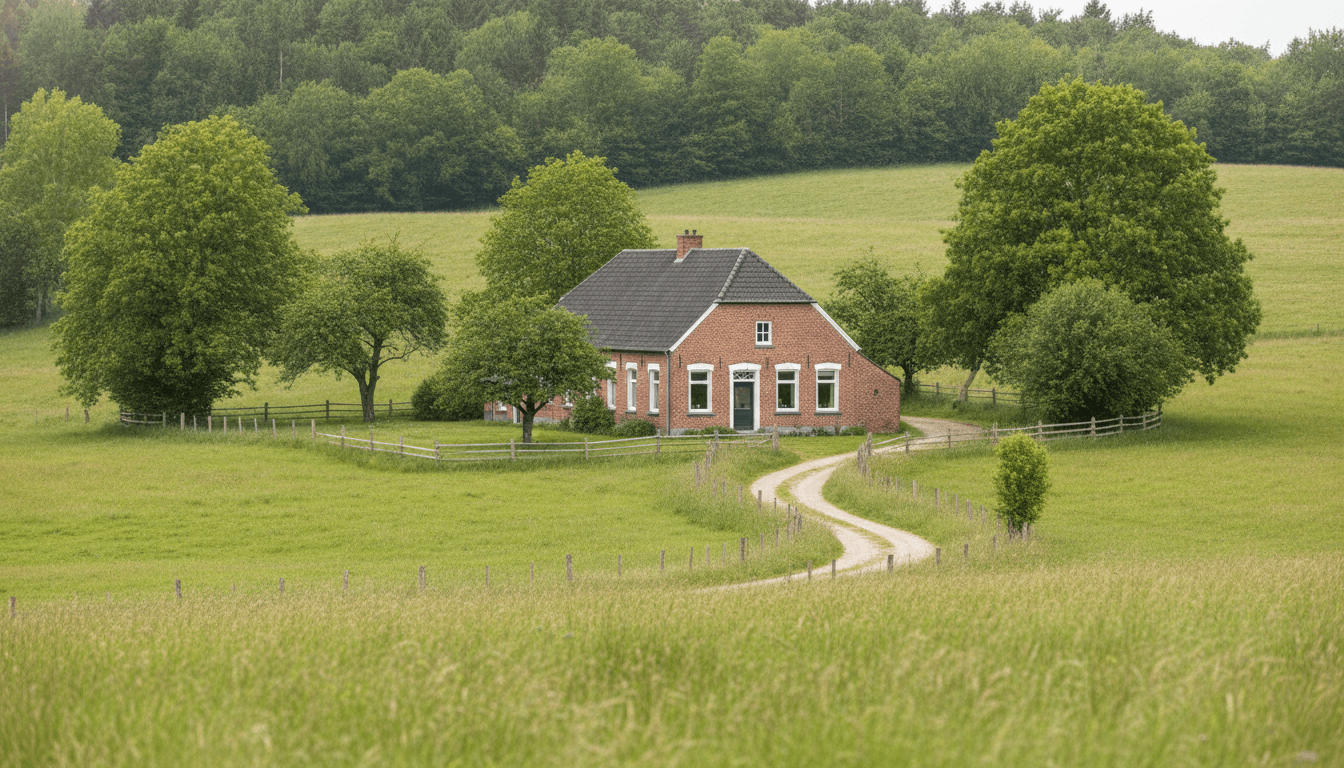
A home is outside its zone when its function (housing) does not match the designated use of the plot. In Flanders, the regional zoning plan, or a later spatial implementation plan (RUP or BPA), determines what a piece of land is designated for. If your house sits in a zone intended for agriculture, forest, nature or recreation, it is outside its zone. This is common for old farmhouses, detached homes along country roads and houses that were already there before the zoning plans were drawn up in the 1970s.
Outside its zone does not mean illegal. The difference between two concepts matters here. The designated use says what should be there according to the plans. The permit status says whether your home itself is permitted, or deemed to be permitted. A home can be outside its zone and still be entirely in order. For your sale, it is mainly the permit status that counts.
The Flemish Spatial Planning Code (Vlaamse Codex Ruimtelijke Ordening) gives permitted homes outside their zone so-called basic rights. Under certain conditions, such a home may be renovated, rebuilt or extended to a limited extent, up to a maximum building volume set by the Code. In spatially vulnerable areas, such as certain nature areas, stricter limits apply. These basic rights only apply to homes that are mainly permitted and not dilapidated. That is exactly why the permit status matters so much to a buyer: without a permitted home, the renovation options disappear.
What information do you have to disclose as a seller?
Flanders has a planning information obligation. Anyone who puts a home up for sale has to include certain details in the listing and in the private sale agreement. These include:
- the most recent planning designation of the plot, with the name used in the plan (for example "agricultural area");
- whether a planning permit or environmental permit has been issued for the property;
- whether a summons has been issued or a planning violation has been recorded;
- whether a right of pre-emption applies to the plot;
- whether the plot is listed in the permit register as "deemed permitted".
✦ 100% free & No obligation
Sell your property with the best agent
Compare the top 3 agents in your region for free and save on commission.
Compare agents →You get these details from the planning extract (stedenbouwkundig uittreksel), which you request from the municipality where the home is located. For a house outside a residential zone, you therefore state the actual designation explicitly in your listing. Anyone who conceals it or presents it more favourably risks a dispute later on, or even the annulment of the sale. You can read more about the role of a right of pre-emption in our article on the right of pre-emption in real estate.
Your notary will also request this information for the deed. Still, it is wise to have the extract in hand before the sale. That way you can answer buyers' questions correctly straight away, and your estate agent knows from day one what they can communicate.
Permitted or deemed permitted: how to check the situation
For a buyer, the key question is: is this home permitted? That can be the case in two ways. Either there is a building permit or environmental permit that covers the home. Or the home is deemed to be permitted. In Flanders, that applies to structures built before 22 April 1962, the date the first planning law came into force. For structures from the period between that date and the entry into force of the regional zoning plan, there is also, under certain conditions, a presumption of a permit, which the authorities can however rebut.
Check three things:
- The municipal permit register. It shows whether your home is listed as permitted or deemed permitted.
- Later alterations. An old farmhouse may be deemed permitted, while an extension from the 1990s was built without a permit. That part is then not in order. How to deal with that is explained in our article on selling a house without a planning permit for a renovation.
- The permitted function. With farmhouses, the home is sometimes permitted as a farm dwelling linked to an agricultural business. If the buyer simply wants to live there without farming, a permit for a change of use may be required. Check with the planning department of your municipality.
If in doubt, have an architect or a specialised lawyer review the file before you put the home on the market. It costs something, but it prevents a buyer from pulling out only once you are at the notary.
What does being outside a residential zone mean for the sale price?
There is no fixed discount for homes outside a residential zone. The impact depends on the location, the permit status and what a buyer can do with the property. A permitted home in an agricultural area with plenty of land and peace and quiet can be highly sought after. A home in a spatially vulnerable area, where rebuilding or extending is heavily restricted, appeals to a smaller group of buyers.
A few factors that clearly affect the price:
- Renovation options. Buyers pay more when they know they may renovate and extend the home within the basic rights.
- Financing. Some banks ask for extra documents or their own valuation for properties outside a residential zone. A buyer who cannot get a mortgage drops out.
- Uncertainty. The more questions go unanswered, the bigger the negotiating margin buyers build in.
A good valuation by someone who knows the local market and the rules is therefore not an unnecessary luxury. You can request a free valuation with no obligation as a first point of reference.
Why the choice of estate agent weighs more heavily here
Selling a house outside a residential zone takes more than an attractive listing. The agent needs to understand the planning file, put the right information correctly in the listing and answer questions from buyers and banks with documents. They also need to know which buyers look for this kind of home: people who want space and quiet, hobby farmers, or families who want to renovate an old farmhouse.
So ask every agent you are considering:
- How many homes outside a residential zone or rural homes have you sold in recent years?
- How do you handle the planning information obligation in the listing?
- Do you work with an architect or lawyer when the permit status is unclear?
Through ImmoMakelaarVergelijker.be you can compare up to three BIV-accredited estate agents in your area, free of charge and with no obligation. That way you quickly see who has experience with this type of home.
Frequently asked questions
Can I simply sell a house outside a residential zone?
Yes. A house outside a residential zone can be sold like any other home. You do have to state the planning designation and the permit status correctly in the listing and the sale agreement.
Can the buyer renovate a house outside a residential zone?
If the home is mainly permitted and not dilapidated, the Flemish Spatial Planning Code grants basic rights to renovate, rebuild and extend to a limited extent. Stricter restrictions apply in spatially vulnerable areas. The municipality can explain what applies to each case.
Where can I find the designation of my plot?
The designation is shown in the planning extract, which you request from your municipality. You can also consult the regional zoning plan on the Geoloket of the Flemish government.
Is a house outside a residential zone worth less?
Not automatically. The value depends on the location, the permit status and the renovation options. A permitted rural home can actually attract extra buyers, while a home with unclear permits attracts fewer.
Final thoughts
Selling a house outside a residential zone works best when your planning file is in order before the first viewing. Request the extract, check the permit register and have any doubtful points reviewed. With correct information and an agent who knows this type of home, you avoid surprises at the notary. Want to know which agents in your area are suited to this? Compare estate agents via ImmoMakelaarVergelijker.be and receive up to three proposals.
"Real estate expert focused on quality control and strategic partnerships."