
Selling a home with a septic tank: what do you need to arrange as a seller?

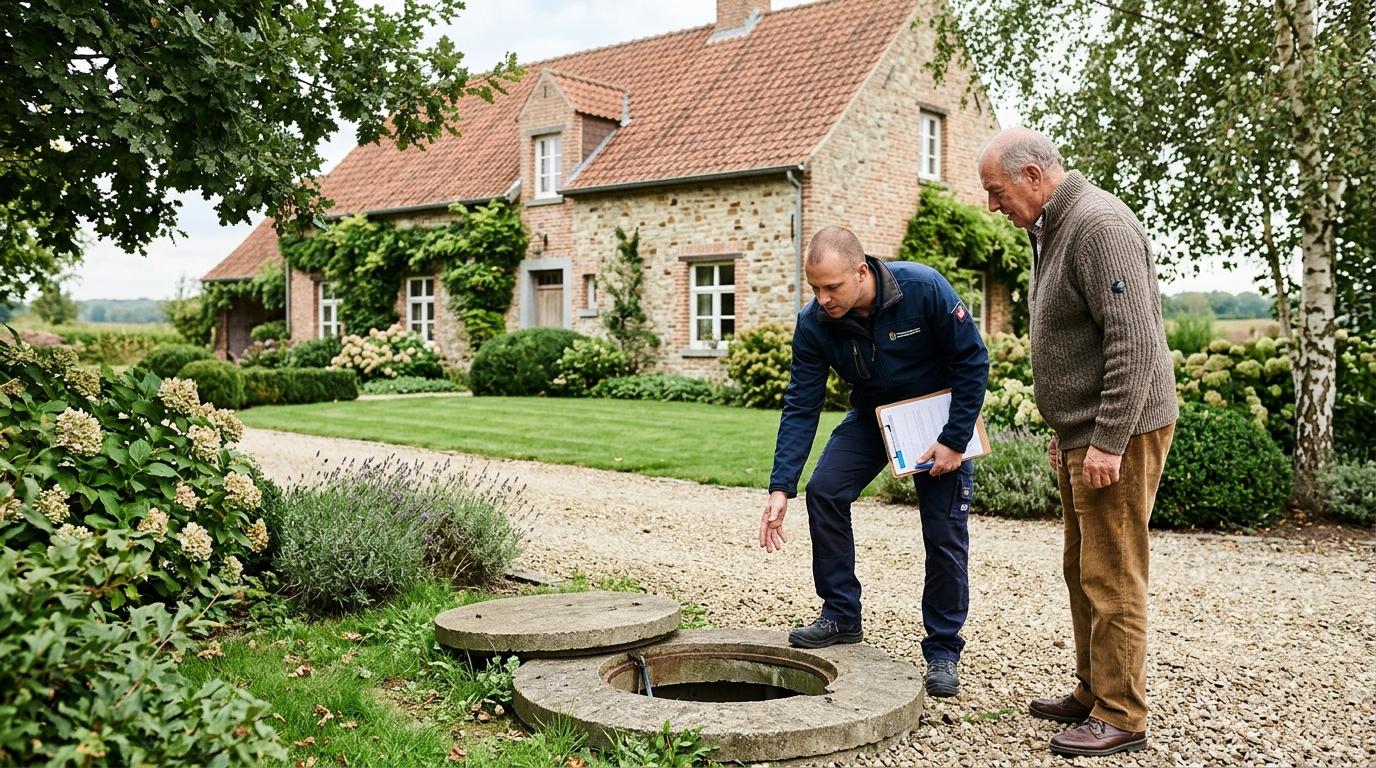
Selling a home with a septic tank: what do you need to arrange as a seller?
If you want to sell a home with a septic tank, buyers will ask different questions than they would ask the seller of a house on a street with mains sewerage. They want to know where their waste water goes, whether a sewer is coming soon and whether a treatment system still has to be installed. In this article you will read how to find that out in Flanders, which papers to prepare and how to stop the drainage question from pushing down the price.
Septic tank, IBA or sewer: where does your home stand?
A septic tank is an underground tank in which the waste water from the toilet, kitchen and bathroom settles. Solids stay behind and the water flows on to a ditch, an infiltration system or the sewer. A septic tank therefore only partly treats the water. An IBA, the Flemish term for an individual waste water treatment unit, goes further: it treats the household waste water itself, so it can then be discharged in an area where no sewer will be built.
Which situation applies to your home is set by your municipality's zoning plan (zoneringsplan). In Flanders, that plan assigns every plot to a zone. In the central area and the collectively optimised outlying area, the sewer is already in place. In the outlying area still to be collectively optimised, a sewer is planned but not yet built. In the outlying area to be individually optimised, no sewer will come, and the owner has to arrange treatment themselves, usually with an IBA.
You can consult the zoning plan free of charge through the online map portal of the Vlaamse Milieumaatschappij (the Flemish Environment Agency) or through your municipality. Note the zone of your plot and keep a printed copy. It is the first thing a well-informed buyer will ask, and it determines which costs they can expect after the purchase.
What does each zone mean for the buyer?
If your home is in a zone where the sewer already exists, but you still discharge through a septic tank, the question is whether the connection is in order. Once a sewer has been laid, a home has to connect to it, and the septic tank often has to be bypassed or taken out of use. Your sewer operator can tell you what applies to your street. Since 1 July 2025, selling a Flemish home connected to the public drainage network also requires an inspection of the private drainage system. How that works is explained in the article on the sewer inspection when selling a home.
✦ 100% free & No obligation
Sell your property with the best agent
Compare the top 3 agents in your region for free and save on commission.
Compare agents →In the outlying area still to be collectively optimised, the buyer is in an in-between phase. The septic tank stays in use for now, but when the sewer is built, connection and separation works will follow on the plot itself. Those works cost money. Ask the municipality or the sewer operator whether a schedule already exists, so you can give the buyer concrete information.
In the outlying area to be individually optimised, the owner must have or install an IBA, within the deadline set for that area. If a working IBA is already in place, that is a strong point in your sales file. If there is only a septic tank, the buyer knows an investment will follow. In some municipalities the sewer operator installs and maintains the IBA itself, for a fee charged through the water bill. Check whether that is the case for you, because it changes the buyer's sums.
Which documents should you have ready?
A buyer trusts figures and paperwork more than reassuring words. So before you put the home on the market, gather:
- an extract from the zoning plan showing the zone of your plot;
- details of the septic tank: location, capacity if you know it, and invoices for emptying;
- for an IBA: the type, the installation date, the invoices and the maintenance contract or maintenance reports;
- plans of the drainage pipes, if they exist;
- correspondence with the municipality or sewer operator about planned sewer works;
- the inspection certificate for the private drainage system, if your sewer operator requires it for your situation.
Exactly which inspection is needed for a home without a sewer connection depends on the situation. Ask your sewer operator in writing. You will find its name on your water bill. A full overview of all sales documents is in the article which documents you need to sell your home. If you also have a rainwater tank, read the piece on the rainwater tank when selling, because buyers often mix up the two.
Duty to inform and hidden defects
As the seller, you have to inform the buyer honestly about what you know. A septic tank that regularly blocks, an IBA that has not been serviced for years or an overflow that runs into the neighbours' garden are things you report. If you keep quiet and the buyer finds the problem after the sale, you risk a dispute over hidden defects, with a possible price reduction or compensation. You can read more in the article on hidden defects and the seller's liability.
Record the arrangements about drainage clearly in the sales agreement (compromis). State the zone from the zoning plan, the installation in place and who bears any future works. Your notary can help you word those clauses correctly. A clear text protects you and gives the buyer certainty, which often makes the negotiation run more smoothly.
How does drainage affect your sale price?
A septic tank in itself does not make a home worth less. Many rural homes in Flanders have one, and buyers in those areas are used to it. What does affect the price is uncertainty. A buyer who does not know whether they will have to invest in an IBA or separation works within a few years builds in a margin and offers less.
You can shrink that margin by removing the uncertainty. Ask for a quote for the works expected in your zone, or have them done yourself if that makes financial sense. A home with a recent, well-maintained IBA or with drainage that is already compliant stands out from similar homes in the area.
An estate agent who knows the region knows how buyers there react to such a file and how to reflect it in the asking price. Through ImmoMakelaarVergelijker.be you compare up to three accredited estate agents for free near you. Would you first like to know what your home is worth today, taking the drainage and any works into account? Then request a free valuation.
Frequently asked questions
Can I sell a home that only has a septic tank?
Yes. A septic tank does not prevent a sale. You do have to inform the buyer correctly about the installation and about the zone in the zoning plan, because that determines whether connection or treatment works will follow later.
What is the difference between a septic tank and an IBA?
A septic tank lets solids settle and only partly treats the waste water. An IBA, an individual waste water treatment unit, treats the household waste water itself and is required in Flanders in areas where no sewer will be built.
How do I know whether my home needs an IBA?
That is set out in your municipality's zoning plan. If your plot lies in the outlying area to be individually optimised, the owner has to arrange treatment themselves, usually with an IBA. You can consult the plan through the map portal of the Vlaamse Milieumaatschappij or at your municipality.
Is a sewer inspection mandatory for a home with a septic tank?
Since 1 July 2025, an inspection of the private drainage system has been mandatory when selling a home in Flanders that is connected to the public drainage network. Other rules apply to homes without a connection. Ask your sewer operator in writing which inspection your home needs.
In conclusion
A home with a septic tank or IBA sells most smoothly with a complete file: the zone from the zoning plan, details of the installation, proof of maintenance and clear arrangements in the sales agreement. The less the buyer has to guess, the smaller the margin they build in. Would you like help selling a home in a rural area? Compare estate agents who know your region, for free and without obligation.
Frequently asked questions
Can I sell a home that only has a septic tank?
Yes, a septic tank does not prevent a sale. You do have to inform the buyer correctly about the installation and about the zone in the zoning plan, because that determines whether connection or treatment works will follow later.
What is the difference between a septic tank and an IBA?
A septic tank lets solids settle and only partly treats the waste water. An IBA - an individual waste water treatment unit - treats the household waste water itself and is required in Flanders in areas where no sewer will be built.
How do I know whether my home needs an IBA?
That is set out in your municipality's zoning plan. If your plot lies in the outlying area to be individually optimised, the owner has to arrange treatment themselves, usually with an IBA. You can consult the plan through the map portal of the Vlaamse Milieumaatschappij or at your municipality.
Is a sewer inspection mandatory when selling a home with a septic tank?
Since 1 July 2025, an inspection of the private drainage system is mandatory when selling a Flemish home connected to the public drainage network. For homes without a connection, different rules apply - ask your sewer operator in writing which inspection your home needs.
Does a septic tank lower the sale price of my home?
A septic tank in itself does not make a home worth less, as many rural homes in Flanders have one. What does affect the price is uncertainty - buyers who do not know whether they face future investment costs will build in a margin and offer less, so providing clear documentation can help reduce that effect.
Follow us on Google
Pick Immomakelaar Vergelijker as a preferred source and you will see our articles more often in Google, including in AI answers.
Redactie ImmoMakelaarVergelijker
"We write about selling, valuing and costs in Belgium. Articles are drafted with the help of AI from official sources and checked by our team."